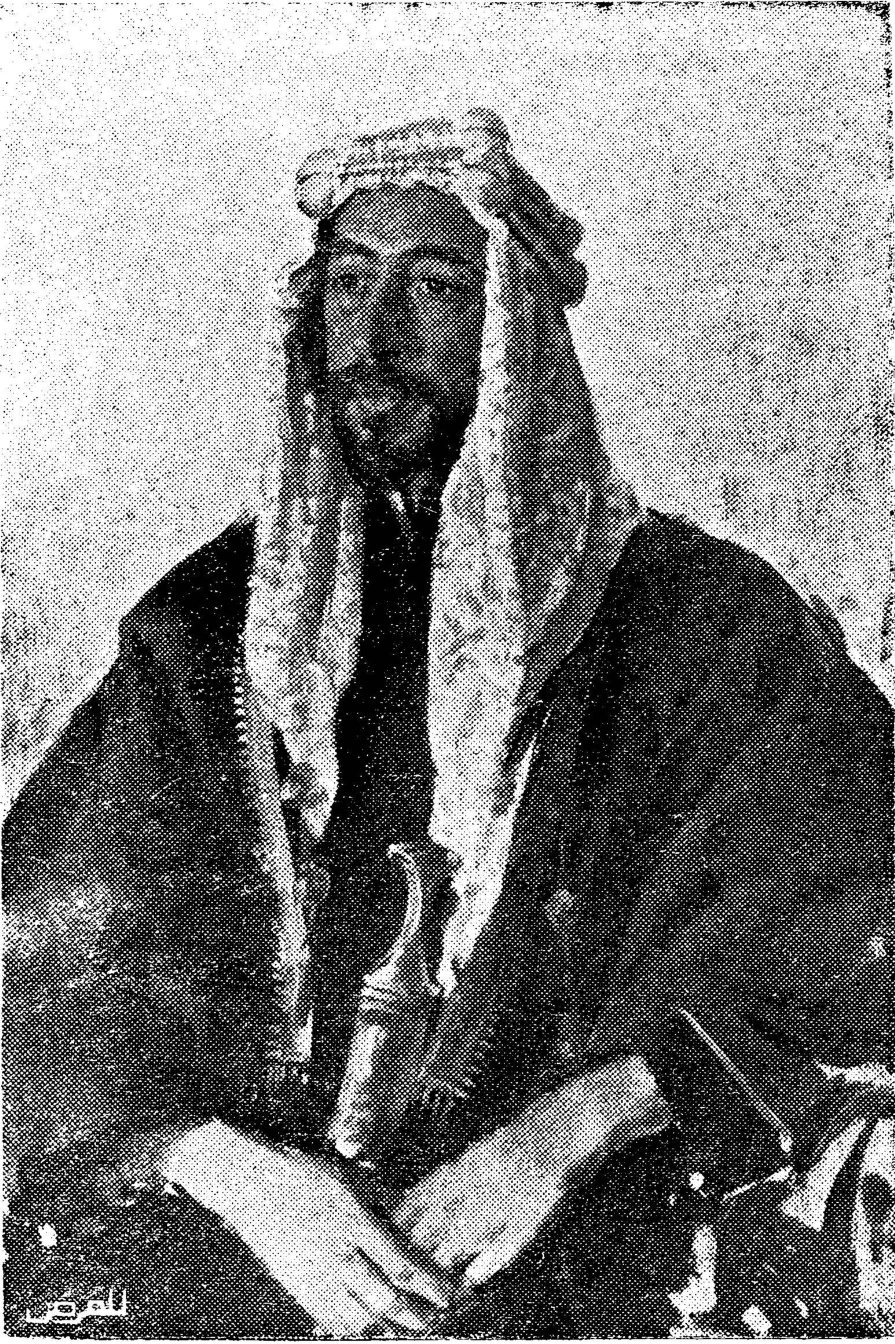
• King Faisal I — from the brush of John •
"Augustus John" is one of the eminent figures of oil painting and a great painter, and the English critic "Wyndham Lewis" has described him in these words: "a great hero into whose hands the fairy gods placed a brush instead of a sword."
"Augustus John" is one of the eminent figures of oil painting and a great painter. Many of his portraits — such as the portrait of Madame Suggia, the player of the guitar; of Yeats, the Irish poet; and of King Faisal, King of Iraq — have won world fame. John was born in 1878; he studied painting from 1896 to
1899 at the famous Slade School in London; then in 1928 he was elected a member of the Royal Academy, and in 1942 he was awarded the Order of Merit.
The English critic Wyndham Lewis described Augustus John as follows: "a great man of action into whose hands the fairy gods placed a brush instead of a sword." And when we see this extraordinary heroism of life striding steadily through our present age with broad steps, armed with the confidence of a victor, we are certain that the description matches the reality.
It is strange that John should differ from all the contemporary artists of England: though he is the eldest of them (he is now sixty-eight years of age), he is marked by the vitality, energy, and confidence that mark the young. The young painters of today are men of thought: they think and construct theories, so that their art emerges as an intellectual product. John is not so; he painted his most striking pictures before he had thought about them. He possesses an immense wealth on which he draws in venturing upon his artistic works, and he is certain, by sheer instinct, of what he is doing, so that his pictures, when finished, come out in the most striking style. But if he errs, it is difficult for him to correct his error; hence the sober, deliberate painter is, in this respect, in a better position than the rash, adventurous John. And he finds himself in a like position, too, when his emotional and artistic wealth carries him beyond his model, and his ideas lose their harmony.
It is an injustice to call this man, who excels in so many spheres of life, merely a painter, despite the world fame his pictures have won. Ever since he left the Slade, the famous school of art in London, he has never ceased to study the lines of the face and the parts of the human body. He is beyond dispute to be counted a link in the chain of the great English painters; there is no doubt that Gainsborough, Reynolds, Raeburn, and Lawrence would admire him and take pride in adding his name to their circle. And perhaps the credit for his brilliant success in painting human faces lies in this: that he did not spend his whole life before the human face, but would turn aside from