the tips of her fingers, then goes out into the garden to stroll
a little along the dark walks.
The trees at the back of the garden were one huge mass of shadow, or vague phantoms. The weather is cold, but the water pouring into the basin has a sweet murmur, pleasant to the ear; between two dark clouds a few stars sparkle, and the cold seemed to add to their gleam. There — the horn of a distant automobile. Asma felt her spirit grow a little calmer. She turned up the collar of her coat and began to stroll at her leisure. Here she is, back to thinking about Jacqueline: and then again, if she does not mix much with people and does not amuse herself like Jacqueline, does she not obtain pleasures loftier than those? Could Jacqueline read a fine literary book! She casts a glance over the newspapers and magazines she buys, and all that interests her in them are the fashion pages and the pictures of the movie actresses. She can savor material pleasures only. Asma feels quite clearly this superiority of hers over Jacqueline, yet she still feels the tightening of her heart in spite of all these enticements. It is as though she were squandering her youth far from the world: who sees her? who knows her? who is aware that she exists?
They call her from the house:
- Asma, Asma, where are you?
She knows her little brother's voice; no doubt he needs her to explain his arithmetic assignment to him.
- I'm coming.
This is her life: she looks after her two small brothers, does a little work about the house, goes sometimes with her mother on tedious visits. She has no amusement but the cinema, reading, and the radio.
The window opens. It is her brother; she can hardly make him out in the darkness, but he shouts a second time, insistently:
- Come on... I'm waiting for you.
She goes in weary, her heart heavy.
It is now eleven o'clock. Here is Asma putting on her nightclothes and going over in her mind what happened at the soirée that has just ended: a dull evening like all the previous soirées. The neighbors came — a company of the old and the middle-aged. First they argued over the vast subject of politics. Then her father played chess with one of the ladies, while the other knitted with her needles as she recounted the news of the quarter. Asma wanted to listen to some music, but she was obliged to shut it off at once, because "jazz" hurts the old gentleman's head.
Asma says her prayers in a hurry because she is sleepy, then throws herself into her bed and wraps herself up well in the quilt; but she stares at the door of her room, standing slightly open, and glimpses through it one of the green curtains in the dining room, where her father is still sitting up. The air coming in through the window plays with the green curtain: it spreads out and trails, then swells into the shape of a circle. It is a magnificent green dance dress, and it has been handed to her to wear. Here she is dancing the waltz, turning and gliding with a young man elegantly dressed. How beautiful she is tonight beneath the lights of the glittering chandeliers. The ballroom is very large and filled with people. How lovely this dance is. Asma's flowing dress flies about her; she is very happy.
The next day Asma wakes to the clatter of her brother's iron-shod shoes as he jumps about her room, shouting:
- It's half past seven now — my God! — and I haven't gone over my geography lesson yet.
He puts an open book into her hands and begins reciting his lesson, staring at the ceiling with knitted brow. Asma raises herself a little and leans on her elbow to follow in the book what her brother is reciting.
Here is her second brother, coming in with his jacket on inside out.
- Fix this jacket for me — I can't manage to button it. And for the ten-o'clock recess make me a cheese sandwich. I don't want the kind that sticks to the fingers and bothers me when I'm playing marbles...
Asma rises from her bed with a single bound. And while she prepares the sandwiches, she remembers, with much bitterness and regret, her impossible dream of the night before.
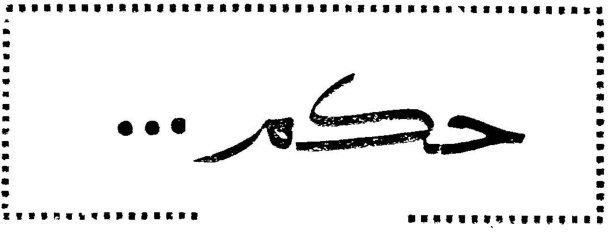
Set yourself to work in the days of youth, for the hours of youth are of gold, the hours of middle age of silver, and the hours of old age of lead; he who knows nothing at twenty will do nothing at thirty and possess nothing at forty. (A sage)
While truths are preparing to appear, and have scarcely finished putting on their shoes, lies have already crossed half the world! (Spurgeon)
Love is the symbol of eternity: it takes no account of times and seasons, such as past and future, and it wipes out all memories of a beginning and all fears of an end. (Auguste Comte)
Marriage is nothing but a duel in the midst of a battle, or a kind of gambling in which the woman stakes her liberty and the man his happiness. (A sage)