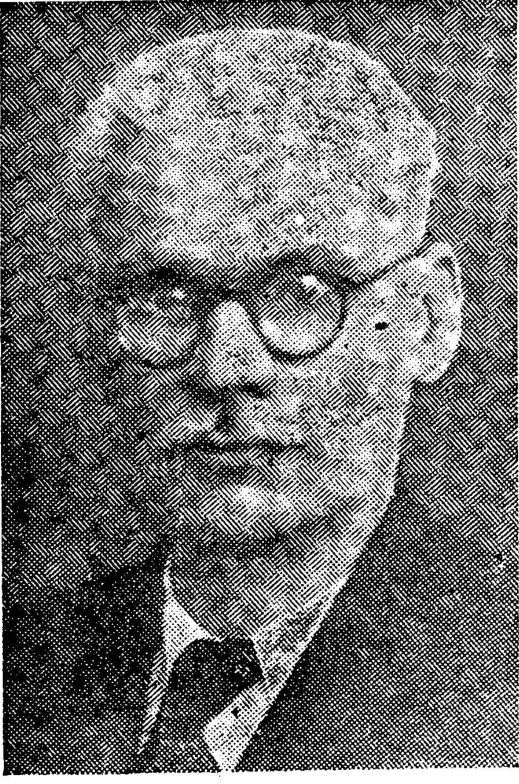
Sober, satirical letters have been bereaved of a great humanist man of letters, Mr. Omar Fakhoury, one of the imams of literature, of culture, and of nobility of character. In his person Lebanon and the Arab world have bidden farewell to one of the purest faces of letters that we have known in history, ancient and modern. And in him we have lost a friend who knew that the true human bond between people is firmer than differences of political inclination.
The late Ustad first saw the light in Beirut and shone in learning. He was one of the companions of the martyr Omar Hamad, so his soul was leavened with the national spirit and he rose up with the seekers of freedom. After the war of 1914 he set out for Paris to study in its institutes, and there obtained the license in law. Yet the spirit of letters remained dominant over the departed's mind, and he devoted himself to it as author and translator. Among what he translated were "The Life of Gandhi" by the French writer Romain Rolland, and a collection of proverbs. He gathered his articles in the book "The Guarded Door," which opened the way for him to the Arab Academy in Damascus, which seated him as an active member.
The Lebanese state chose him as registrar of the land registry, and he filled the post after having practiced law. Yet the inclination toward letters kept burning in him, and he collected the lectures he had delivered over the radio in a booklet brought out under the title "The Four Seasons." The Radio Orient station invited him to work there as director of its Arabic literature section, and he supervised the lectures given over the air. In that atmosphere he produced his book "No Quarter," which comprises Mr. Fakhoury's lectures against Fascism and the tyranny manifest in it. The society of the "Brothers of the Soviet Union" had placed
him at its head, and he directed it with ardor, sincerity, and energy.
The house of "al-Makshuf" asked him for the printing of his lectures and speeches, and from them he produced two books: "The Lebanese Truth" and "A Man of Letters in the Marketplace." Satire prevailed in his writing; he was an author of solid footing after the manner of al-Jahiz and Anatole France. And if we survey the life of this striving man of letters, we would say of him that he was not among the fortunate: he did not know such success as his aspirations yearned for. Yet everything he left behind is a distinguished literary legacy that testifies to his mastery in the craft of pen and thought. Style itself is in his debt, and soundness of taste does not disown his eloquence.
We grieve most deeply over this calamity that strikes us in a writer lofty of spirit, sincere in affection, pure of soul. He lived like the violet in its meekness and its sweetness, dwelling in the corner and spreading from it a perfumed fragrance. The loss of him is universal. May God have mercy on him, and console letters and his family with the best consolation.
The Islamic Girls' College held its athletic festival on Thursday, the eleventh of April 1946, on its own grounds. As soon as the appointed hour drew near, the field was thronged with the invited guests — distinguished ladies and some of the heads of educational institutions and academies, among others. The band struck up in welcome at their coming, and then began the general display by the school's pupils, who drew up in close, orderly ranks; their number exceeded four hundred girls from the elementary and secondary classes alone. No sooner had they sung the national anthem and saluted the Lebanese flag than the audience applauded with pride and exultation.
Then followed the games and the gymnastic exercises. The Swedish drill was the object of everyone's admiration, and the exercises of harmonized dance were no less moving to the soul.
As for the dance of the "slaves," that is, of the Negroes, it was the most astonishing of all: watching the performers at close range, we could fancy ourselves before a troop of African Negroes dancing and leaping, feathers stuck in their heads, girded with a kind of long fringe hanging down about their waists. Their movements, for all their fine harmony and precision, provoked laughter and stirred admiration for the skill of the little performers, and we would have gone on applauding them at length had the rain not cut us short.
Then we stood to watch a football match, and despite the falling rain one of the two teams carried off the prize.
And so the invited guests went out delighted with what they had witnessed that day of the charms of modern art, full of praise for the administration and for the ladies who had arranged that splendid festival.