was that it was founded thirty years ago, and that it flourished thanks to a few individuals who received no encouragement whatever from the government authorities, which neglected it
while subsidizing the foreign schools, and especially the French among them. This young school was able, through the energy of Mrs. Mary Kassab, its first founder, to develop from a primary school into a secondary boarding school. From the very beginning its practical and artistic character showed itself, for it gave attention to household management and to music.
Then its scholarly and cultural side expanded when Mrs. Cortas came to head it: the first college class, the "Freshman" class, was lately added to its program, and the second college class, the "Sophomore," will follow next year. Thus the student is spared having to move to another school before pursuing her higher studies at the university.
Among the things I remember is that Mrs. Cortas said to me: "I do not know why we love the Ahliah. Its atmosphere is that of a family, and however far a girl may go from it, you find her always remembering it and longing to visit it."
The truth is that the Ahliah has strong features in its program. There is music, which, as I saw, is part of its very life: its students make up the greater number of the members of the orchestra conducted by Mr. Alexis Boutros, in whose founding Mrs. Cortas had the foremost hand.
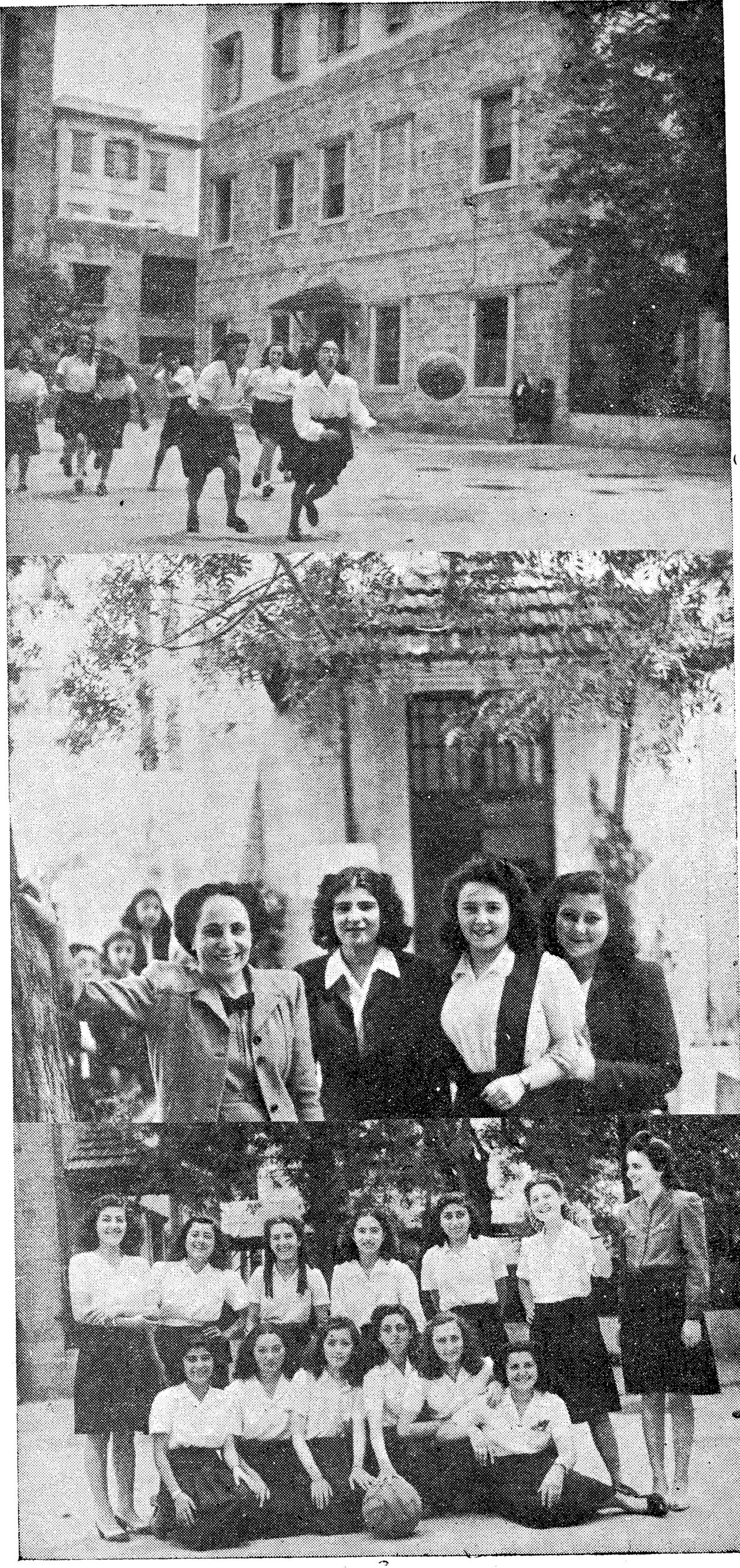
As for sport, it too holds a worthy place, and we often hear that the Ahliah School's team has beaten the other Lebanese teams. The sporting spirit prevails in the school's atmosphere in its plainest manifestations — that national, patriotic atmosphere steeped in order, refinement, and the love of knowledge.
At last I took leave of Mrs. Cortas, after she had shown me all the departments of the school and allowed me to take a few photographs. And when I passed through the massive outer door, I turned back toward it — and behold, this time it looked to me more beautiful, and smaller, than it had when I entered...