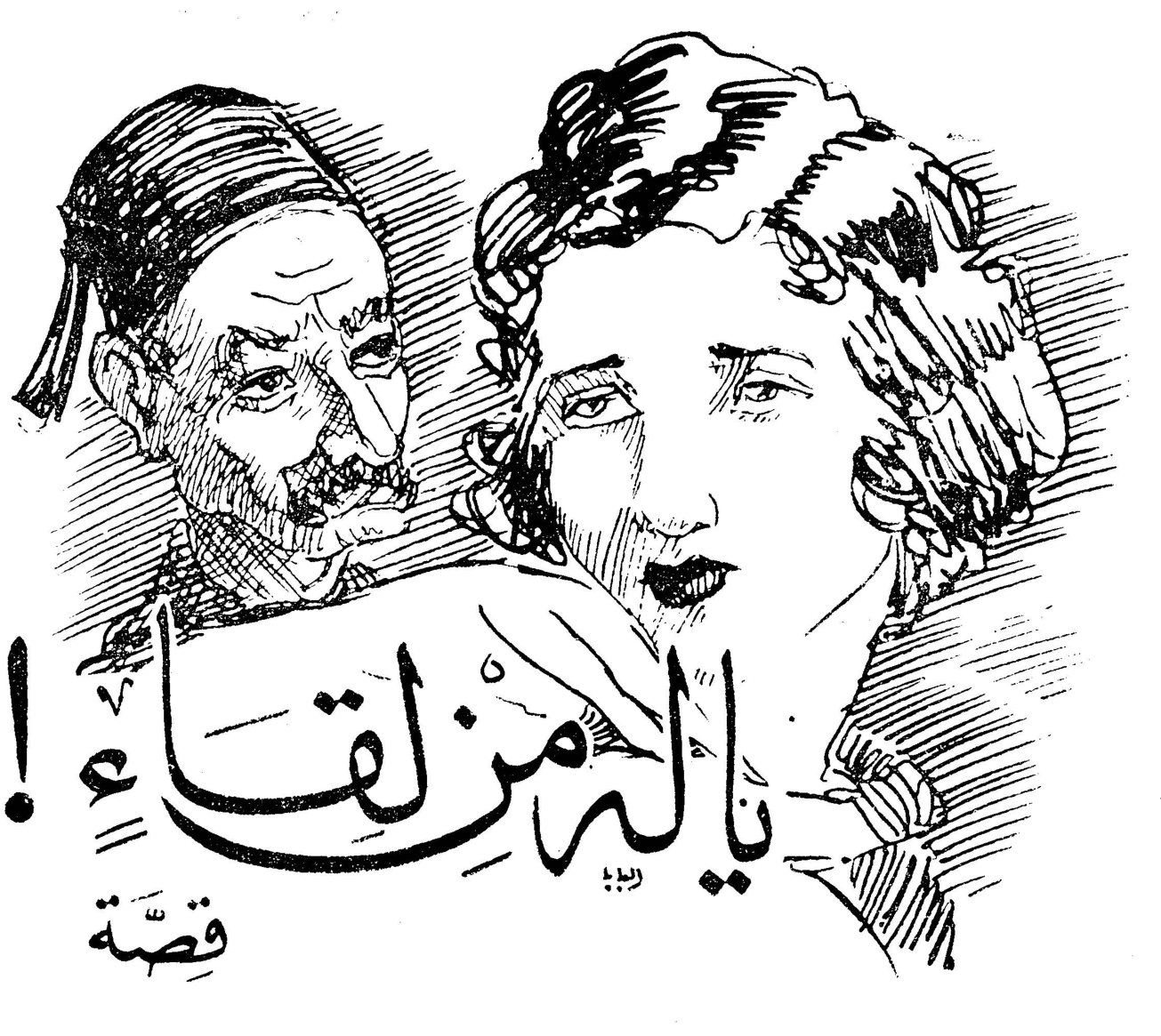
Abu Hanna was not at all himself that day, for his beautiful young bride was away visiting her family. She had promised him to return the day before, and here the second day was nearly dawning and she had not yet come back.
And although Abu Hanna had reached the age of sixty-five, he was still a fresh bridegroom that day. Do not wonder at his years: he had money and property enough to guarantee him a young bride even at ninety.
When his former wife died — Umm Hanna, the partner of his life — all who knew him said he was sure to die of grief and gloom. But he wanted to prove to the world that their beliefs were false, so a month after his wife's death he announced to them that he wished to marry a new wife... and he would accept no ordinary girl, but a beautiful girl, shapely of figure and full of winning charm, who could win his precious love. The strange thing is that he succeeded where many fail who are in the bloom of youth and the pride of their years.
Abu Hanna was no blind-hearted fool to fall under the spell of
any woman whatever, though he declared to every woman he met the power of her spell over him. This one was stout, and he did not like a stout woman; that one limped a little, and he wanted her sound and whole of body; that one laughed too much, and he did not like a woman who laughs too much; and that one was perfect in every quality except that she resembled Umm Hanna, his former wife, and he wanted to try a new kind of woman. So he refused many, until at last, after toil and effort, he found that lucky one who found favor in his eyes... That girl possessed nothing but a strong feminine attraction. She was twenty-five years old, of modest means and ambitious, dreaming night and day of ease and riches; her smile was broad, her voice sweet, her eyes languid, her talk melodious, and the touch of her hand warmth and bliss.
On the day of the wedding crowning the people watched him standing erect beside her like an electricity pole, and had his eyes not gone dry of tears he would have wept for joy. And how it pleased him to defy the people, and those among them who
said that his departed wife was watching him from heaven, weeping over his stinging betrayal, and charging the angels to make his life a misery... He told himself they said such things only out of envy. Yes, Abu Hanna married; he danced and made his bride dance; he drank and made merry, and felt youth returning to him once more, and the accumulated years vanishing to make way for new years brimming with wine and nectar and honey.
As for his new wife, she never once regretted having married him. How could she regret it, when he doted on her as a mother dotes on her child? She declared many times that there was no difference between him and any young man in point of strength and firm muscle. Indeed, he surpassed the young man in many things: in his rich talk built upon the experience of the years, his sweet jokes that never ran out, his surpassing frankness, and his varied teasing, whether in word or in gesture. How often he would say to her, as though in earnest: "I shall save for you all I can, and leave you the largest inheritance possible, so that when I bid life farewell you may find a rich man to marry you after me, with whom you can secure your living."
In this fashion matters went on between husband and wife, with nothing to trouble their serenity, until that ill-omened day arrived — the day the wife was away at her family's house. Old age, with all its terror and its weight, assailed Abu Hanna once more. Rising from sleep in the morning had lost its splendor and its magic, and the face of the day had changed, appearing fickle and scowling. Instead of greeting the world from his window as usual and saying, "How beautiful this morning is," Abu Hanna sought refuge in God from the accursed devil, then made a violent, heavy movement, pushed along with sudden haste... and sighed, grieving over the absence of his beloved wife, "Daad."