Most mothers believe that colds in children are a matter of no consequence, and so they pay them no heed, trusting that a cold is a slight, annoying phenomenon that soon passes in a short time — not knowing that it is among the conditions of illness that weigh most heavily upon children, especially if they do not treat it seriously and promptly.
If the matter were confined to the cold and its symptoms, it would be an easy one; but if the child stricken with a cold is neglected and left exposed to chill and to drafts of air, and his clothes are left damp, he is inevitably exposed to the dangerous complications that develop out of the cold — such as pneumonia, pleurisy, tonsillitis, swelling of the nasal passages, inflammation of the mucous glands, bronchitis, chronic cough, and the other disorders of the respiratory system, which have a direct ill effect on the digestive system and on the child's health in general.
It is probable that colds and the inflammations of the respiratory passages in all their varieties are caused by germs of such extreme minuteness that science has not yet been able to see them under the microscope; and they have one special property, namely the power to slip through by filtration. These, it is thought, rouse a kind of bacteria — or several kinds — always present in the tissues of the nose and pharynx, so that activity stirs in them, and they cause colds and influenza and the rest.
If this theory is correct, then you must, O mother, keep your little child away from the persons who carry these germs in their bodies, especially in the first days after the cold is contracted, when the transmission
of the germ is extremely easy. If one member of the family is stricken with a cold, you must, Madam, isolate your child from him completely, so that he is not exposed to the danger of infection. But if you yourself are stricken with the cold and there is no one to care for your child but you, then make a mask or a face-covering of cloth to place over your mouth and nose.
And whatever the case, great attention must be given to the child's feeding, and to giving him the suitable nourishing foods according to the directions of the specialist physician, so that he grows naturally and his constitution is strengthened, and he acquires a natural immunity against the cold and its complications and against other diseases as well... Suitable food and sound feeding, built on scientific principles, are the first firm foundation on which the future of your child's health is built, Madam. And do not forget to support this by giving him the necessary vitamins with the knowledge and guidance of the specialist.
Here a question may occur to your mind, as to what you ought to do if your child is stricken with a cold in spite of all these preventive measures. In answer to that I say: keep the child in a room where the temperature is constant and does not exceed twenty degrees on the centigrade thermometer, and let the air in it be changed by way of a window in an adjoining room, so that he does not breathe cold, damp air. And if the child's temperature is high, give him plenty of water to drink and feed him light food — but do not starve him.
And if the child's temperature is above 37.5 on the centigrade thermometer, you must call in the physician to examine him; and you must also keep the nose, the ears, the pharynx, and the chest under complete watch.
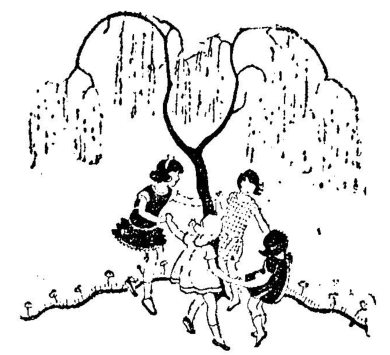
Here is an uncolored picture. Give it to your child, if he has not passed his twelfth year, and train him to color it in a variety of colors. Then cut it out and send it to us by mail at once — perhaps your child will win the prize that "The Woman's Voice" has set aside for the first winner.