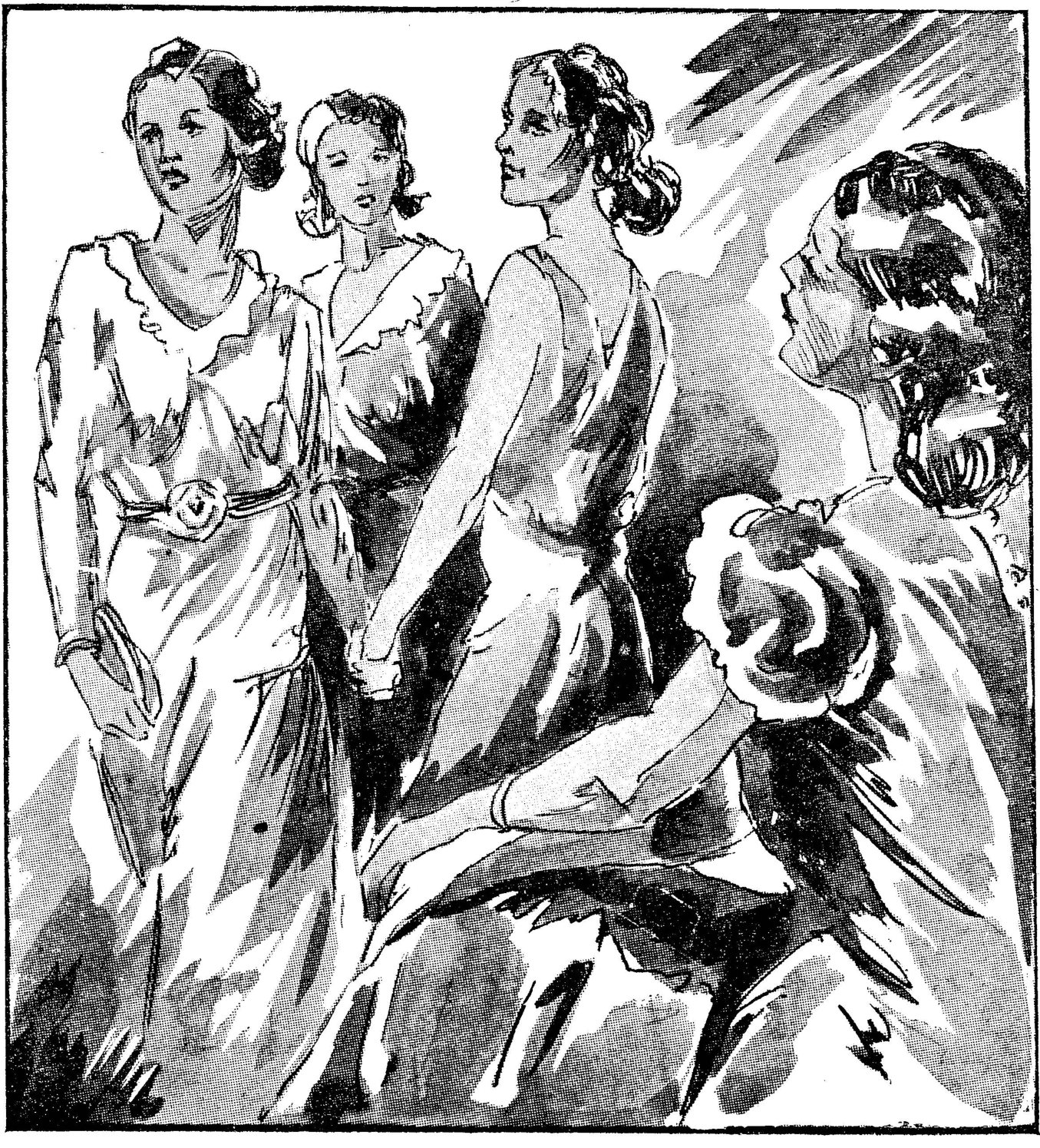
The inclination in people toward exchanging visits and invitations arose in answer to a natural instinct in them: sociability, the desire for companionship, and the love of appearance and renown. Happy is the home whose mistress is able to establish social relations, with tact and taste, with all those to whom the ties of kinship, friendship, and interest bind her.
There is no doubt that such relations, and the keeping up of them, are no easy thing to achieve in an age in which mingling among people has become general and relations have multiplied through the ease of communications and the shortness of distances. After our visits were once confined to the nearest of kin and
neighbors — we would go to them on foot, without ceremony or formality — we have today come to keep a running account for this department, with its many expenses: we go out visiting before noon and receive after it; we invite to tea in the late afternoon and are invited to dinner in the evening; we hold a gathering of good cheer between the late afternoon and dinner-time, and attend an evening party after that.
Since this state of things goes on increasing as relations among people increase; since we shall be compelled to keep pace with it, whether from interest or from personal inclination; and since, when society sanctions a thing as custom and convention, and the advanced majority follows it, there is no escape for us — the backward minority — from following it and taking it as our model, lest we remain exposed to the criticism of those who stand above us in the world of civilization.
Good manners and the arts of company show themselves most plainly in the course of a visit — and no wonder, for the art of visiting is among
the most refined of the arts of social propriety, and the most intricate of them, since its practice is no longer confined to family and friends but has extended to invitations to official banquets, social receptions, and evening parties, each of which has its rules and usages, ignorance of which is counted in this age an unpardonable crime by the scholars of "etiquette." In the measure of a lady's familiarity with these rules, and the regulations laid down for them, will be people's respect for her.
The refined lady who visits and is visited must acquire a small book, as a memorandum, in which she records the