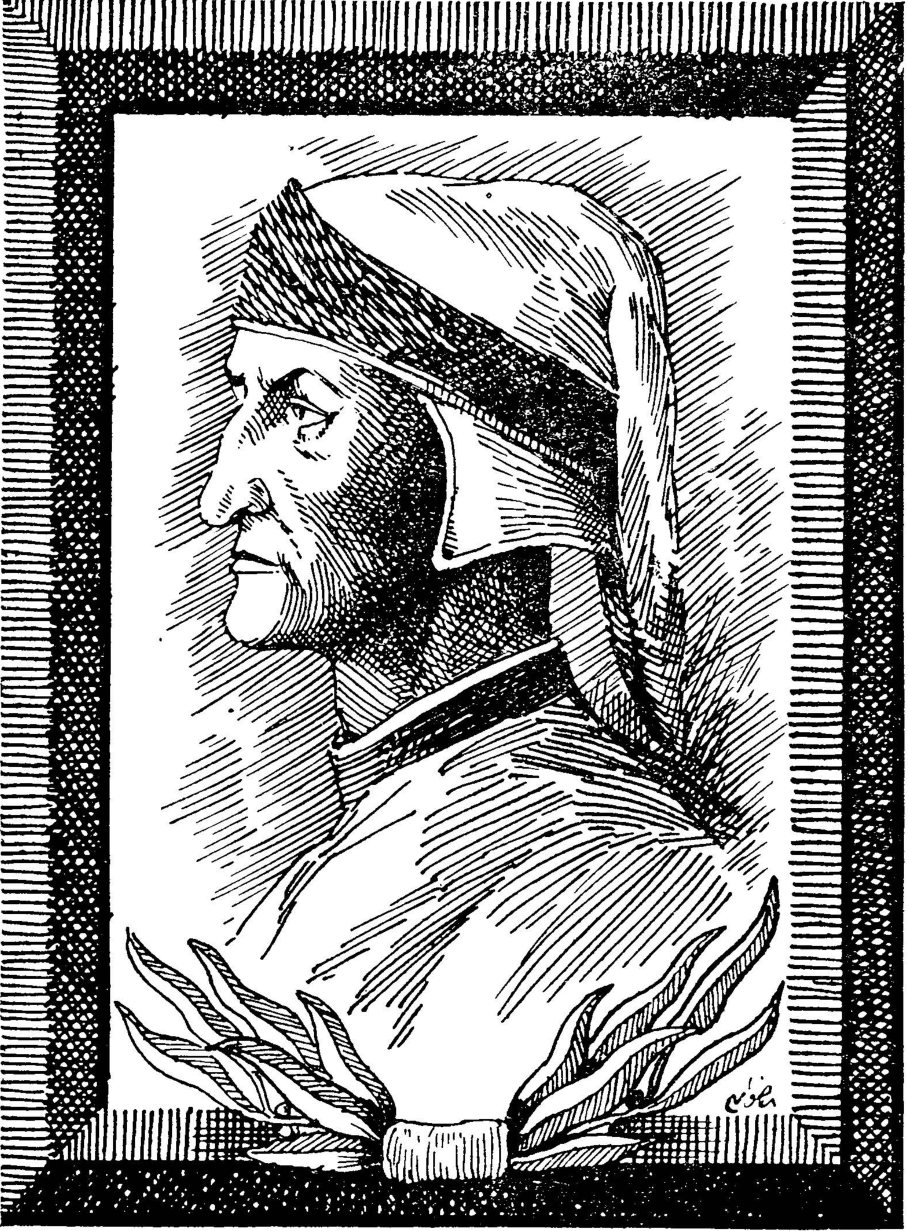
God's mercy on 'Dante' for this nobility of the letter, the like of which my eye has never fallen upon, in all that I have read so far of the literatures of the nations. I have almost finished keeping him company, for the third time, on his journey to the other world. And what a companion he is: a knight
and a man of letters, embodying in his person the noblest virtues of mind and spirit that the Middle Ages contained.
What pleased me in Dante, along with this nobility, is the truthfulness of his nature and its freedom from affectation — and this is a virtue more becoming to the man of letters than any other. We see him — he, the master of lofty Latin expression
— casting his thoughts into verse in the common speech of his countrymen: thereby he granted the word its right to develop and grow like every living being. And we see him launching forth in speech like the carrier pigeon that has no aim and no desire but to arrive where it must arrive: thereby he granted poetry its right to sit, with the other arts of speech, upon the highest of the peaks of Olympus.
Thus was the 'Divine Comedy' an immortal book among the books of creation and invention, passed from hand to hand by the living languages of the earth — except our language — and taught by the civilized nations of the earth to their children — except our nation.
And how the reader of the 'Comedy' rejoices in this unique wandering through the world of the dead, when he would have every right to be cast down! For 'Dante,' even as he
shows you sights at which the soul contracts, lets you hear words at which it expands and forgets all else. Here lies the secret of his artistic genius. And hence Dante is, of all artists, the nearest to Beethoven — he who wrests joy for you out of pain (La joie de douleur).
And how it pleases the reader of the 'Comedy' to pause at every one of its pages, to reflect, to think, and to marvel. He is not lost, nor bewildered, nor wearied, as he is when he reads that bedizened, veiled poetry at which we have arrived in this generation — a poetry whose makers, the harder they strive to flee scandal with it, come the nearer to falling into it. The horizon of poetry has been dark since the last of its stars sank below it in the past century. And what could 'Valéry' do other than what he did? Should he have nailed his feet fast against the sweeping current, when he had not been granted, like Socrates the Greek, the grace of the ancient truth??
And after all — how hard it is to speak of 'Dante' in a language in which, had he been one of its sons, he could not have written a single letter before first putting it into a condition consonant with the truthfulness of his nature and its freedom from affectation.