
2
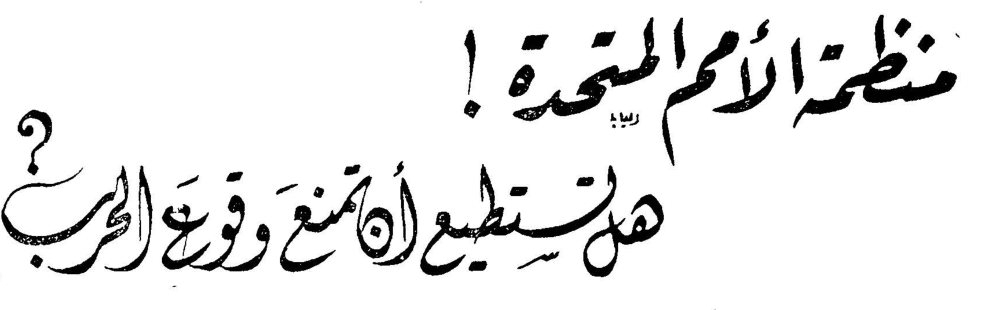
In the previous issue: The question of peace has been one of the great preoccupations of thought since the earliest ages • The views of certain philosophers and thinkers • The correct approach: seeking the cause of the disease and rooting it out • The political cause: absolute national sovereignty.
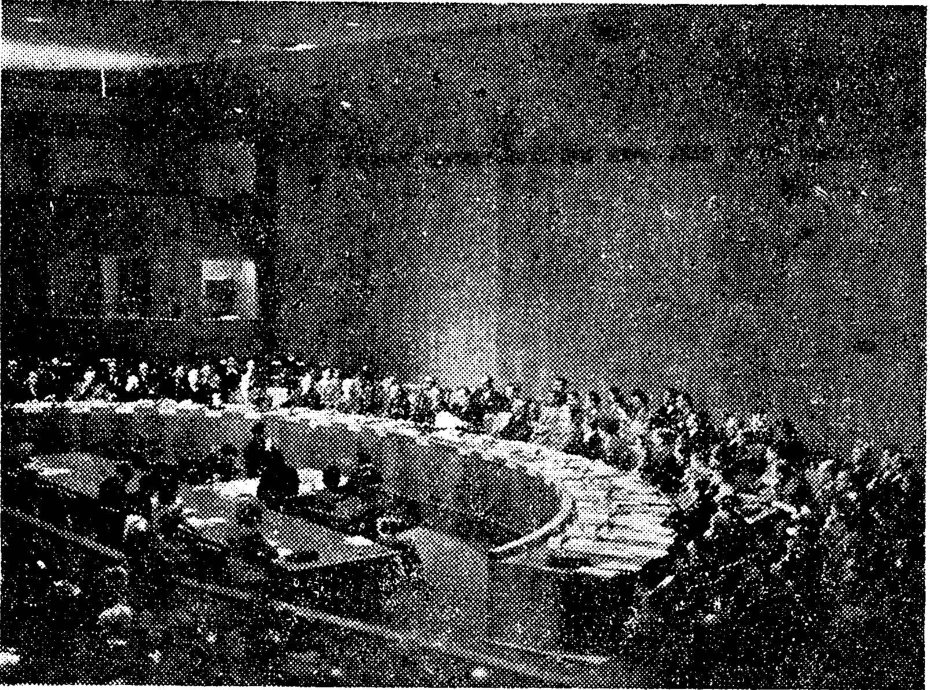
Before me lies the “Charter of the United Nations,” which, in the estimation of the fifty-two states that took part in preparing it and approved it unanimously, is sufficient to “save succeeding generations from the scourge of war.” I turn its pages and look closely at certain of its paragraphs, as though I had known it before. For these tortuous expressions, this ingenuity in slipping out of tight corners, remind me of another covenant, drawn up in similar circumstances, after a great world war, approved unanimously by the allied states, and said to “open a new chapter in the history of mankind and guarantee it welfare and peace”... the Covenant of the “League of Nations,” whose ink had scarcely dried before revolutions and wars flared up in the four corners of the inhabited world, and then the great war burst forth — the Second World War.
Truly, between the two covenants there is a strange and suspicious resemblance.
I do not mean a resemblance in form, text, and letter. Those are surface matters with which scholars of law sometimes amuse themselves, studying and scrutinizing them to death. What concerns me is to penetrate to the essence, to the intentions, to the spirit that inspired this honeyed talk after devising hidden ways of escaping from it and from the responsibilities that flow from it.
Read the first article of the Charter: it declares frankly and plainly that the aim of the organization is “to maintain international peace and security,” and it makes clear also that, to attain this end, the organization must take effective measures “for the removal of everything that might threaten the peace,” and for the punishment of “every aggression and breach of the peace, and the settlement of the disputes that might lead to the cracking of the peace.”
Such is the honeyed talk — the word “peace” occurs in it four times running in a single sentence!
As for the hidden ways — the stratagems that the cunning of politicians has devised to turn this talk to dust — here are some of them:
First — the Charter does not touch with a single word, nor hint even in the faintest way, at the most important causes disturbing peace in our present world: I mean the economic causes. The division of raw materials and the occupation of the world's commercial markets — the two gravest international questions of all — received no attention from the allied states at the San Francisco conference or at the preparatory conferences that paved the way for it. The truth is that these states preferred silence and connivance, and evaded raising these thorny questions. And so the dispute remained, at bottom, what it had been before this war and before the San Francisco conference. There are still two camps of states in the world: states monopolizing the riches of the earth, and states deprived of them.
Second — the foundations on which the United Nations organization was built are not “world” foundations in the full sense of the word. The united nations are in reality the front of the victorious states, the states that prevailed over Germany and her ally. Whether the defeated states join the United Nations organization in the future or do not join it, their future position will change nothing in the essence of things. The organization will carry its “original sin” to the end. The order it was created to uphold and foster is a partisan order, willed by one camp to the exclusion of the other. Add to this that relations between the victorious states and the vanquished states are defined and decided outside the organization, at the peace conferences and in the great capitals, and the United Nations has no say in them. Tomorrow the peace treaties will be a heavy burden on the organization's shoulders — a wearying, crushing burden beneath which strength and resolve will give way...
Third — the Charter created no neutral body to adjudicate disputes. The members of the organization are the representatives of states with conflicting interests, who stir not a finger nor utter a syllable except at the prompting of their governments. It is not permissible, this being so, to regard the United Nations organization as a supreme court of justice, since its judges enjoy no independence whatever, and very often the judges in it are the litigants themselves...