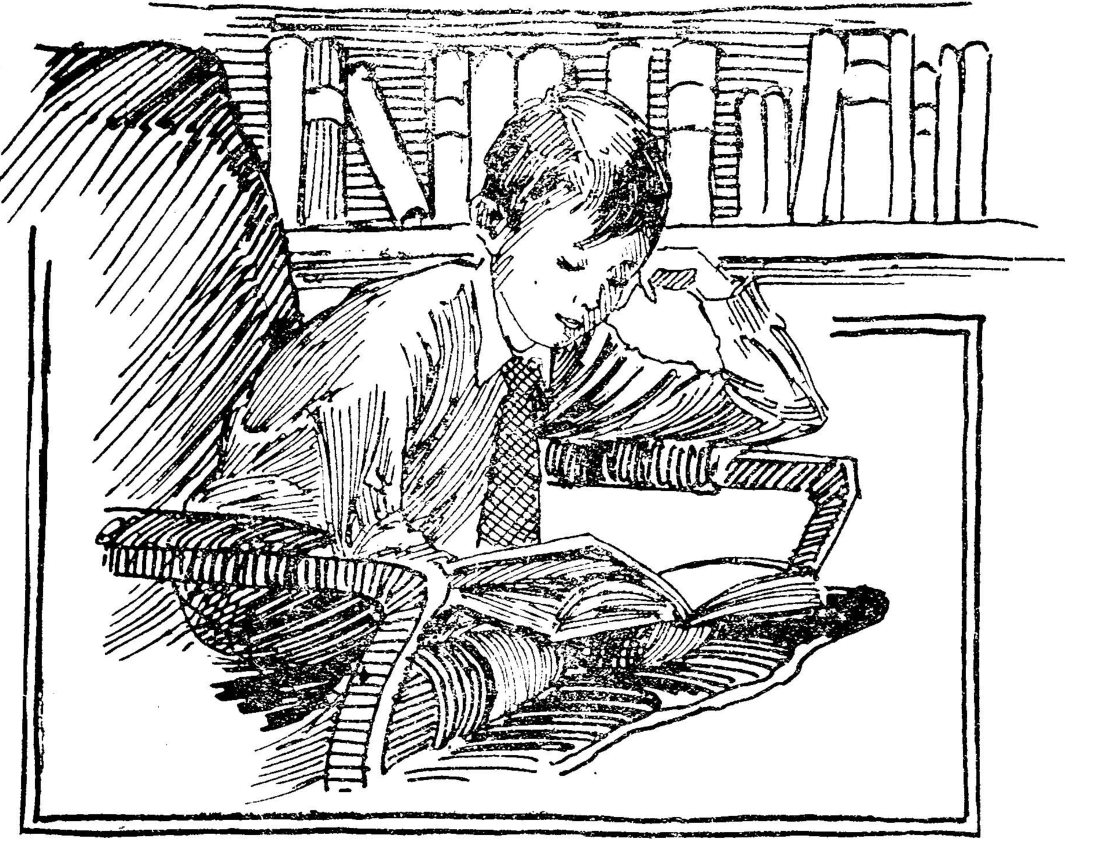
When he sees this title, it occurs to the reader that we must have prepared a library for someone other than the child! In truth, we have not yet prepared the ideal library — not for the child and not for anyone else. For a library is not a human library unless it opens itself to every book of value in any of the languages of the earth. But we wish now to confine the question to the child's library!
What have we written for our children in Arabic? Nothing! Despite the mighty attempts undertaken by Kamil Kilani, which produced a collection of books running to more than fifty volumes, containing a bouquet of "titles" — and sometimes more than titles — of the loveliest stories and legends of the world. Yet in point of language and manner of expression they are not within the child's reach, nor even within the youth's. I am ashamed to say that they are not within any human being's reach. There is in them such affectation of expression, and such stubbornness in "digging up" far-fetched, ponderous words, as buries the story and makes it a source of tedium to anyone at all! Kamil Kilani's case with children was like that of the bird that invited the fox to a feast which it poured into a vessel with a long, narrow neck, so that the "guest" could not even tell what sort of food it was!
As proof of what I say, here for the reader are portions of the preface to one of those stories. He wrote: "And she kept pressing me to finish it, and reproaching me for this tardiness, supposing that I had deliberately set out to vex you"... until he says: "As for you, this delicious mental nourishment pleased you, and you found it
savory!.. and I do not blame you for your importunity and your haste," and so on...
I say this in the full certainty that the subjects Kamil Kilani chose for his stories, and the effort he expended for the sake of children, had they been joined to a complete grasp of the child's mentality and his linguistic capacity, would have filled a gap in the child's intellectual life of which we have long complained.
Our child has no intellectual or spiritual nourishment, and our child has no constructive pastime.
There is nothing like stories, and sweet, artless literature, to nourish children's minds. The Lebanese Women's League, upon its founding, gave thought to this side of things and established a competition for children in which more than forty Arab writers, men and women, took part; I had the honor of serving as judge of its outcome. We read everything submitted and found no ideal story
for the child, despite the felicitous attempts the competing stories contained. Here is proof that the subject has not yet formed traditions among us — whereas in the Western child's library we find, in delightful, attractive stories alone, what teaches him the elements of science, geography, the arts, and history, what refines his spirit and his mind, and makes of his leisure a positive development, wholly guided. Nor is the matter difficult for us, now that the thinkers of the West and its leaders in education have penetrated the secrets of the child's pleasure and created for him stories carrying every element of fascination. A child is a child everywhere; all that remains for us is to devote a special effort to translating that rich library, giving it something of a local coloring, always keeping to a language that can be considered a sound instrument for conveying to
the child what we wish to convey, without disfiguring his knowledge of his tongue. The Arabic language has flexibility and powers of assimilation enough to guarantee this, and more. I am not thereby arguing against original writing for the child; but I find the need to nourish him so pressing that we must begin with what is nearest and easiest, until there arises among us that great self-made master who can carry the truths of goodness, truth, and beauty into the heart of the child.