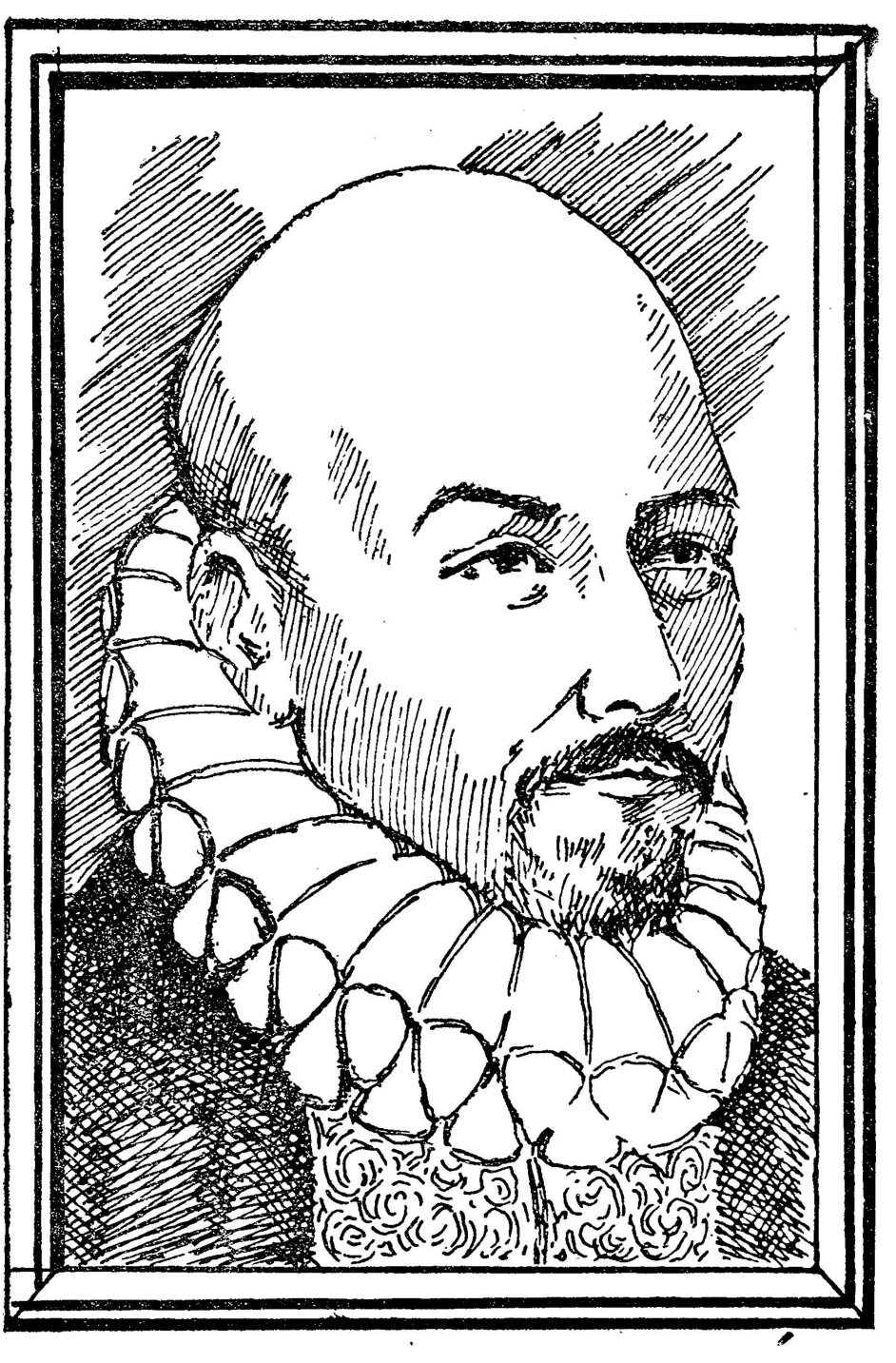
Among the men of letters and thought whom it has been given me to know, I have known none stranger than Montaigne. Nietzsche may be strange, and strange in this fashion, too, may be such men as Kierkegaard and Dostoevsky; but Montaigne, in my view, is the strangest of them all.
He lived fifty-nine years (1533–1592), most of them spent as a soldier and a magistrate. In 1568 his father died, leaving him his title and his broad estates; whereupon he withdrew from office and settled into his manor—which was like one of those ancient fortresses familiar to the Middle Ages—and wrote in bold letters over the front of the door: "On the eve of the first day of March in the year 1571, at the age of thirty-eight, Michel de Montaigne, sound in mind, spirit, and body, gives himself over to the care of the virgins of wisdom, to spend in their company, tranquil and content, whatever remains to him of life, now that the servitude of the courts and of public office has worn him out."
And so Montaigne bent over reading and writing for some twenty years, and behold, he absorbed the most important legacy of mind and spirit that civilization has left behind. And behold, he added to that legacy, besides, three massive volumes of essays treating every subject that can occur to a penetrating mind.
Montaigne claimed that he was not composing books—he was as ignorant as could be of the arts of composition. Rather, so he maintained, he was portraying himself in letters;
and should it be fated that an eye fall upon them, then let that eye be indulgent and long-suffering, treating him with gentleness and mildness, seeing how little importance he had as a man who lived, and whose whole concern in living was to seek knowledge and search for truth. Yet in these three volumes he portrayed everything except himself, and left his readers perplexed about him, knowing nothing certain of him except his uncertainty. For he was—God rest his
soul—the master of all who have doubted the possibility of apprehending the truth and reaching its essence; and he held that the eternal question, "What do I know?", would forever drive man to stand before the ultimate problems in the attitude of suspended judgment and philosophic doubt.
But the strangeness of Montaigne does not lie within the narrow bounds of what we have mentioned; it lies in the limits he drew for word and for deed. In word, he drew
the limits of release from all limits, letting his pen run across the page in letters that expressed freely everything that passed through his head. In deed, however—the very opposite of his practice in word—he drew the limits of adherence to all limits: and behold, he rose above the rest of men by his embrace of life, merry and believing; he contemplated it and made it the subject of his thinking; from it alone he profited in forming opinion and drawing lessons; and by its help he learned how to form himself. And life rewarded him for this with the fullest continuance in life...
And so it came about that word and deed became, in Montaigne, truly one, and he was able to realize his humanity with all the existential significance that this expression carries. Thus he won the honor of sitting at the table of the existential thinkers since Socrates. And had he believed in Christianity as belief ought to be, he would have shared with Kierkegaard, three centuries after him, the leadership of that virtuous, creative company.
Shakespeare came under his influence, as did geniuses of thought of whom it is enough for me to mention Descartes and Nietzsche. And when I read Montaigne, I feel that I am not reading him—I am reading with him. And the subject we read together is this gentle life, which cares for us with the care of a tender mother.
October 9, 1946