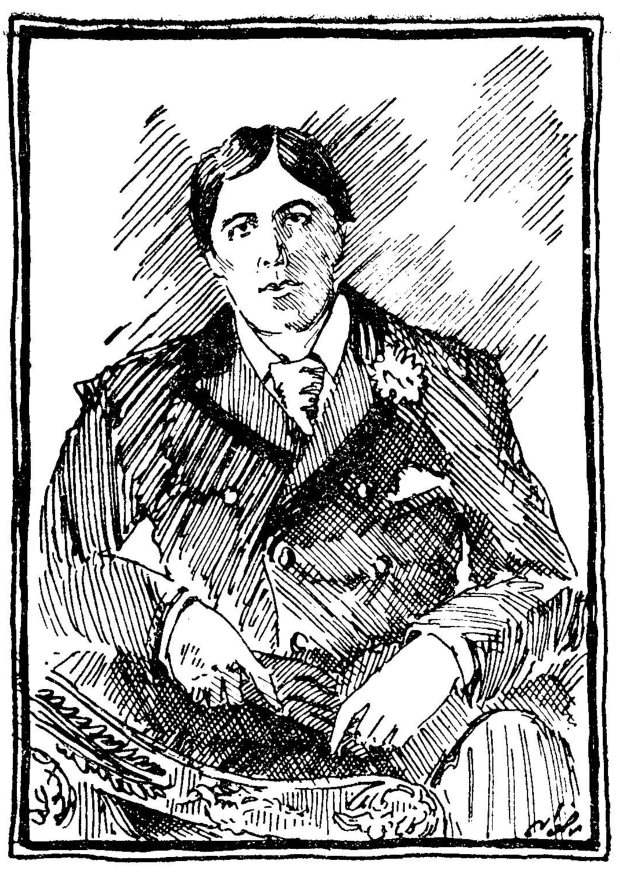
In the year 1887, Oscar Wilde found himself in difficult financial straits. For the demand for the books he composed, the articles he penned, and the verse he wrote had vanished, or nearly so.
Fortune chose to smile on Wilde this time as well: behold, Sir Wemyss, the director of one of the great English publishing houses, came to him with a proposal—and what a proposal! Wilde regarded it with astonishment and wonder and replied: "I, the editor of a women's magazine? I know nothing about editing except that editors do not see what I see!" Sir Wemyss answered him: "No matter! That inexperience of yours is a fine advantage in my eyes, for it will help you to be original..."
And so Oscar Wilde, the celebrated libertine man of letters, became editor-in-chief of "The Woman's World." The weekly pay offered him was six pounds—a paltry sum which the lowliest of editors today would disdain to accept. Yet Wilde was greatly pleased with this pay, for six pounds a week, in his eyes, was better than nothing. And why not, since it would at least cover
his smoking expenses and the price of the flowers with which he was so fond of adorning his breast. It would likewise afford him the chance to feel himself sitting in judgment on the literary output of others—he who had so long suffered the injustice of the verdicts editors passed upon him, accompanied by "returned with thanks..."
When the journalists of London learned that Wilde was to take over the editorship of "The Woman's World," they showed their astonishment and commented on the news with a questioning not devoid of encouragement. The "Pall Mall" magazine, which was always eager to solve complicated problems, stated that the reason for choosing Oscar Wilde for this delicate position was Sir Wemyss's desire to treat his readers to something amusing.
The official announcement issued by the publishing house said: "The magazine 'The Woman's World' is a free platform from which ladies of the highest culture may express their views." The editor-in-chief, Wilde, tried to obtain editorial assistance from Sarah Bernhardt, the famous French actress, but did not succeed. He obtained, however, the assistance of other ladies of the aristocratic class, and of princesses, who hastened with pleasure to write engaging articles on all manner of useful women's subjects. Titles so beguiled Oscar Wilde that he would accept articles, faults and all, provided their author was a princess or a noblewoman. And so the magazine's fame spread far
and wide during the first year of its life.
But this wide fame did not keep the magazine from slipping backward. The number of copies sold grew smaller month by month, and the mails were crowded with the magazine "returned with thanks..." And if Wilde met this phenomenon with indifference, its owner could not afford to take the same attitude. He would grumble before Wilde and ask him the reason. It occurred to Wilde to answer him once, and he said: "I do not know the reason, Mr. Wemyss, but I assure you that the magazine enjoys the favor of the noble ladies of the aristocracy, and it is to be found, so far as I know, in the waiting room of every dentist in the country!" Wemyss cried: "Yes! But that does not help us much. The magazine is losing money—so what do you suggest I do?..."
"The matter is simple," Wilde answered. "Sell a larger number of copies..."
And so the magazine's poor owner surrendered his magazine to fate. Had he probed a little deeper, he would have found the true cause of the failure. It was that he had erred in choosing Wilde—that rebellious bohemian artist whose nature it was never to settle down. He soon flags and grows bored. And he flagged at the magazine and grew bored with it in the course of the second year after its founding. Whereas he began his work by coming to his office two hours a day, three days a week, he ended by coming one hour every two days.
And so it was that the magazine "The Woman's World" vanished from its readers in 1890, at only three years of age—years it had spent in the hands of perhaps the greatest reckless rebel the history of literature has ever known.
(From the magazine the Wilde Review, adapted)