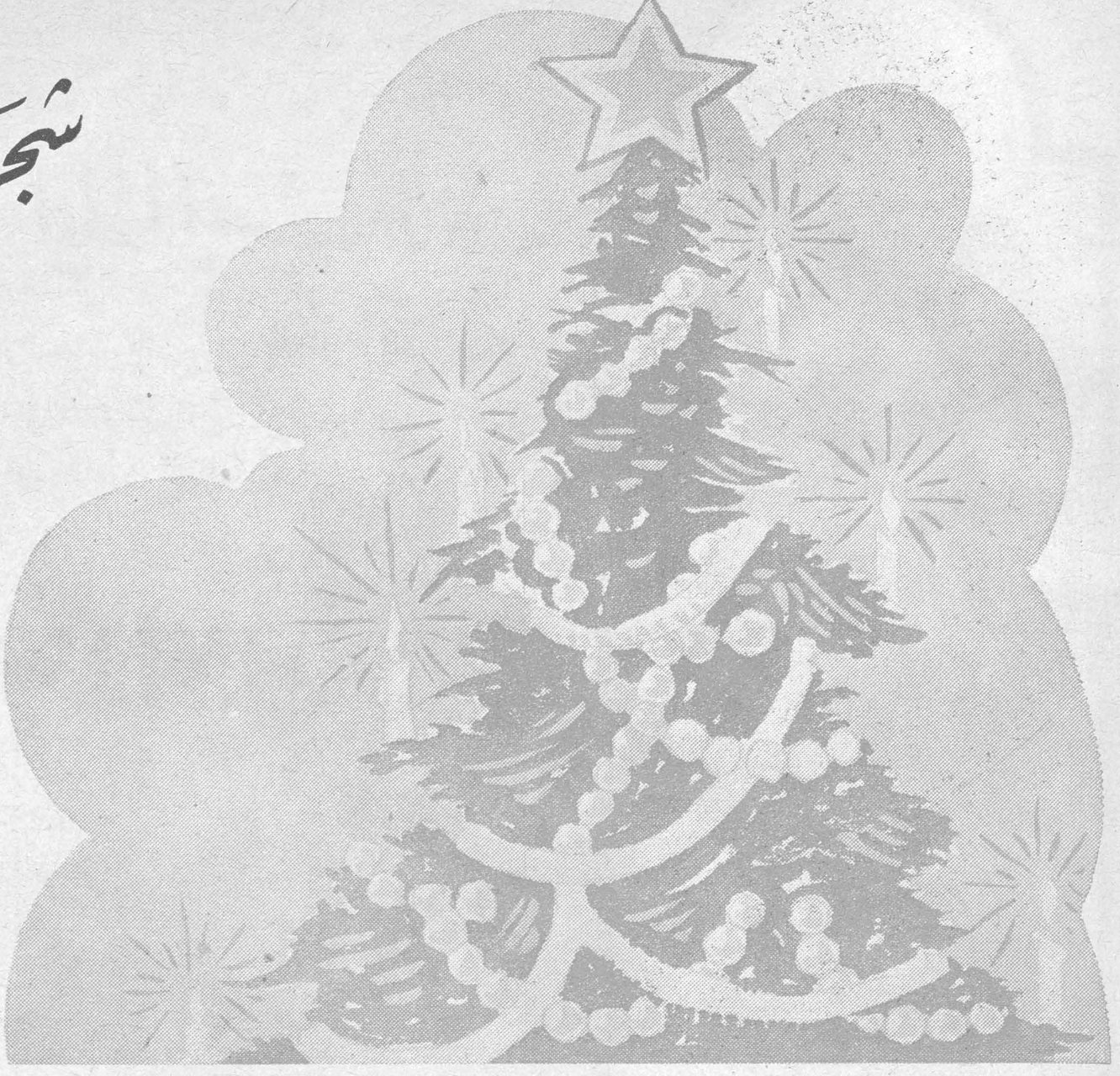

The Christmas tree is an old custom, said to have spread through the Christian countries from Germany and the Scandinavian lands in particular.
It most probably takes the place of the log that used to be burned and kept blazing all night long; this log was called the "Noël" log.
The Christmas tree is a small
green tree of pine or fir, on which are hung sweets and dolls for the children, the women, the servants, and the visitors.
Papa Noël is pictured with a long white beard and a hooded coat covered with snow, coming in by the chimney, where the children's little shoes are set out; in them he places the gifts he
brings them — that is, if these children are among the obedient and well-behaved; while Father Fouettard (the bearer of whips) accompanies him and plays a role parallel to his, namely requiting the disobedient, unruly children for their misdeeds.
Most people believe that the origin of this holiday tree was taken from the Protestant denomination and that this custom is peculiar to it, just as Catholicism has made its own the crèche, the symbol of the feast. But it is a mistaken belief. For this holiday tree has been mentioned in German tales since the Middle Ages — that is, before the appearance of Protestantism — and the proof of it is that Luther, in one of his letters to his son, described to him the feelings that stirred within him, when he was a child, on standing for the first time before a Christmas tree.
In a work composed by Father Kamil in 1862 we read: "This tree was a symbol of the tree of Paradise, which Christ restored to