In the previous issue of “The Woman's Voice” we reported the news of the arrival in Beirut of the literary lady Mrs. Salwa Dimashqiyah al-Said, from London, where she had been with her worthy husband Mr. Fouad al-Said, one of the staff of the Arab Office. She kindly granted our correspondent this delightful interview, which the reader will
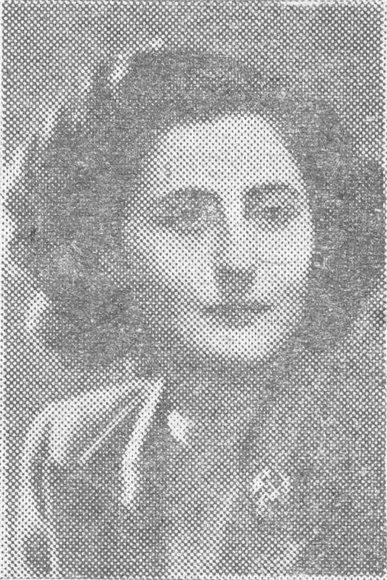
find below:
The interview took place at the home of her worthy father, Badr Bey Dimashqiyah. Present were her mother, the great woman of letters Mrs. Julia Dimashqiyah, proprietor of the now-discontinued magazine “The New Woman,” who opened before women's journalism in the Arab world the road of conquest and creation, and her sister
Mrs. Samia, wife of the notable Zuhdi Bey Abu al-Hasan, who is likewise at work in the field of the women's renaissance in Palestine.
The conversation ranged over various subjects. It took up the weather in London — that gloomy weather full of factory smoke and nature's fog. Mrs. Salwa said: “The moment my feet touched the British Isle I nearly suffocated. My soul whispered to me to return quickly to my own country, where the weather is clear and lovely, where the sun shines from the east until it sets, and where nature is gentle and temperate, neither oppressive with heat nor extravagant with harsh cold. But after some weeks I began to get used to it; I grew familiar with it and came to love it. There is no doubt that the harshness of the weather there has a great effect on the character of the inhabitants, just as the greatest credit for their health goes back to it. For cold reduces germs — how much more when it is joined to the cleanliness and the sanitary methods which the English have perfected in their country to a very high degree.”
Then our talk moved on to the English character — that character marked by self-control, obedience to the law, respect for the other person, adherence to freedom of opinion, welcome for fair and bold criticism, attachment to truthfulness and simplicity, and a holding fast to the old as one manifestation of national continuity. This character is reflected in all the doings of the English, so that they stand in the front rank of nations for firmness and steadfastness, unshaken by the vicissitudes of fortune and the turns of time that shake others.
Mrs. Salwa's admiration for the English character was very great indeed: it is not right that we should
deny the English their due, in spite of the political quarrels that stand between us Arabs and them. As for the English family, that is another matter worthy of attention. When I asked her to describe this family to me, she answered: “It is said that the war has done the English family grave harm on the moral side. The girls have revolted, to some extent, against the conventions upon which English society had settled. Today they overindulge in drink and smoking, and take a less than serious view of moral principles. This is to be regretted. The subject was even raised once in the House of Commons; the press joined in treating it, and a heated debate arose around it to which the responsible authorities still give much attention. In any case, the family in Britain is respected, though the family bond is weaker than it is with us; it is not all-embracing, as it is in our country, except in the aristocratic families. Family attachment in general does not go beyond the bounds of father, mother, and children.”
After that, Mrs. Salwa had a long talk about living and its standard. The black market exists only in the cities, and recourse to it is comparatively slight, mostly on the part of foreigners, and of the Jews in particular. The people there grumble at the severity of rationing. It is the women who buy the family's needs in the markets. Rationing has almost wiped out the difference between the classes: rich and poor are alike. It is rare to find a rich man buying from the black market anything beyond what falls to him under the ration.
I kept hurrying the conversation along so that we might reach fashions — and fashions are a subject dear to women's hearts in every age and every land. She told me: “Dress in Britain is simple. Rationing curbs a woman's extravagance in it. Still, for all its simplicity it is pretty and clean. The ladies wear the tailleur a great deal. What astonished me was the woman's confidence in herself: she does not trouble about what she wears, however high her social position. I remember visiting a family of the very highest class, and the lady received me in patched stockings that no maid in Lebanon could be seen wearing.”
Before our talk came to an end, I wanted to ask Mrs. Salwa how the English look upon the Arabs and their causes. She said: “The majority there are ignorant of Arab affairs and ignorant of the truth about the Arab world. But their knowledge is growing, thanks to the activity displayed by the Arab Office and the Arab legations, and thanks to the visits some men of the army paid to the Arab countries during the war. Those of them who were in Palestine detest the Zionists heartily; as for those who were in Lebanon, they love it exceedingly and long to return to it, to enjoy its beauty, its sweetness, and its charm.”
And here the interview had to end. It had run on a long while without my noticing. And who, pray, would notice, in a lovely interview like this one, with all the charm, sweetness, and grace of its talk, and with great women of letters present who have rendered abundant service to the renaissance of the Arab woman?