Woman surpasses man in her love of the beauty of nature under the clear blue sky, amid the chirping of sparrows, beside the rippling brooks and on banks crowned with jasmine, Arabian jasmine, and sweet basil, sighing with breaths of myrrh and incense. Woman's senses blaze with longing for beauty in its loftiest manifestations, and yearn for a refreshing intoxication in greenery and fragrance, water and air.
Woman is distinguished from man by the blessed gift of her imagination: she dreams of the ideal, picturing it even if it be impossible, and she does not like man's face to reflect the truth of things to her eye.
Is this, then, what keeps some women from rebelling against the veil and embracing unveiling — or is it the lure of suspense?
Woman tires more readily and rests more slowly than man, yet it is often easier for her to walk the straight and narrow path.
She has more modesty than man, and her translucent modesty is the loveliest envelope for the kernel of femininity; so it falls to man to fill the void of bashfulness with honor and respect.
The forces of disgust and hatred are stronger in her than in man — let man beware of provoking her. She has a stronger desire to pierce the veils of the unknown, so it is no wonder if she wishes to know every stray detail about the neighbor, the fashions, and the rest. And she is less negligent than man of the simple, important matters, such as care for the cleanliness of teeth, body, and dress. But if she neglects them, she scatters the beads of the family's necklace, and therefore it has been said:
"When the girl marries, she loses a sweetheart."
She is sweeter of temper than man and richer in mental harmony, and these two gifts are precious — let her tend their growth.
It is rare for her to be malicious or fickle, and rarer than rare to see her mocking or sarcastic; while man is more inclined than she to deceit and to sensual license, and more covetous of what belongs to others.
But she is more tender toward
the children than their father, more inclined to piety and prayer, less concerned with politics, and more swayed by her own private inclinations and opinions. Her hold on the affairs of the hour is weaker; she is more timid than man in many situations, and more submissive to the customs of her surroundings. It is well known that she is the slave of fashion. She surpasses man in her manual dexterity, but she can seldom keep pace with him in mathematics, letters, and poetry.
Wishing occupies a higher place in the heart of woman than in man, and by it she solves, or tries to solve, her problems.
And though the two agree, each in asserting an independent individual personality, they differ in direction: woman likes onlookers to consider her beautiful and attractive, a delight to the eyes and a desire to hearts, while man wishes to be counted the knight of the field, the first on his track, the man of the hour, the hero who accomplishes his works and achieves his hopes. Yet she is keener in resolve than man and more enduring of calamities and pains. By virtue of her vital function she surpasses man in her
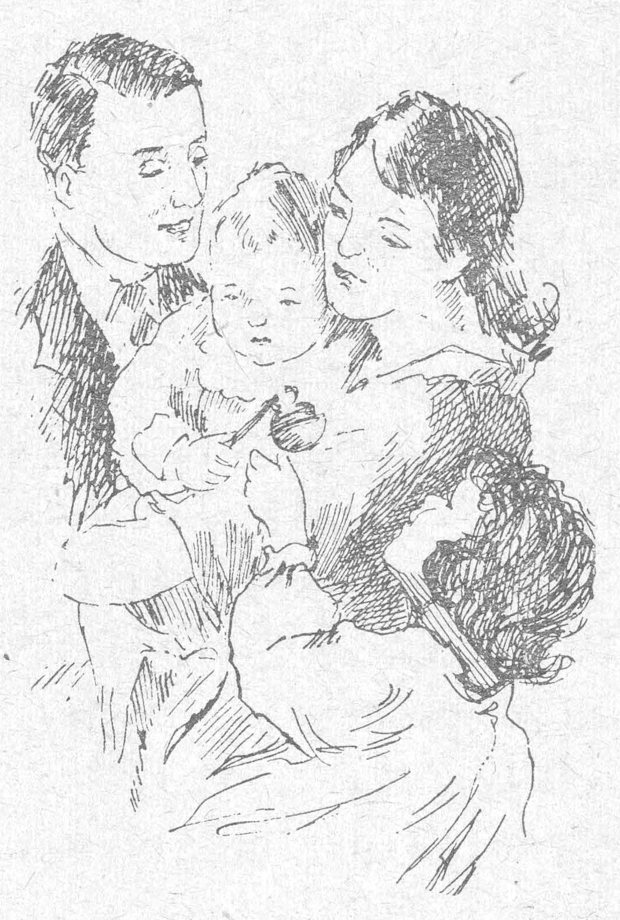
concern for living beings before things, and so she tends husband and children. She sees further into matters and grasps them better than man, for she understands every human soul that has any connection with her. This nature has withheld from man, and therefore it has been said:
"The man who understands woman has not yet been born of his mother."
She is more capable than man of living for others. And she has a particular desire to feed her husband's illusions about her and to add to his fancies. However man may wrap his selfishness in a film of apparent sacrifice, woman's understanding pierces it at once, as the mysterious rays pierce the flesh and skin of the sick.
Nature has done well in imposing on each of the two sexes particular duties for the good of mankind and its continuance. He errs scandalously who claims that one of the sexes is superior in mind or character to the other. Each of them has its sacred natural duty, which is necessary for survival; so let them cooperate closely, and let each be left its own direction and its own way of handling affairs. Let the differences between them be melted in the crucible of happiness, as sweet voices, for all their difference, blend in the anthem of the choir.
The family is an experiment that must succeed, for the pieces of our hearts and the fragments of our souls watch for the family's success or its fall. Wine, gambling, gossip, rancor, hypocrisy, and passions run loose down the slopes of suspicion and accusation, and their like, are wrecking picks aimed at family and nation alike.
So let us kneel, women and men, before the altar of pure love and sacrifice; let us cast into the blaze of the fire our selfishness, our pride, and all our ugly habits; let us bring paradise down into our world, so that love of beauty may fill our eyes and love of fellowship our breasts, so that tenderness may hover over our children and care over our better half. Then we shall reach our goal, which is to live on earth in bliss — for who can guarantee to himself or to another the bliss of heaven?!