
The Woman's Voice has resolved, as it carries out its mission of women's enlightenment, in Lebanon in particular and in the Arab countries in general, to keep in touch with the women's social movements — carrying the fruits of this good work and the efforts of these noble women to their sisters everywhere. What follows is a series of interviews given to the representative of The Woman's Voice, Ustad Musa Sulayman, by a distinguished company of those who have contributed, and still contribute, in the women's social field: Mrs. Iqbal Hashem Zawq, Alawiyya Zawq Shawqi, and Hortense Boulos Tamer:
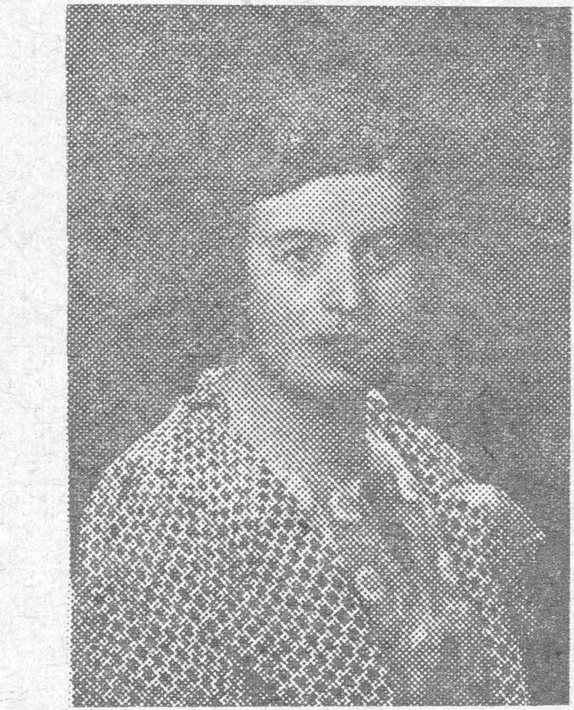
Mrs. Iqbal Hashem Zawq
President and founder of the Women's Charitable Society of Tripoli — delegate of the Lebanese Red Cross, and holder of the honorary Lebanese Order of Merit since 1942: She told me — she said:
I have accompanied the women's movement in Tripoli for twenty-five years, and I spent my efforts spreading the call to encourage the daughters of my sex, together with a small band of my Tripolitan sisters, in the days when a woman in our circles was not permitted to raise her voice. I was encouraged in this by the free home atmosphere in which I lived.
I founded this society twenty-five years ago, and it is the oldest women's society in Tripoli. Its essential aim was, and still is, to assist the respectable poor families with whom a great city
like Tripoli teems. It pleases me to mention that the number of members of this society has grown steadily year after year, until this year it has reached about one hundred and sixty members. Among them I may name the administrative committee: Mrs. Iqbal Zawq, Habiba Zayni, Fatima al-Namli, Mamdouha al-Mulla, Muna al-Mulla, Samiha al-Nu'mi, Asma al-Sibai, Nadia Minqara, and Najla Maatouq Haddad. All these ladies, with many others besides, belong to the most honorable families of Tripoli, and they came down into the field of work of their own accord when they felt that society stood in need of their useful and fruitful labor. The truth is that their efforts have ripened and borne fruit in the founding of a shelter that today houses ten girls, educating, feeding, and clothing them free of charge — and we have great hope that we shall be able to accept twenty girls in the very near future.
And where do you get the money, Madam? Whoever strives is not disappointed. We hold literary lectures and theatrical performances, the members pay annual subscriptions, and certain donations come to us from people of living conscience and great soul. I was able to persuade Ustad Saadi al-Munla, head of the previous government, to assist us with the sum of five thousand Lebanese liras from the poor man's piaster fund. We are also expecting effective assistance from the Islamic
waqfs of the town. Nor shall I forget the visit of Her Ladyship the First Lady of Lebanon to Tripoli with a large company of our ladies, and her donation of a thousand Lebanese liras and a hundred wool sweaters...
I understood from the lady speaking to me, moreover, that she works alongside another company of Tripoli's finest ladies in the Lebanese Red Cross — she is the society's delegate there.
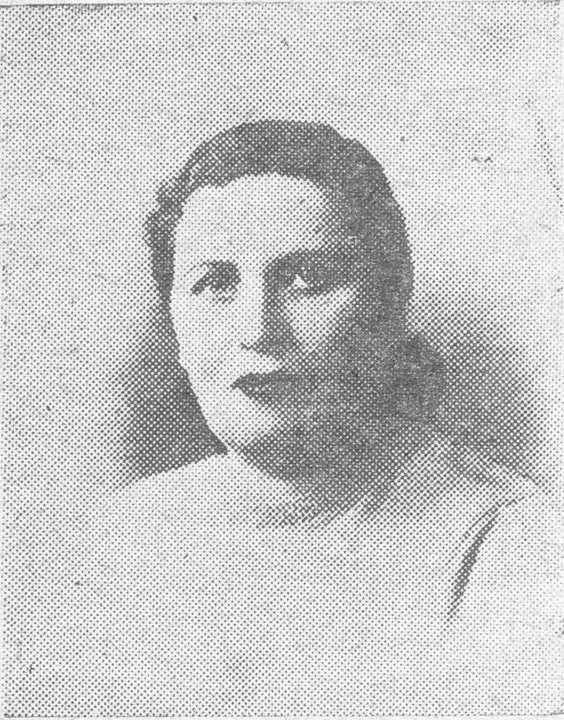
Mrs. Alawiyya Zawq Shawqi
Now, since I had come to al-Fayha to acquaint myself with the women's movement, I had no right to leave it without making the acquaintance of the leaders of this renaissance one by one, foremost among them Mrs. Alawiyya Zawq Shawqi, president of the Children's Welfare Society and the one with the longest hand in founding the first kindergarten in the city of Tripoli. I visited her, and she welcomed me, saying: Welcome to The Woman's Voice, which goes seeking its news from the sources — an effort for which we thank you. The women of Tripoli stand ready to do their part toward raising the voice of the Arab woman to the whole world.
Then she began to read out to me, and to the assembled company, passages taken from the society's statements and registers. She said: I felt, and a large