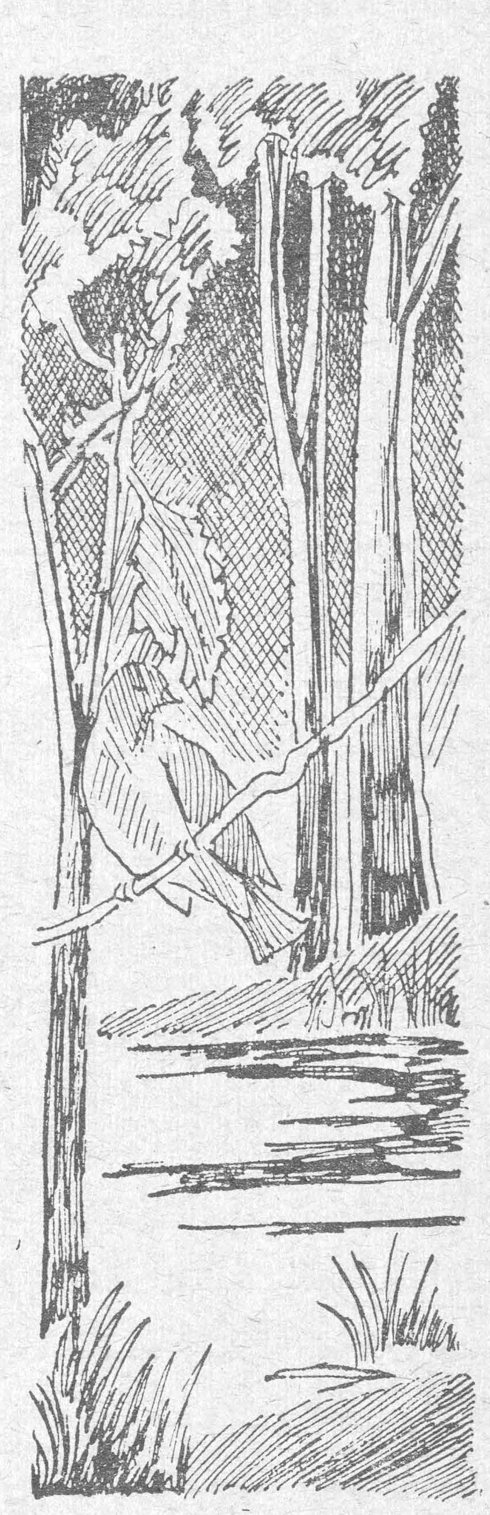
You crouch upon the dewy branch, above the fragrant flowers
As though upon a platform from which you give the testimony of love
You recite it chanting, in tones sweeter than the whisperings of the lyre
O priest of the branches!
What beloved did you serve faithfully, whose promise to you was betrayed?
What wayward hen-sparrow failed to keep your covenant?
What dread calamity has struck terror into you?
O teacher of love! Sing this thing that is in your heart! Nay, sing the message for which you were created!
Say that it is pain that made of you an artist
Sing out, O monk of the night!
Sing out — the birds nest gently, reverently, among the branches, following your story
Sing out — the leaves are athirst with your melodies
And the silent moon, he too listens to your pains; perhaps he too suffers a tragedy like yours
And so the gentle violet! She sends up fragrant, sorrowing breaths, weeping for your fate
As for the virgin jasmine, her tender blossoms have fallen from the force of her passion, and kneel upon the ground, asking patience and solace for you
And the glowing, haughty rose! For the first time she has bowed to the tragedy of hearts, fearing lest her strong thorn be broken
And the worshipping lily! She shows pale in the moonlight, wishing to halt her life to listen to your prayer, like a candle burning in a temple of worship
But, O priest of the branches! Can you not tell me where your sighs come to their end?
And does it not grieve you that this beauty that surrounds you has not the grace of immortality?
What purpose, then, is there in these images and feelings?
And what purpose in the surging of life through plant and beast?
O nightingale! Why do you not answer my question, but go on with your anthem, with this field of beauty's colors around you?
Answer me: what is the purpose? And whither the end?
Long now have I stood at the thresholds of your sanctuary, and your anthem has made me drunk in this flood of translucent silver
What, then, is your answer, which I await? Or is it perhaps my ignorance that leaves me no room to comprehend your answer?
For it seems to me that you believe that this state we are in is, in itself, a purpose
But it is not the end
And then I shall ask you: how can these outbreakings of the force of life be purposes, when they have not reached their end?
And I fancy you would answer that that end is an embrace and a gathering-together of these outbreakings which have fulfilled their purposes
And that continuance is the means of their fulfillment
While the rays and the shadows, the changes and the trials, the oneness and the interworking, are attributes inseparable from this purpose that leads to that end
But O poet of the meadow! Did you truly say this, or is it man's thought — an attribute all his own — that makes you utter such suppositions and theories?
God knows you are innocent of all this; all there is to it is that you sing this thing we do not understand, yet love and delight in
So sing out, O monk of the branches! Perhaps it is your good fortune that the welling-up of life in you is free of thought —
This thought which stirs our perplexity and our unrest, yet is powerless to bring us to the great truth
Because it is a part of this great truth, and one of the attributes of life