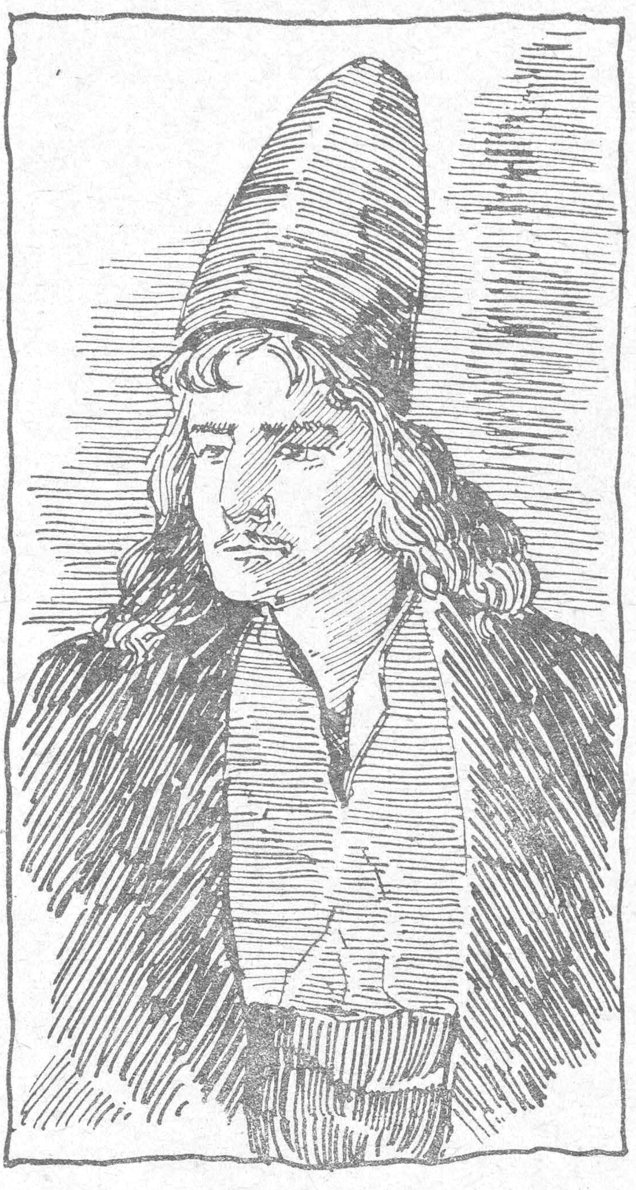
of goat's hair; and blue trousers of heavy weave, with a kaftan brocaded in threads of colored wool. Then I was astonished by the man's Lebanese mountain accent, mingled with a jargon I could not tell whether it was Syriac or Aramaic, for all my slight acquaintance with those tongues. I fell to contemplating the appearance of this strange person, and in his face, brimming with health and vigor, there showed the marks of nobility and daring. I judged his age at between twenty and twenty-five, with all the strength and impetuosity of that age. The note of complaint never left his voice as he repeated what he had said to me before: “What is the matter with you, that you will not believe? I am from the village of Baakoura, in the district of Kesrouan. I am from the very heart of Lebanon. I risked my life in coming to you to seek reform for my town. What is the matter with you, that you will not understand?”
I confessed to him that I had never heard that name before, but that I was ready to offer him every help within my power — what was the reform he sought?
He said: “The first thing I ask of you is to approach the government, or the societies concerned, to send a mission to study the conditions of Baakoura, even against the will of its people. I myself have failed in my endeavor, and found no one who did not meet my appeal with a shrug of the shoulders and words of pity and disdain... We are all but perishing, good people! Our town is the town of the living dead — the town of old men who do not die; and that is what made your young men mock my words and think me touched. We have nothing but a fine climate and long life. No stranger enters our village, because of the ruggedness of the path and the hostility of Sheikh Nimrod, and none of us leaves it, for we have inherited a shrinking into ourselves until our isolation has become a law we do not transgress and would not exchange for anything else. Except me — I have risen against the will of Sheikh Nimrod.”
I asked him: “And who is this Sheikh Nimrod?”
He said: “He is Nimrod the Nestorian, the grandfather of our family's grandfather, absolute
ruler in things religious and civil, who holds sway over our destinies, our wills, and our souls. If he knew that I had left my village to seek help, he would inflict on me the most hideous punishment. But I drank the spirit of liberty from the teaching of a monk called Father Arman al-Halabi. He taught me to read in secret, and had hidden in his hermitage a collection of books; when his doings were found out by the Sheikh, who tried to lay hands on him, he fled and his traces vanished. Of late I have grown used to breaking
his law and going out to the villages, drawing from them a new life and catching the news of the world; and so something reached me of your works of building and development, which summoned me to attend this celebration. I want for my town liberty, learning, and some of the works that others of the sons of Lebanon enjoy. By Shamma's life, that is all I want.”
I asked him, “And who is this Shamma?” He sighed and returned no answer.
I thought to honor him with a glass of aged Ksara wine; he drank a mouthful and said, “This is water — it has no taste. Would that you could taste our wine: we
do not count it aged unless it has lain a full generation in its jars.”
Then I asked him his name, and he said: “Your servant, Jrous.” I said: “You have my word, Jrous, that I will spend the whole of my tomorrow in your service. Can you stay here two or three days?” He said: “Yes. I am used to being away from my house for days, working in our distant folds and returning to the caves at nightfall. I could have fled to the wide world, had I not seen duty calling me to rescue the sons of my village, though I expose myself to destruction and to mockery.”
I said: “And I have a duty which I shall perform as far as ever I am able.”
And indeed the sun of the next day had not risen upon us before I was going about the city begging my friends' sympathy for the project, moving from one government office to another, appealing to this man and to that. Most of the day passed without avail, and I could not persuade anyone to accompany me to Baakoura, that lost hamlet; so I resolved to make the journey alone with my new friend.
The weather was clear, and the breath of spring stirred in me a longing for adventure; so I took my revolver and my stick, loaded my camera, pulled on a massive pair of boots, and boarded with Jrous a car that carried us to a spot in the high wilds of Kesrouan where the paved road comes to an end.
We began climbing the roughest paths God ever created, until we reached a mountain drowned in thick fog. Would that I had judged better and put off my journey another month, until the weather had settled; for we had not walked some two hours before the face of the sky darkened and a wild storm took us by surprise, forcing us to shelter in the lee of rocks and caves. Darkness overtook us while we were still astray in trackless wilds where a traveler would lose his way even by day. All the while my friend kept adding to my knowledge of his village's affairs — which only added to my perplexity, and doubts of the soundness of his mind would have crept into me but for the coherence of his ideas and their agreement with historical facts. From his talk I concluded that he belonged to a sect that had split from the