others. It is as though Douaihy at times tries to please the general public and to entertain it; and in this he loses much of his art and his force, for his colors come to look obsequious.
Now let us turn to César Gemayel — this artist who tries to create for himself a place of his own, differing entirely from his fellow Lebanese artists. He shares with his colleagues in no element of painting: he has neither the precision of drawing that we know in Farroukh nor his local subjects, nor the delicacy of feeling and the simplicity apparent in Douaihy's paintings, nor the strength of composition, the purity of execution, and the depth of artistic taste that we sense in Onsi.
He is nearest to being an artist who labors to win society's interest and attention and to excite it. You see him choosing sensitive, instinctual subjects, and trying to bestow on his paintings a richness of color — as he learned it from his teacher Saleeby — setting down all his colors without order or harmony, so that his paintings come out vulgar, clashing in their parts, weak in effect. His large painting, which he named "The Fire Dance" (no. 26), is disjointed in its elements, utterly wanting in force of execution and mastery of lights and shadows and in the harmony and accord of colors; it is also weak in drawing, rigid, needing a great deal of movement and release — as though a crowd of admirers had accompanied Gemayel while he executed it, or as though the artist wished to please certain people and thought to please them all with this one large painting, so that his feelings scattered and
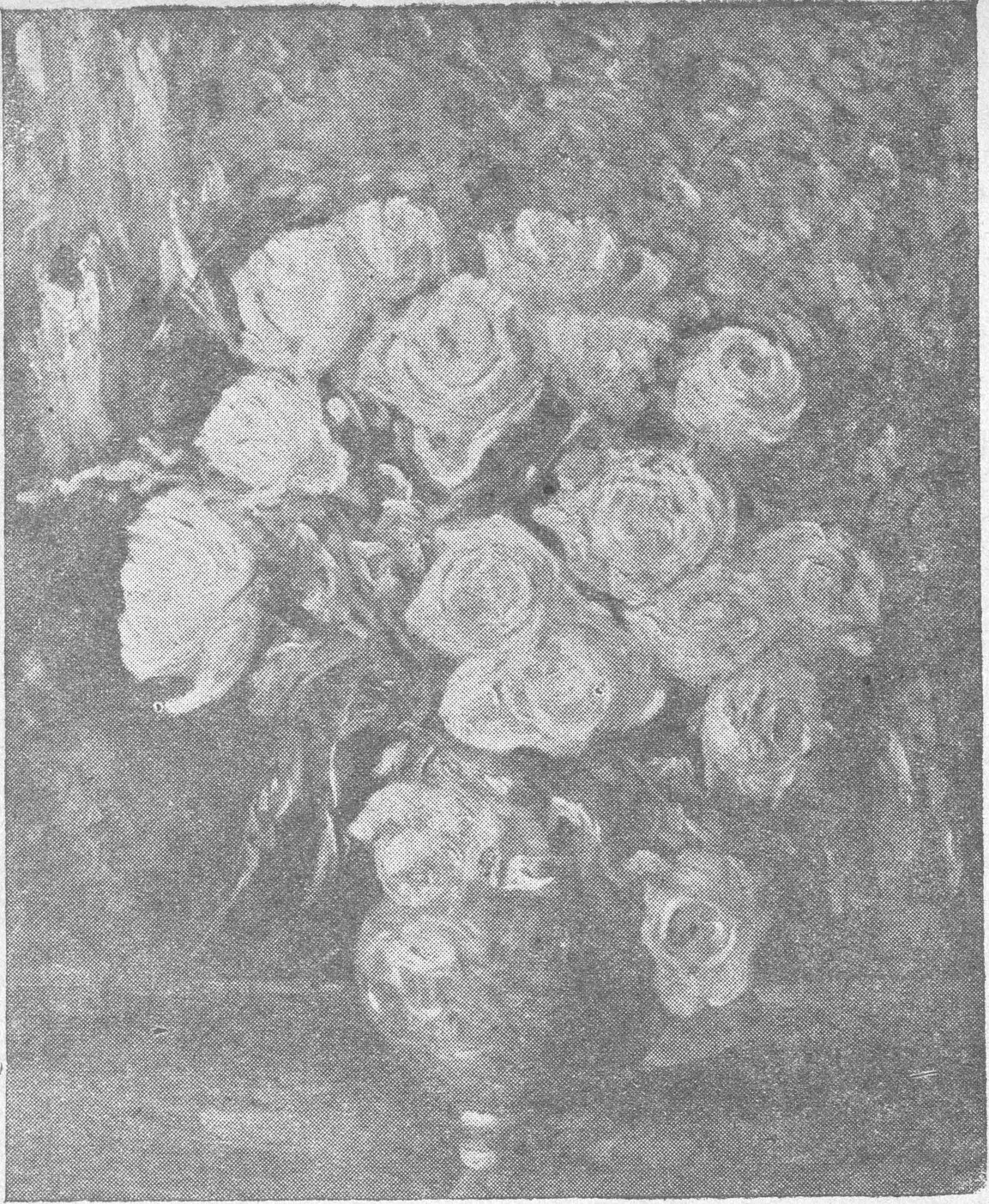
Roses: by César Gemayel
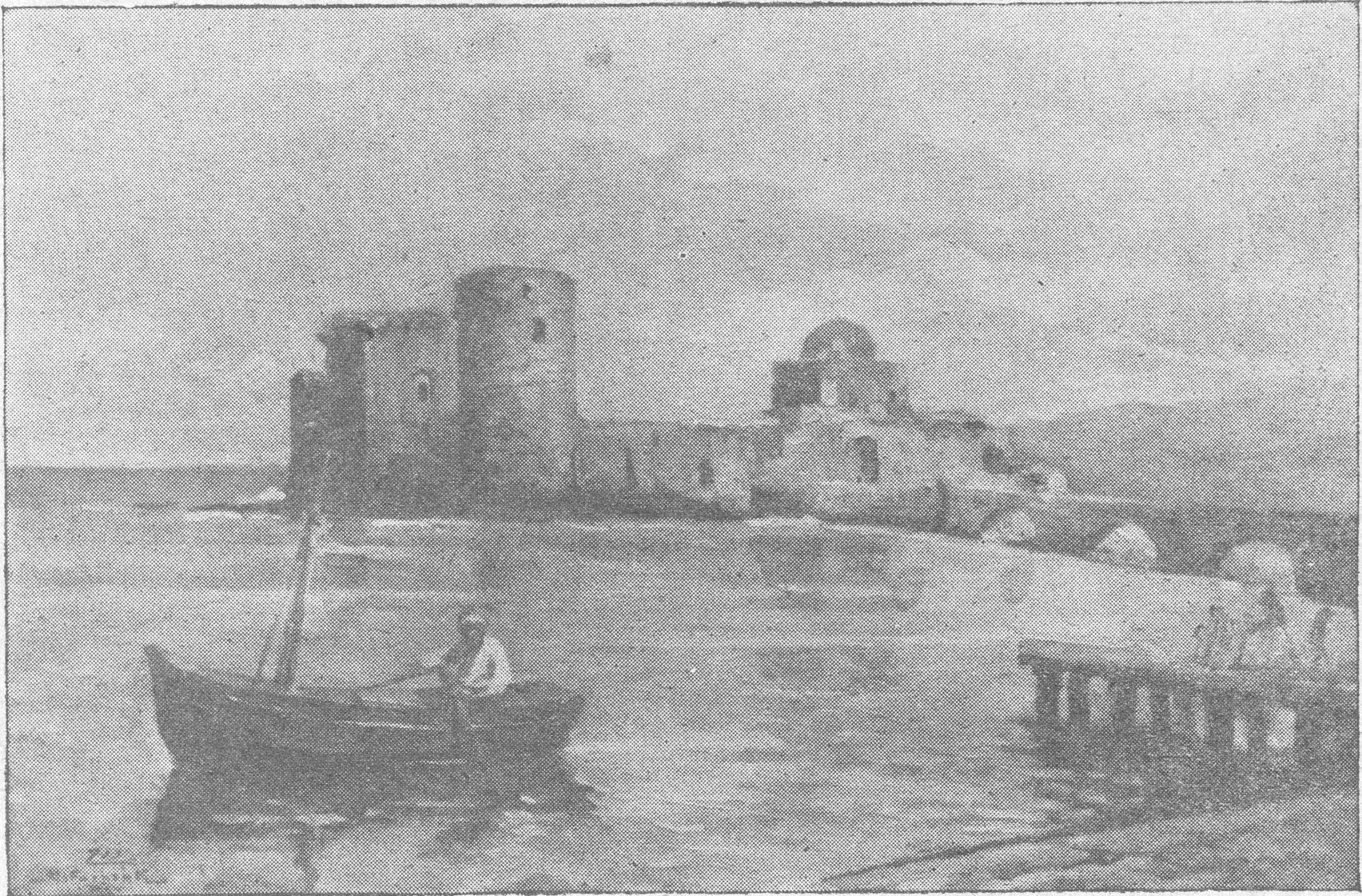
The Castle of Sidon: by Moustafa Farroukh