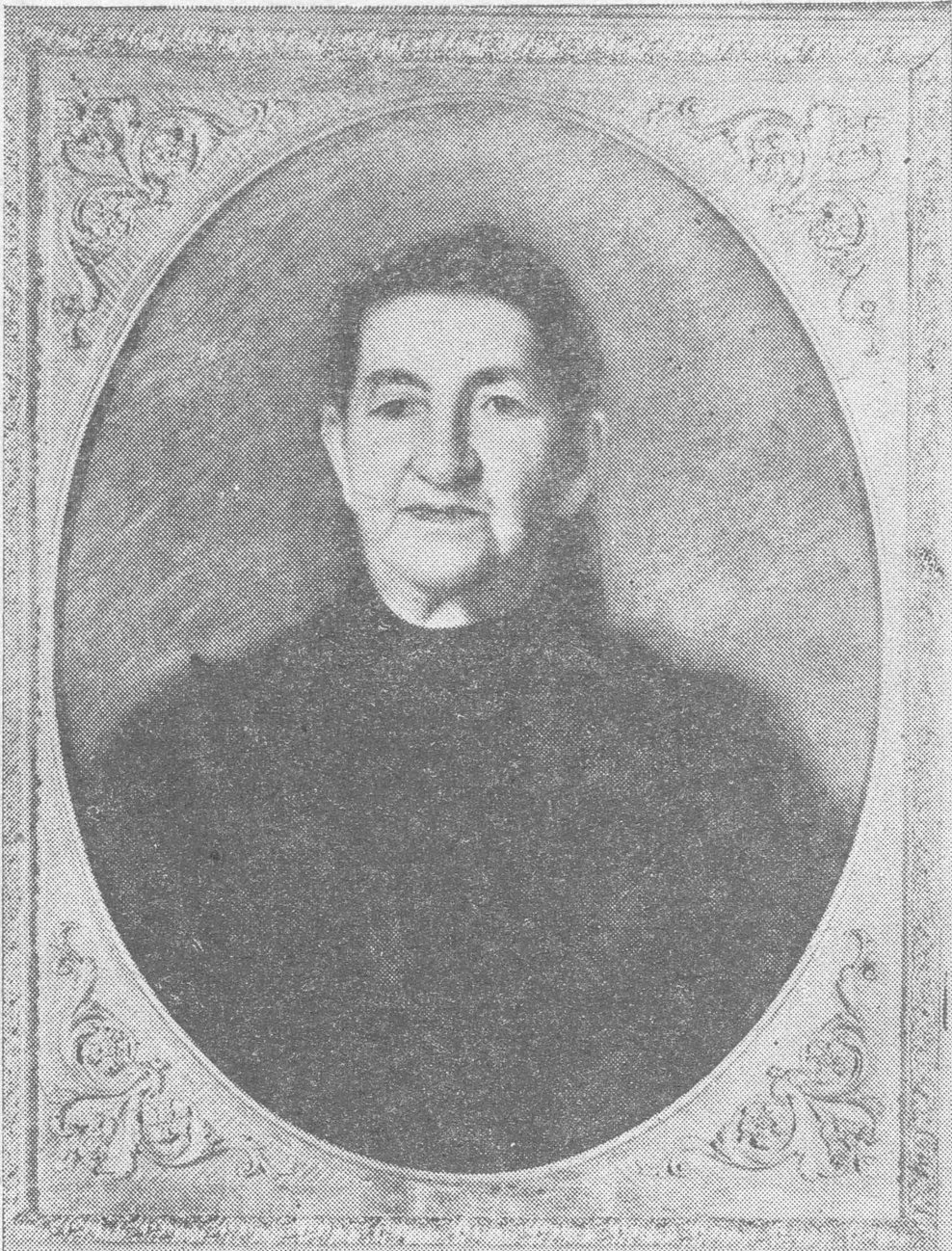
Who is Raif Shadoudi? This name is not mentioned among the names of the dead Lebanese artists; no one ever spoke to me of him — not even those versed in the history of Lebanese art.
I would know nothing of his life had circumstances not led me to make the acquaintance of one of his pupils, and had I not spoken of him before Viscount Philippe de Tarrazi, who afterward directed me to some of his paintings; nor would my interest in him have been great had I not spent a few days last summer in Dlebta, the birthplace of the artist Kanaan Dib, where I saw a canvas from his brush in one of the houses of that beautiful village. This painting is an artistic piece of real worth; at first glance I took it for the work of one of the geniuses of art among the people of Venice, who drew and colored in an easy manner without affectation or hesitation.
A single painting an artist leaves behind can express the history of an entire nation; a few lines and colors the artist sets upon his canvas give an ample lesson on his inner nature and his qualities.
I do not care to busy my mind with minute research into Raif Shadoudi's origin, his lineage, and his creed, so much as his artistic production concerns me, and the age in which he lived. I leave that to those who are accustomed to burying their days and nights in the making of "family trees."
It became clear to me, once I was able to see a portion of Shadoudi's paintings, that in what he drew and colored there are depth, vitality, strength, skill, and boldness, and that his way of blending colors is the way of an expert artist seasoned by time, who does not fuss over details as beginners do. His colors have a special stamp in the manner in which color masses
upon color without the color being killed by the oil medium — a method upon which the passage of time has no effect, and whose merits time cannot efface, as it affects the light manner that resembles painting in watercolors.
Raif Shadoudi's painting is confined to human faces; yet he copied some mythological subjects as a training for his artistic instinct, as does every searcher who wishes to study the methods of the great artists in order to mark out for himself, later on, a course of his own — so that it is as though Raif had traveled to Rome, the Eternal City, the cradle of art.
Raif never took ship, and saw nothing of the grandeur of the arts of the West; but he observed their trace in the drawing of Daoud Corm, Habib Srour, and Khalil Saleeby, and most probably he frequented their studios, for in his drawing and coloring there is a spirit of theirs.
Raif was adorned with fine moral qualities that knew neither envy nor
hatred nor love of show. In his pictures there is a strength drawn from the hardness of the rocks of our mountain, and in his blending of colors a faith, an endurance, and a resolve that stops at no goal. Here — here is the secret: that a man not grow vain of himself, nor quench his thirst from a single cup of water. Raif was a realist who showed the truth in both its comely and its ugly forms; he never painted and twisted his painting to please men's feelings. How sorely Lebanon needs men of this stamp — men who do not paint, or write, or string verses, or "play the politician," or "play the monk," saying to circumstances: yours is the verdict.
I admire a Lebanese like Raif Shadoudi, possessed of such artistic power. It is little short of a miracle that an artist of iron will should be born in an age in which ignorance ran rife and egoism ran high, an age tyrannized by the two criminal policies — the colonial and the feudal. That age disowned its gifted sons, and so they lived shrunk in upon themselves, with no thought and no spiritual kinship linking them to other men. Had the Lebanese grasped the value of their artistic production from the time art first arose in Lebanon; had they followed their artists' course, or let the gifted among them devote themselves to the works of art that stirred within their souls in this inspiring atmosphere — then the Lebanese today would be among the leaders of art in the world and among the teachers of mankind.
Raif Shadoudi lived in surroundings that never once felt his existence; and Raif Shadoudi died as Habib Srour and Makaroff Fadel died — no one knew of it, and no history recorded him; for here we have never been accustomed to set up a scale of worth except for empty appearances that bear no relation to thought or to art.