for a short time
making "caramels"; then he moved to Lancaster and from there to New York, where he set up a small factory with his aunt's help, in the year 1883. After his business had grown and advanced rapidly, he met with a blow which forced him to give up this factory of his and to pay only 40% of his debts. He then returned to Lancaster, and his aunt again came to his rescue. There, after those trials in which he had met with failure, he started a new small business, and with the help of four workmen he began making "caramels." This business of his grew day by day and his workmen increased in proportion, until, after fifteen years had passed, the owners of the other caramel factories offered him a million dollars to leave the trade to them, and he consented; he was then past forty-five years of age. But his spirit, ever leaping toward work, would not let him retire, and he began to think of making the chocolate bars of which he had been using a small quantity to flavor the caramels. What encouraged him in this idea was that he had earlier visited the World's Fair in Chicago and seen there a German machine for making chocolate; he had bought it, and he still had it. After he had set the business going, his wife asked him to retire and to make a tour around the world together; he granted her wish and made over his factory to some of his workmen. But upon arriving at the first city his wife felt tired and asked to go back; he did not oppose her in the least, but returned full of longing and eagerness to found a new factory — but where, this time?
Hershey had bought his grandfather's old farm (Derry), intending to return to it after retiring from work. And now he decides to found his new factory there; to this end he bought several neighboring farms. There he stood one day, thinking of those farms and plains and the enormous harvests they used to yield each year; and he asked himself: would his new project, one wonders, ripen and yield as much in value as nature used to yield? And there rose before him a picture quite contrary to that stillness reigning over those parts. A short time after that pause his friends saw him raising numerous buildings on that land, to their astonishment, and many of them asked him: "And what, pray, do you expect from the output of factories so isolated from the world?" He answered: "I did not undertake this work in order to increase my fortune — I have no need of any work; but I aim to find a way in which my fortune may work for the good of others." And casting his friends' many criticisms to the winds, Hershey went forward with his energy and drive. While the factory buildings were going up, Hershey thought of the necessity of a railway station near his factories; when he asked for this he was refused by the company, so he renewed his request, offering the land to the company on condition that it undertake the building; the railway company accepted, and put up a handsome station, after which a post office was established in answer to Hershey's
request. And thus was born the town of Hershey, with its factories, its railway line, and its paved roads easing its communications with the towns around it.
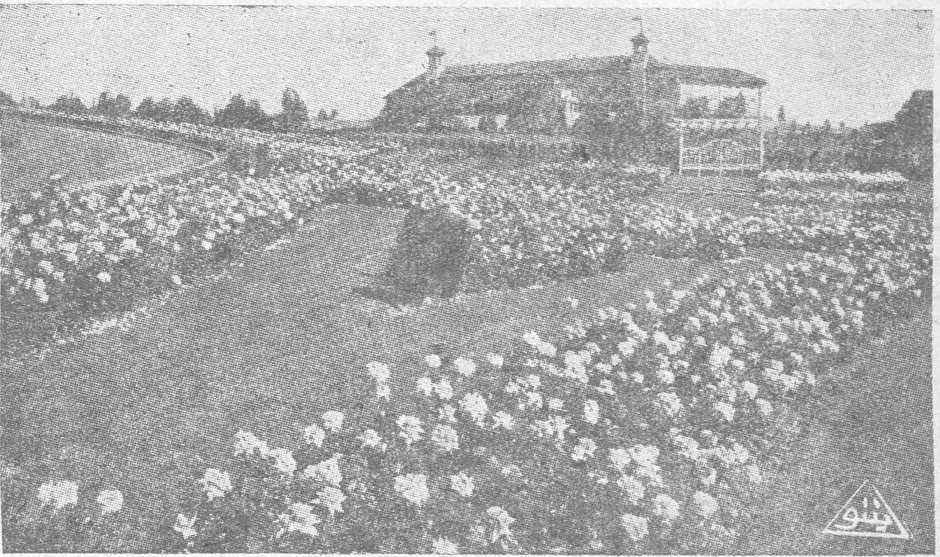
Hershey did not follow the methods followed in other cities for building the dwelling houses of his town; rather he built each house independent of the others and surrounded by a garden spacious on every side, and he surrounded the factories themselves with gardens full of different kinds of flowers. Whoever visits the town of Hershey today sees that industrial center, run on the most modern methods, surrounded by a number of farms which he bought and turned into teaching centers for the farmers around them — realizing his idea: that practical instruction benefits the farmer far more than sermons and theoretical teachings. He has declared repeatedly that work in the countryside is to be preferred to work in the cities, and he greatly regrets the young people's absorption in the cities and their neglect of their farms, which, if they returned to them with the knowledge acquired in the cities, would yield them many times the returns.
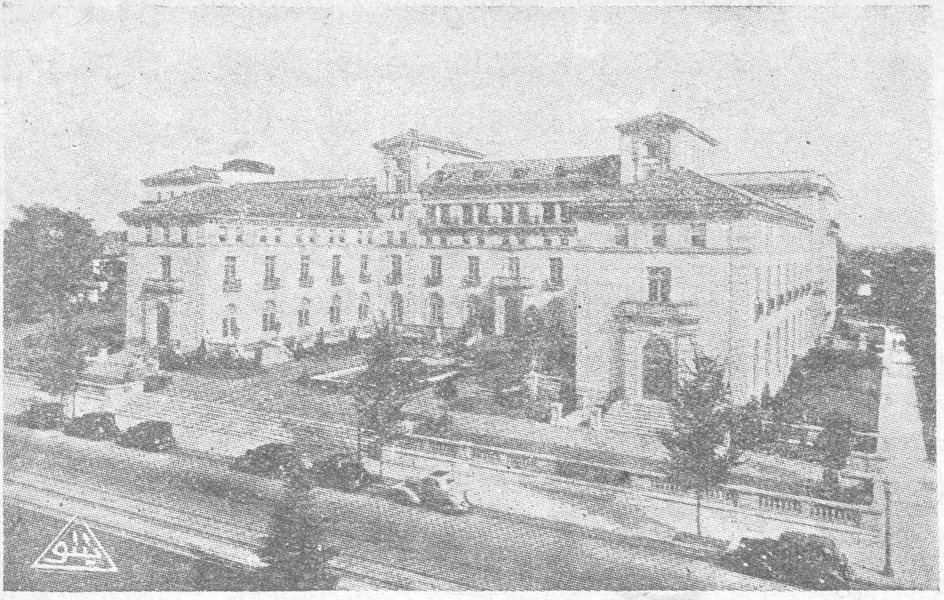
There, on the spot where Hershey was born, the visitor sees the school called the "Hershey Industrial School," consisting of several buildings standing on the slope of a hill, which its owner founded in 1909, setting aside for it five hundred thousand shares of the profits of the chocolate company, valued at sixty million dollars. What increases the worth of this gift is that no one knew of it but his close friends, since he considered it not worth mentioning; and by means of it he and his wife became parents to a thousand orphans, to whom they give learning, comfort, clothing, and nourishing food, opening before them the paths of work, each according to his own choice. Hershey's concern was not confined to his factories, his places of work, and his industrial institute for orphans; he also concerned himself with providing everything his workmen, his townsmen, and his neighbors might need. He established a great public library containing hundreds of books on varied subjects, a swimming pool spacious on every side, moving-picture houses, and playing fields, and he gave that spot the name of "the Social Club for Men and Boys," fixing the subscription to it at between three and ten dollars according to age. Then he founded another club for women, and he did not forget to establish a bank for financial dealings — which made people mock him, having no hope of its success; and how great was their astonishment at its brilliant success in a short time, until it came to rival the great banks in the other towns. Among the things Hershey established in his town are a hotel containing every means of comfort for travelers, a large commercial store meeting the needs of the neighboring inhabitants, and a public park containing
great woods and several buildings for the
The garden of the Hershey factories