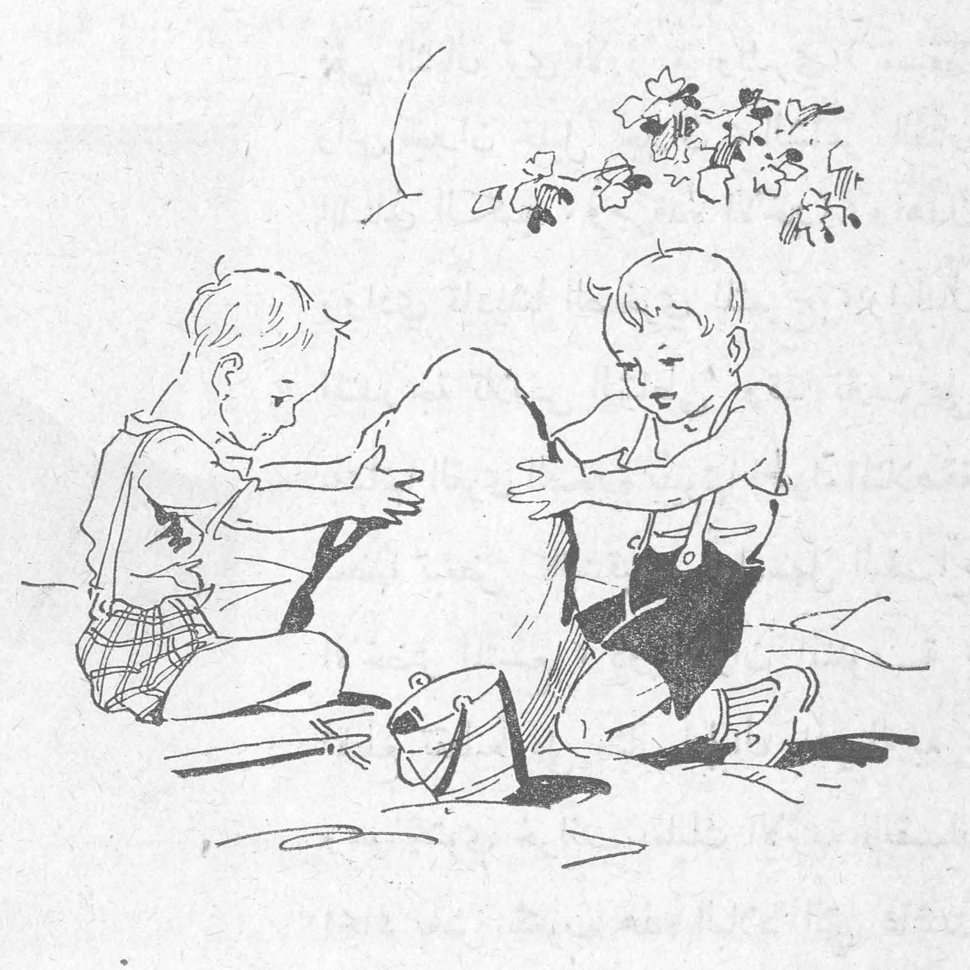
of wood which they used as a tray, and offering them to the guests as cakes and sweets; and the guests took them with earnestness and attention and thanked them for them. The sight of them and the breadth of their imagination delighted me; and since the time had come for them to go in to class, I left them to continue their play-acting until they should have their fill of satisfying the instinct of their imagination.
The leaders of education in the world have awakened to the importance of creative imagination in the child's life and have carried out certain reforms in the methods of education in the kindergartens. Whereas the teacher formerly used to make models of handwork and drawing and ask the children to copy them, binding them to follow her method so as to produce a likeness of the original, as close as might be, she now leaves the child absolute freedom to draw whatever his imagination — drawn from the atmosphere of his own life — suggests to him, and to make models of whatever it pleases him to fashion, binding him with no restriction or condition, and so developing in him the power of creative imagination. For children — however simple and unimportant the works they make — there lies in this a growth of their individual personality, of the power of their imagination, and of their independence of thought.
And whereas the kindergarten teacher of the old school used to tell her children stories and tales and ask them to repeat them and hold to them to the letter, today she encourages them to invent stories, however trifling, however far from truth and logic,
for these have their value and their importance in the child's mentality. We must, then, prize them, and respect the simplest idea inspired by his imagination.
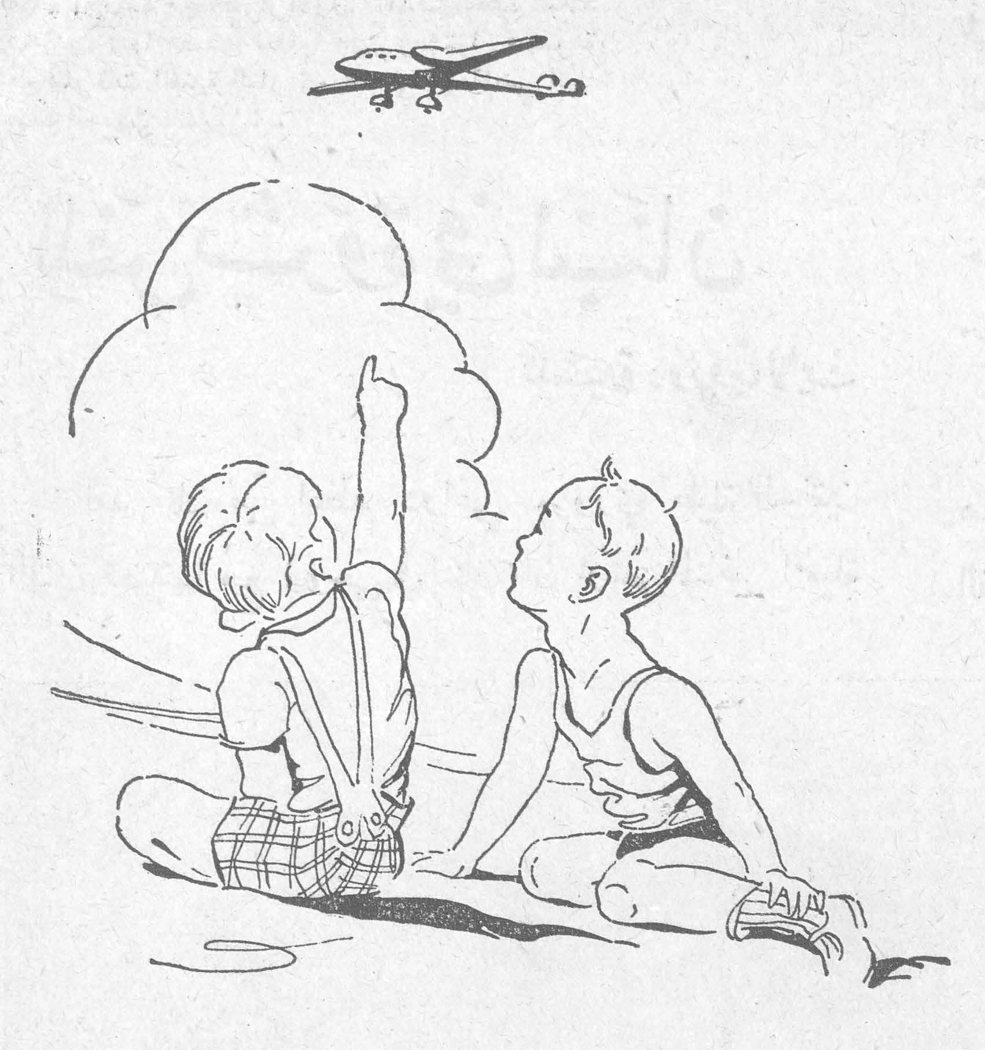
(3) Ziad told his story with enthusiasm. He said: "On the morning of the feast my father gave me an airplane." Elias interrupted him, saying: "My father gave me an airplane too!" Ziad hastened to make things clear, saying: "But my airplane is big, and it really flies! I rode in it yesterday and piloted it myself and flew over Beirut and saw the sea and the streets!" Elias asked him imploringly: "Will you let me ride in it with you?" Ziad answered him: "Gladly! Come to my house tomorrow, and you will see what a fine time we shall spend together." And the story ended. And Ziad sat proud of his adventures and of his possession of an airplane to fly in!... I understood afterward from his mother that an airplane had flown over their house the day before, so low that it drew all eyes and moved Ziad to ask question after question about it. He wished he might have an airplane like it, and this wish inspired the story in him until it became real in his imagination. It is not right for us to mock his story and insist to children on its distance from the truth, so long as it has filled a great void in his life.
Our duty, then, is to distinguish between lying and creative imagination, and to encourage our children to express their ideas and to develop their imagination, so that their personalities may grow strong and they may become independent in their thinking and their doings, after the example of the children of the advanced nations.