A Treasure for Art in Lebanon
An American artist of the first rank came to this country and found in it a lofty source that inspired her brush with a collection of masterly
paintings. Here she is, confiding to us this delightful talk:
It has been among my greatest pleasures, throughout the two years I have spent with my husband in Lebanon, to paint the beautiful scenery of this country. Rarely does a landscape painter find, in any country of the world, such an abundance of scenes worthy of painting at short distances from one another. Mountain, sea, and sands; the foreign dress and faces; the ruins of bygone days; the beauty of Arab architecture with its red roofs, together with the natural scenery and whatever else the artist may imagine — all this exists in astonishing plenty.
What stirs the feelings most in these varied scenes is, to my mind, that brilliance and richness of the colors which nature has bestowed upon them, so that the artist must call on every color of his palette to do these views justice. And when he strains his imagination to perfect the picture he is painting in harmony and fidelity, as does every painter who is not content with a mere likeness between picture and model, he is given the chance to use the various colors his art and his feeling suggest to him. Everyone who has watched the sun at its setting over the sea, behind Beirut, turning to a rosy red and then to a pale blue, then a deep purple, then a luminous blue, and after that to the color of night, wishes it were possible to keep the magic of those moments forever. And the artist knows that such a scene inspires a desire to paint that cannot be overcome.
Wherever you go in the country you see beauty before you. In the north you see the Cedars, and Bsharri (birthplace of Gibran Khalil Gibran, the great Lebanese poet-artist, and his last resting place), and Ehden, and the rocky, winding Qadisha Valley, and the terraced mountains touching the shore, little villages scattered on their flanks with their red houses pressed one against another like clusters of grapes. As for the broad green Beqaa plain, with its
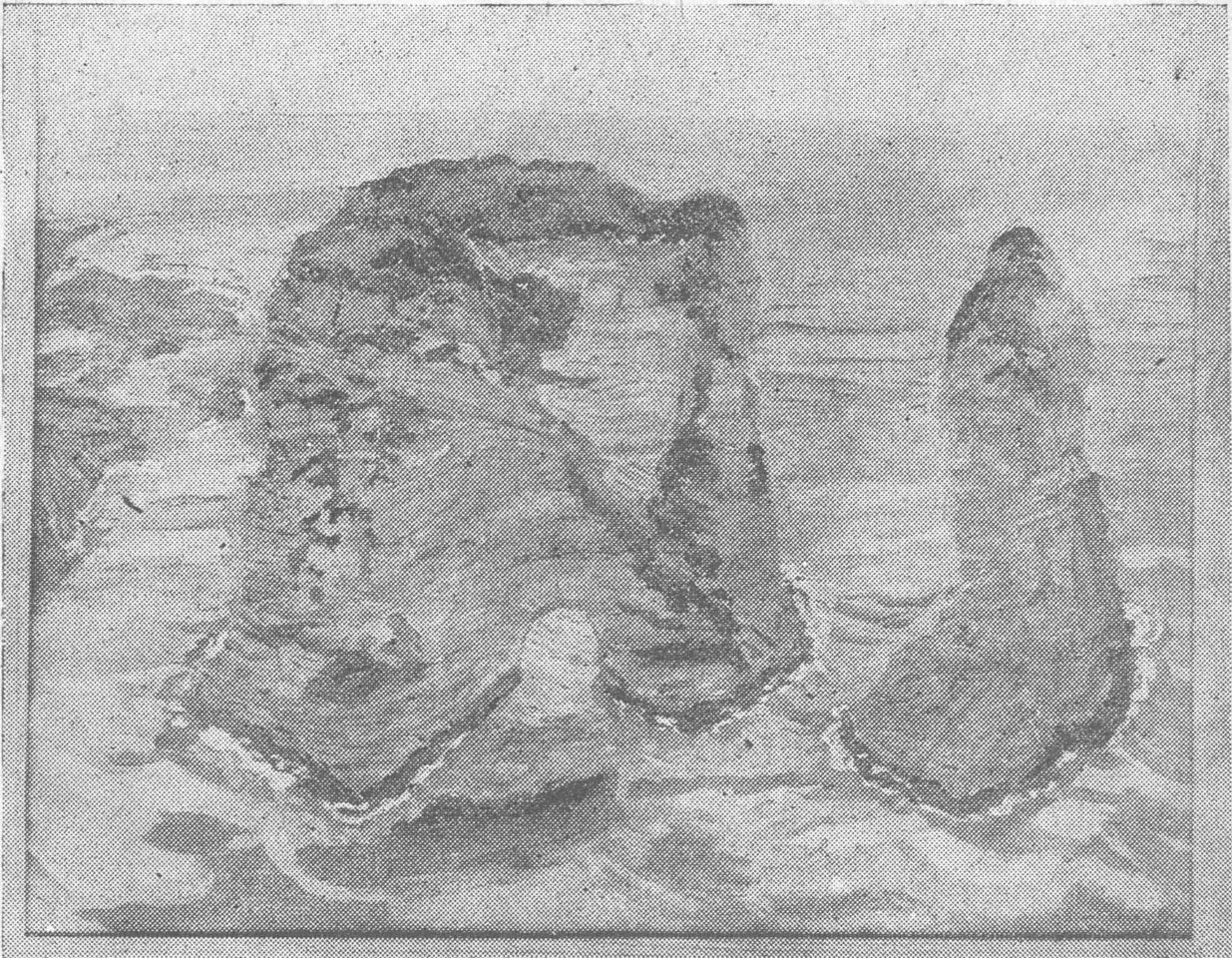
A view of the Rawshe in Beirut. This scene has ever been a fertile subject for artists.
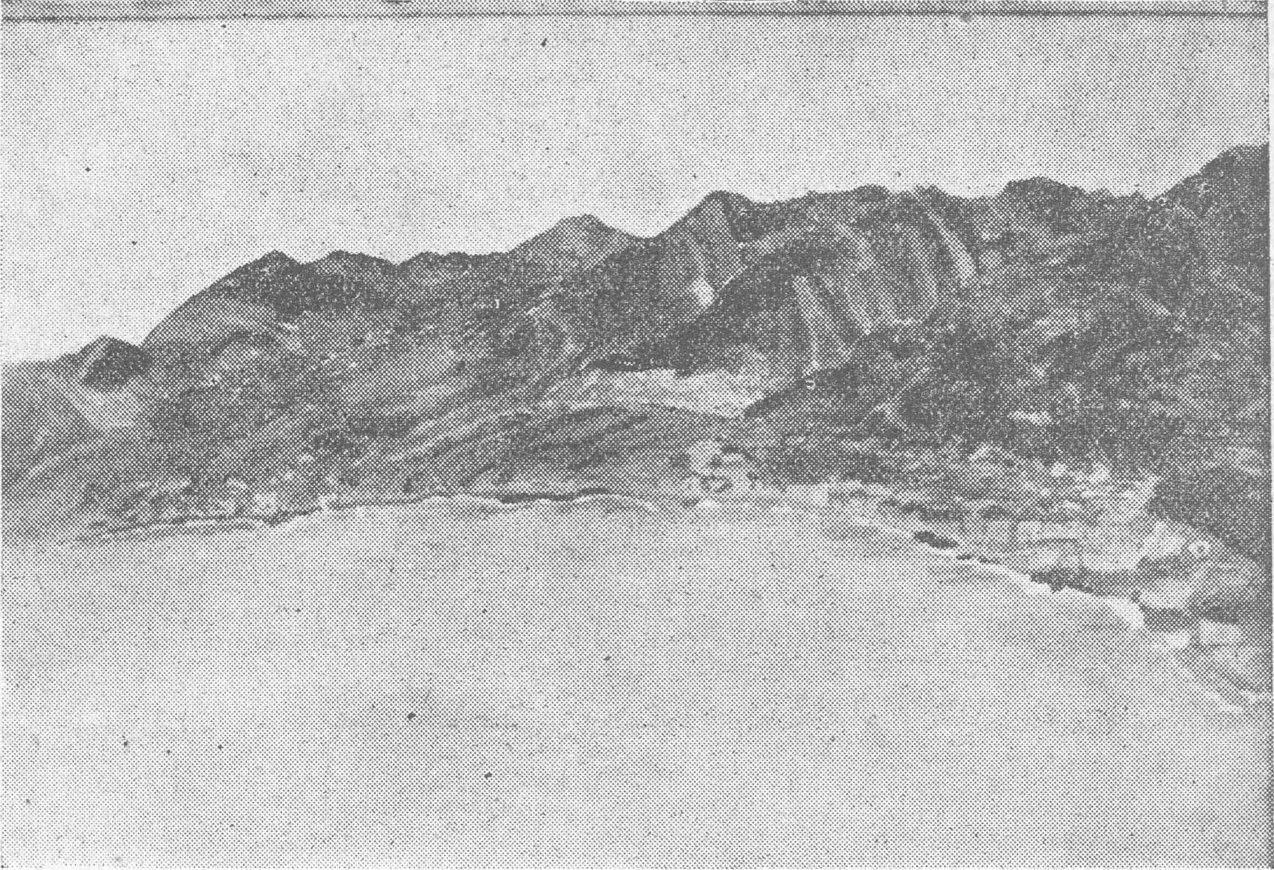
The famous bay of Jounieh, which in times past was a great harbor for the Phoenician ships