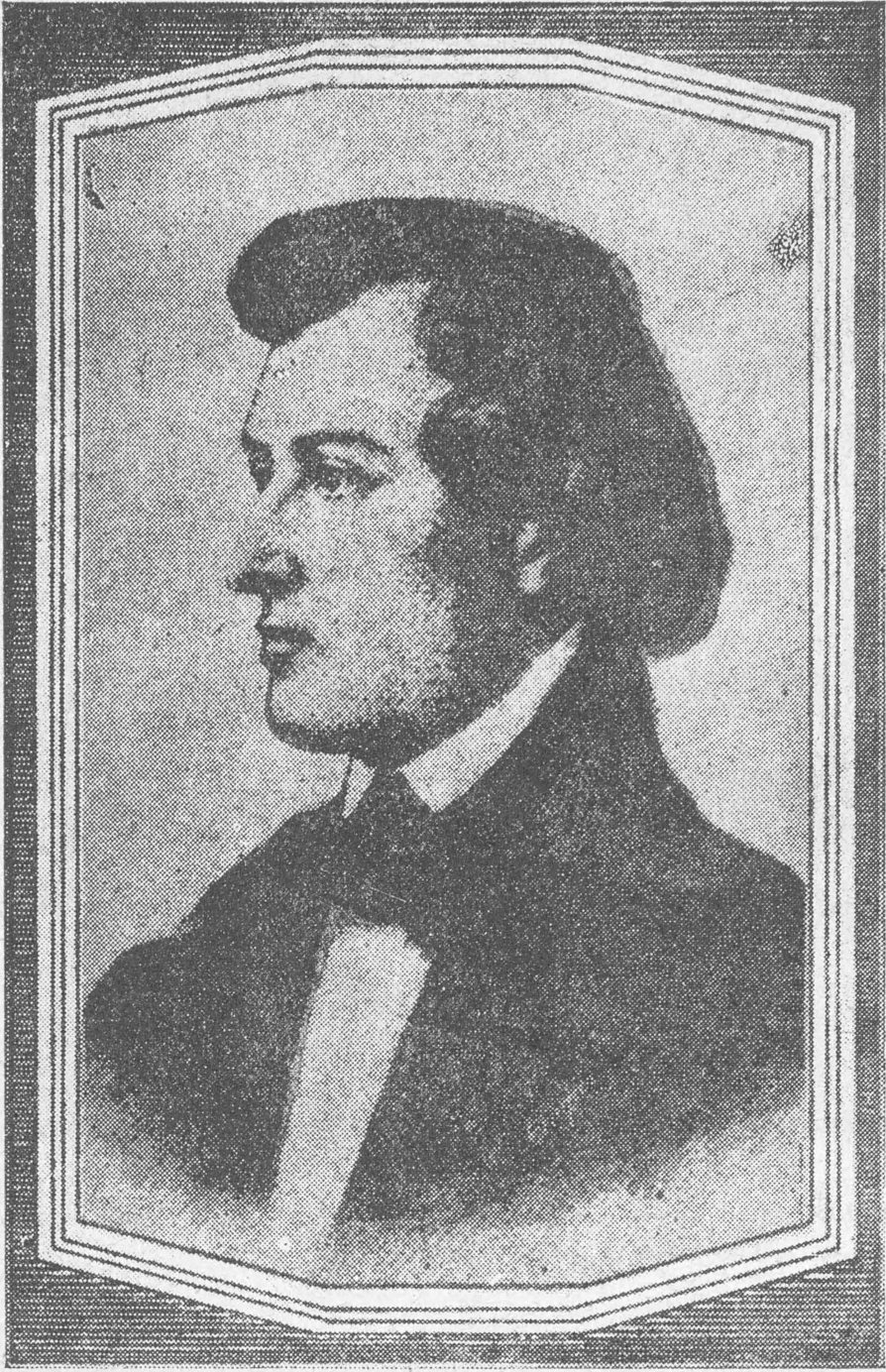
This time as well, The Woman's Voice takes pride in presenting to its readers a new woman's face, one that heralds to Arabic music the coming of dawn... And here she begins her series of talks on a select company of the world's musicians.
Poor Chopin! He lived a life short in span and abounding in sorrows and forebodings... He loved nature and surrendered himself to her, but she cast him off, for the two could not understand one another. So he despaired and went soaring above nature, repeating his sorrows to the breeze, the stars, and the birds. He complained of his misery to the stars, and they gave him shelter. Then he loosed his anger upon the Creator and creation and wept over that fate of his which had created him in the likeness of men when he was not one of them! The outcome of his revolt was that his feelings overflowed and tears streamed from his eyes like limpid water, and he let us hear in his "Nocturnes" plaintive melodies that steal into the folds of the ribs as though they were heavenly strains that magic had poured into the jars of the unseen.
His melodies are moaning and complaint, and his complaint is weeping and lamentation. He rises up against fate in the "Barcarolle"; then his feelings are stirred and he comes to us with the massive "chords" heavy-laden with obscure thoughts; and after that he lets us hear the fine, harmonious note, like a moan rising from the depths of the heart, heard only by those who have mastered the language of hearts. And Chopin uses the "minor," pointing thereby to his misery and wretchedness.
But how many stages of the soul did the famous artist pass through — and perhaps they were the reason for the excellence of his musical genius — such that tears would stream from his eyes onto the piano when he played a passage from his famous compositions under the title of the "Promenades." The reason is that he was never blessed with a true love all his life long, though his feelings were unruly and ablaze and the psychic impulses latent within him were in raging revolt... He it was who believed that life without love lies outside the bounds of morality, and that so long as a man feels no emotion of love toward another person he is little better than the beasts. How many obstacles he met with in his life, and how many times his heart took refuge in another heart, only to find itself — he, so delicate of feeling — shattered upon that hard rock. If you listen to one of the passages of the
"Promenades," you will hear distinctly the hymns of hope as he runs toward his beloved; then suddenly he sounds for you a massive "aksura" at which hearts all but break for the pain that is in it; and at last your eyes brim with tears when you hear him moaning from excess of pain, gazing with the eyes of a despairing man at his hard-hearted beloved. Say the same of his relations with his friends: he found no bosom friend to whom he could turn in his despair save George Sand, the famous French writer. He knew her throughout the whole period of his stay in Paris, and she was perhaps the first to encourage his art, for she surrounded him with her tenderness when she felt that he was passing through an arduous stage of his life, his family having cast him off, and he far from his enslaved country, having left his band in the flower of its national production, despairing and empty of pocket. It was she who took him to her bosom and encouraged him to persevere in composing. So he dedicated to her the "Mazurka," which is a hymn of thanks to her who afterwards became the beloved of his heart. And how long does a love endure that rests upon friendship and esteem? The Waltz