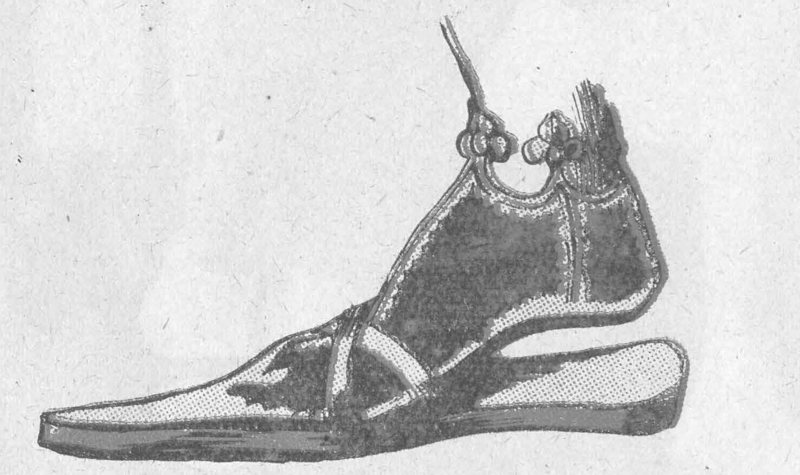
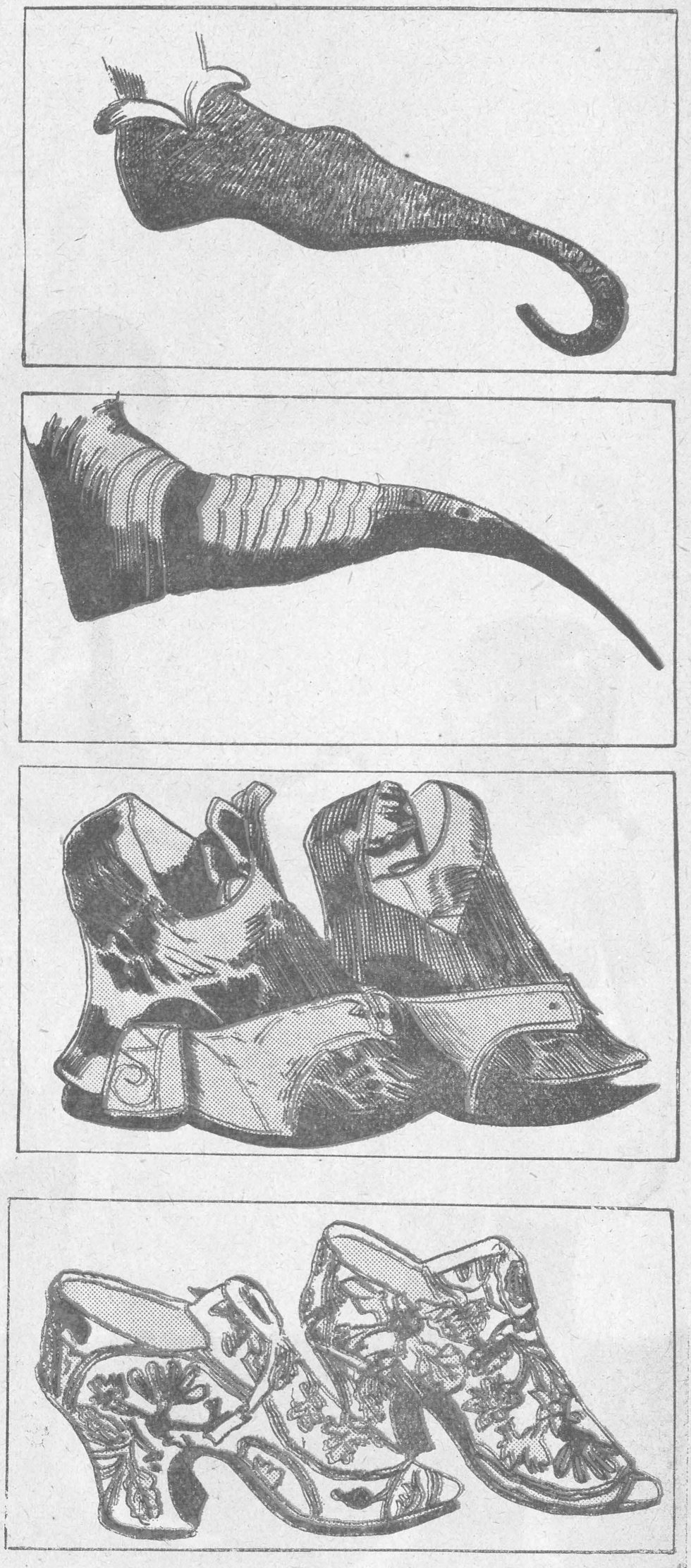
Models of old shoes that were a display of pretension to grandeur
If you could organize a procession of the shoe fashions known to history, it could tell you such a wealth of information about the social conditions of every age as would astonish you. The simply made sandal of ancient Greece suited the social and artistic aims of that age. As for the society of ancient Rome, which surpassed Greek society in its elegance and in the complexity of its affairs, though it fell short of it in devotion to the democratic spirit, it does not astonish us that none but freemen were permitted to wear shoes; indeed, the kind of shoe differed according to profession and social distinction. One could recognize a member of the Senate by looking at his feet, just as you would never see a commander wearing the shoe of a common soldier.
The truth is that the shoe has been the badge of social rank in every period of history. The actors of the tragedies on the Roman stage wore tall shoes of gilded leather, called in Latin Cothurnus and in English Buskin, as a sign that the wearer was one of the heroes of the tragic plays, while the hero of the comedies was forbidden to wear these shoes.
Shoe fashions in the Middle Ages in Europe reached an extreme degree of excess, and displayed the arrogance and pretension to grandeur that prevailed in that age. It happened in the year 1420 that Anne, princess of Bohemia, came to London to marry Richard II, king of England; and she and the members of her retinue wore shoes with long pointed tips. This fashion pleased the dandies among the young men of the English court, and they took to imitating it to such a degree that they were obliged to hang chains and ribbons adorned with jewels between the tips of their shoes and their knees, so as not to stumble in their steps or over other people's feet. When the extravagance of this fashion reached the point where these chains were fastened to the belt, the government intervened and passed a law threatening to prosecute anyone who wore a shoe whose tip exceeded a certain length, unless he was a person of high station.