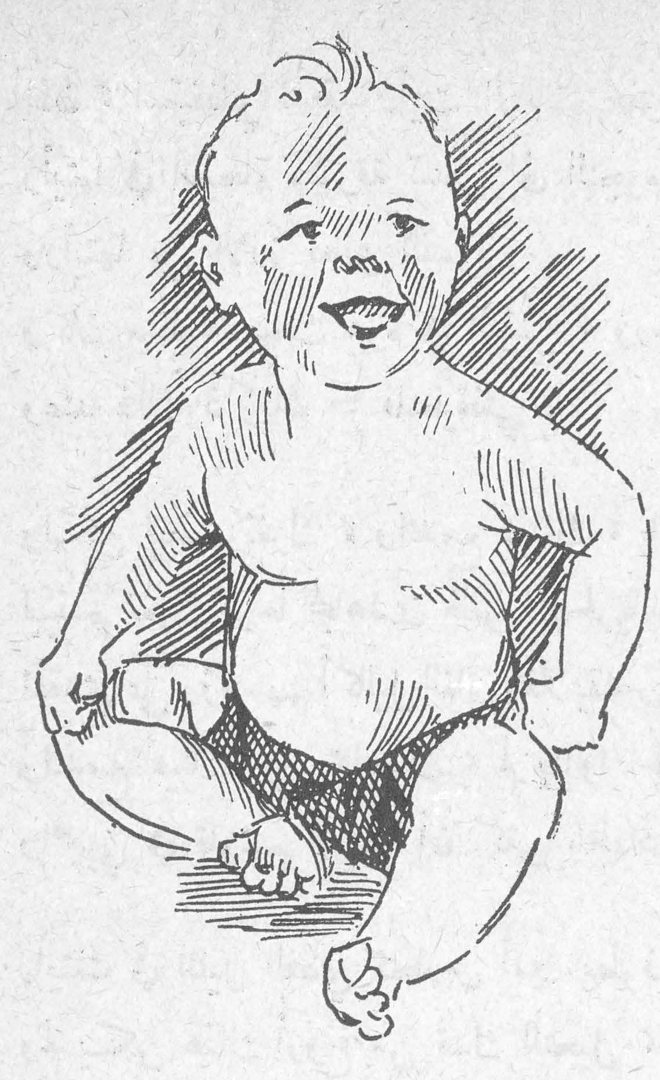
This article was written especially for The Woman's Voice; in it is a reminder of the importance of nursery schools in the life of the nation.
The Lebanese, and others among the inhabitants of the Middle East, have begun to feel the pressing need for schools that care for their children, whereas we in England felt the value of the "nursery school" long since. In 1923 the Nursery School Association was founded in England. And although the political situation, internal and external, has changed greatly in the last twenty years, the movement has kept on its course, and it is now one of the foundations of education in Britain.
All educators acknowledge that the stage lying between the second year and the seventh is among the most important stages of the child's growth, and that any educational program which does not attend to this stage must be counted deficient.
In this stage the child's growth, mental and physical, is faster than at any other time, and upon this stage, filled with experiences, the person's conduct in the future depends. This stage between infancy and school life is therefore vital and of the greatest importance in the life of the nation, because the character of citizens depends to a far extent on the manner of their life in the years before they enter school.
What, then, do these schools involve?
First: the companionship of children with one another. This experience is unique and of the greatest importance, and the child cannot obtain it while he is at home. Since the gulf between the child and the grown man is vast, it is impossible for the child to take anything from the man, especially as the language the man speaks is degrees above his mental level. The child learns good habits — helpfulness, for example — by keeping company with children of his own age, and not by keeping company with men.
Second: education in the nursery school means opening the way for the child to play, especially in the open air, for play develops his muscles and strengthens his body; and it is very desirable that play should be with some toys.
Third: education in the nursery school means attention to the child's emotional growth. It thereby acknowledges the value of outdoor play at this primitive stage. It attends also to the children's need of whatever helps them attain their purposes and their desires, developing their senses thereby through play. It acknowledges, too, that the children's desire for musical airs and simple colors must be satisfied, because it holds that upon these foundations the growth of mind and feeling depends.
Fourth: it observes the
importance of caring for their health, and so we see that it follows a special daily regimen in which the hours of sleep and rest are observed, and it strives always to keep them away from whatever excites their nerves.
Fifth: these schools train children in self-control — in eating, in the use of toys, and so on... This kind of training is acceptable to the children because it pleases them, and thus they learn by imitation and adoption.
Sixth: the teachers of these schools are young women who understand children rightly — young women who have specialized in the art of teaching children. Every girl in England who wishes to join the ranks of teachers in schools of this kind must produce her certificate showing that she has completed her general studies and has attained a high general culture. In this way the level of the nursery schools is raised very high indeed.