band of the young men
and young women of this town. That was in the year 1939, when the first signs of the war threatened grievous consequences, and our fathers were still telling us of the hunger that ravaged the body of the nation in the First World War. And we began to think! Who would stretch out a helping hand to the poor? Who would take pity on the weakness of the respectable families in reduced circumstances and take them by the hand along life's rough road? Who would care for the sick who have neither shelter nor helper?
'The idea soon ripened in our heads, and behold, it came out into existence and took shape as a group of both sexes who felt the pains of the people and so loved to help the people. Nor did we lack means of gathering ample funds and spending them in the ways of charity and beneficence. We imposed upon ourselves a monthly subscription which each of us pays with pleasure and gladness, just as we laid fixed subscriptions upon a large part of the well-to-do families of Latakia. And we hold various social parties and give dancing soirées, and contrive raffles and charity bazaars, inviting to these parties and these bazaars the notables of the community; and the people of goodness and open-handedness answer our call, every one of them eager to take an effective share in the work of charity and beneficence.
'And what more would you have me tell you? The government? Yes, it helps us, though its help is slight; it has donated to us some hundred Syrian liras, just as His Beatitude Patriarch Alexandros helped us with a like sum. The Mira institution, likewise, feels with us and sees in our movement what calls for assistance, so it supplies us with grain at cheap prices. And the municipality does the same — which leaves us thankful to these official bodies for their encouragement and their fellow-feeling. Today we help scores of poor families in this city: we distribute grain and provisions to them twice a month, pay the cost of their medicines on their behalf, look after their sick, and send them to the hospitals when necessity requires. So you see that the idea which haunted our dreams was soon realized, and in its realization lay the greatest consolation for us, the children of this city.'
I thanked Mrs. Odette Saadeh Aish for her valuable talk and asked her leave to depart, confident that the descent of the noble class in Lebanon and Syria into the arena of society will lighten much of that society's pains and tragedies.
The Child Welfare Society
And there is in Latakia an association of no less consequence than the two preceding ones — if indeed it does not surpass them in usefulness — for it undertakes the rearing of children and watches over them, that they may grow up sound in mind and body. This association is known by the name of the Child Welfare Society. It was founded in 1945 through the special interest of the Honorable Dr. Rushdi al-Jabi, director of health
of Latakia. All the official bodies look kindly on the association, and it is administered by a large company of the excellent ladies and young ladies of the town, under the presidency of Mrs. Wadia, wife of the great notable Ali Harun.
And the wife of His Excellency Mr. Adel al-Azma, governor of Latakia, takes a special interest in this association: she covers it with her patronage and spares no effort for its advancement. She is its honorary president.
I was not able to meet the members of this association, since many of them were away from Latakia; but I was able to obtain ample information from Mrs. Wadia Harun, its working president, who kindly supplied the following particulars:
'The fundamental aim of our association is to watch over the feeding of the poor children deprived, for one reason or another, of their mothers' milk, to give them health care under the supervision of the association's physician, to furnish them with treatment and the necessary tonics, and to give them some articles of clothing from time to time. The association also watches over the mother's health, and undertakes to give mothers guidance in caring for their own health and the health of their children.
'Our project met with some difficulties at the outset, as every new project does; but that did not last long, before public opinion came to understand the benefit of watching over the child and caring for him, in bringing forth a generation of the healthy.
'We are proud to say that our association has treated and supervised nearly two hundred children. The association took complete charge of each of these until each of them reached a full year of age. And the association has recorded various cases of illness which proved to it that sound feeding and constant treatment were the cause of the rescue of these cases — which strengthened our faith in the necessity of widening the scope of our work, so that deaths among children may grow fewer.
'And the association is thinking today of taking in the largest possible number of children, widening the scope of its concern with their treatment, and setting up for them a free public dispensary under the supervision of official specialists. Nor does the association's concern stop at material care for the child: it is thinking also of spiritual and moral care, by holding parties and lectures for mothers, so that they may be able to bring forth a new generation enjoying good health and a sound, upright character. This is our association, and these are its aims; and to reach these aims we move heaven and earth and raise a roaring clamor in the cause of gathering funds.'
May God bless you, then, and bless your clamor, my ladies! And would that in every city of the Arab world our ladies might rise from their sleep to work at bringing forth a sound, strong, and conscious generation.
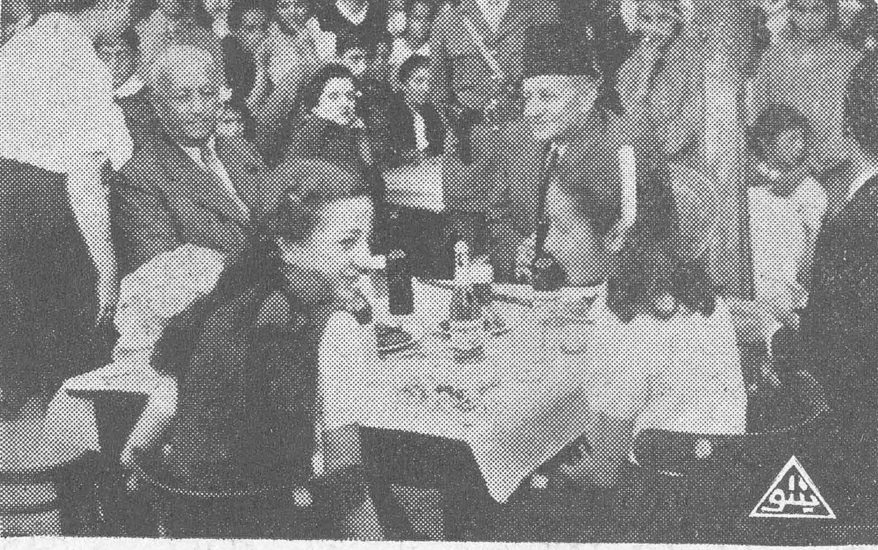
The president of the Friends of the Poor Society receiving His Excellency the Governor
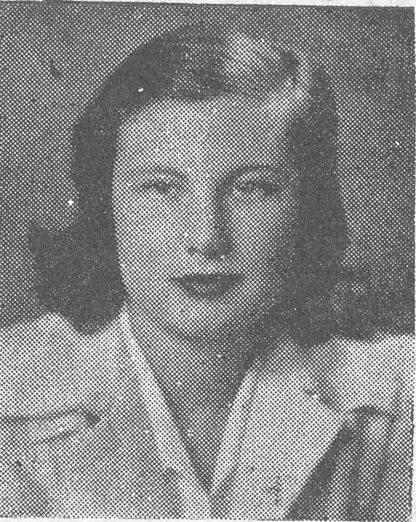
Mrs. Odette Saadeh Aish
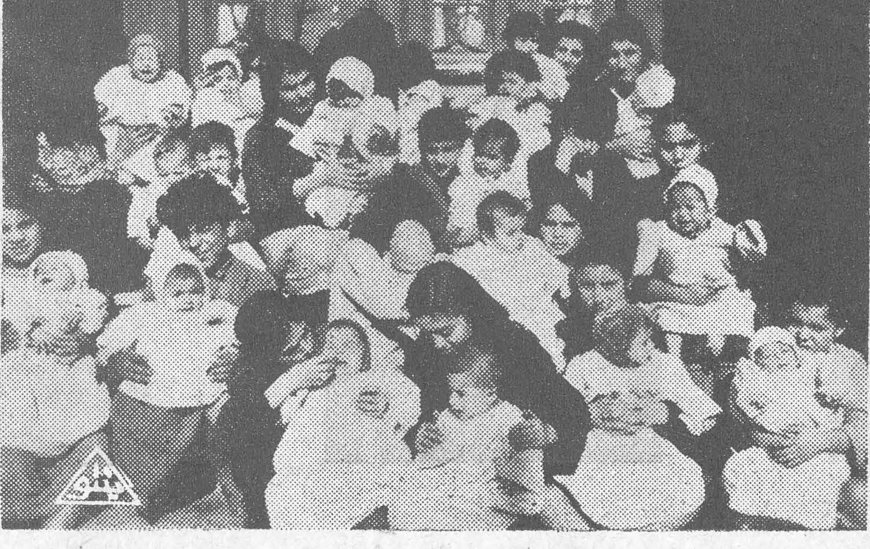
A group of the Child Welfare children