And the days went creeping lightly by, as though they moved to the fall of Angelo's hammer and the rhythms of his chisel; the marble chips fell here and there, and the statues came free — beautiful, alive, strong, moving — challenging by their form and their might man and his greatness, and lifting their noses proudly toward immortality.
The days went on in this fashion until out of
the darkness came a man — one of those created to live in darkness — who obstructed their course, told tales against Angelo, and whispered to the Pope private words which no one heard at the time, and whose result was known to only one person: he who knows the secrets of such conversations — and this keeper of the money — as is hidden from no one — is always the part that cannot be severed from the crime of power.
It became difficult for Angelo to find his way smoothed to the sacred thresholds; the
coins grew lighter in his hands and their ring grew fainter; the officials put him off and delayed rendering him his due day after day, until the treasurer confronted him with the words:
— I have from His Holiness an order to expel you; he does not wish ever to see you again!... I know you well and hold you in honor, but these are orders from on high.
And the earth swayed with everything upon it — except Michelangelo. He felt his heat rising and rising, and his breast surging with anger and fury. He looked at the treasurer, pressing his lips together, lifting his flattened, broken nose; his beard shook, his thick, disheveled mustache quivered, and his lips parted upon a curse which, had the officials known its meaning, the history of
art would have been changed most gravely...
On the next day the Pope spread open before him a paper bearing a few words written in the hand of a nervous, furious man:
"Most Holy Father, I was driven from your palace this morning, and by order of Your Holiness; if you should have need of me again, you must look for me in some place other than Rome."
And Angelo sold his possessions and his goods, then mounted his horse for the city of flowers.
In Florence the people honor their men, and Michelangelo was a man whose like the gods themselves begrudge; no wonder, then, that he defended himself and the whole city defended him. When the Pope's envoys arrived demanding him — by force if need be — they understood that such a thing was difficult, that any hand stretched out toward him would be cut off, and that any man who approached him with ill intent would meet his death without hesitation. It is a fine thing for one to witness the contest of art and religion in the person of a man who loved them both... but he preferred art, and he was not afraid...
Rome's letters rained down upon Florence one after another, reassuring the man about a return to the capital; in one of them the Pope wrote to the governor of the city, saying:
"Michelangelo the sculptor, who left us without warning or regard for us, fears, so far as we know, to return. We bear him no grudge and no rancor, for we know the ways and tempers of men of his kind. He may set aside every suspicion he harbors concerning us. We wish also to remind you that obedience is owed to us and to our will, and therefore we ask you to promise him in our name that if he returns to us he shall return free and assured, and we shall welcome him with the warm feeling we used to bestow upon him before he departed."
A letter such as this weighed heavily, no doubt, upon the rulers of Florence, and Angelo understood that if he
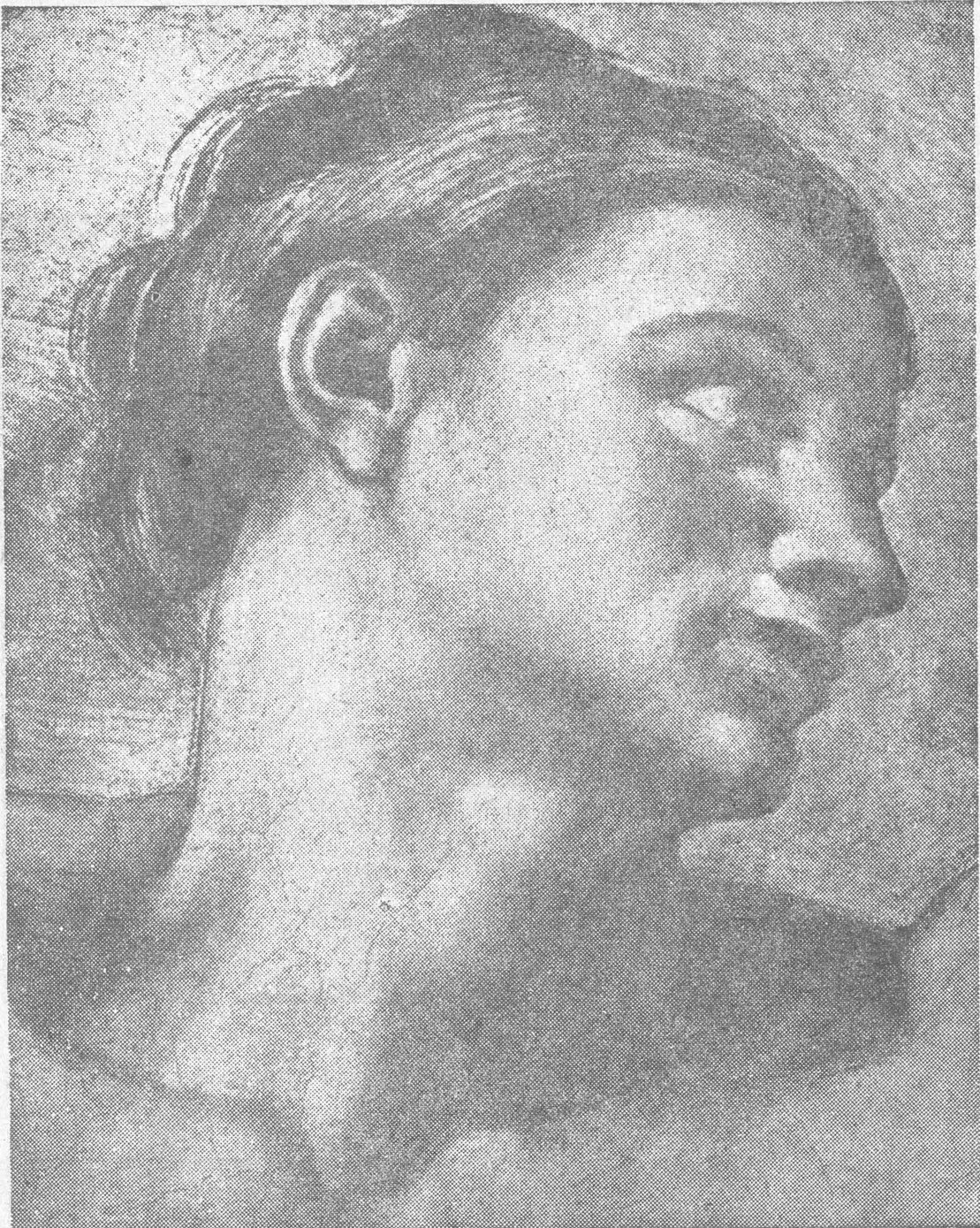
Adam — from a painting by the artist on the creation of man