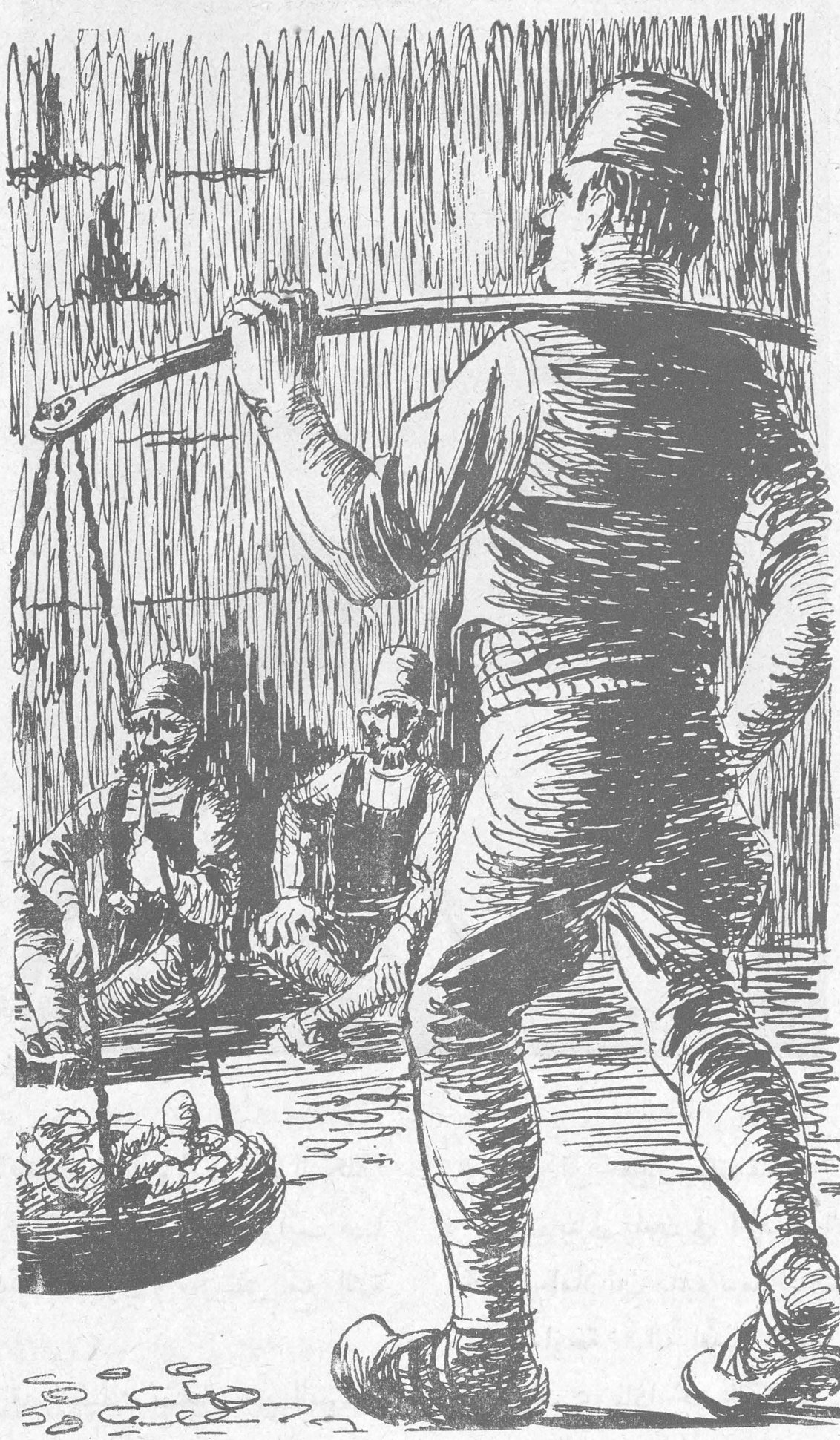
A story from the masterpieces of Turkish literature
When the Çumra canal leaves Lake Beyşehir, the color of its waters is the ordinary color of water; but scarcely do they reach the Konya plain before their color turns to the color of blood.
You may suppose that the waters took on this color from passing through the red earth of this plain; but here I am to tell you that the waters took their color
from the blood of Mehmed of Dedemköy and from the blood of his brother.
Nor is the color of the horizon that bounds the Konya plain a purplish blue; it is yellow — yes, yellow.
You may suppose that it took this color from the dust the winds stir up; but I tell you that it took it from the pallor of Zaghar Mehmed, who is in the Konya prison.
...
In that steppe no harvest is gathered except after exhausting hand labor. That land, before which the plow is helpless, grows nothing but thornbush and grasses an inch tall, and consents to nothing but to expose its surface, scorched by the scarcity of water, bare to a sky empty of clouds.
As for the waterway dug by the hand of man, it serves only to increase these plains' thirst
for water. Those slow, muddy waters that saunter along their course scowling, as if angry at flowing in that place, not only fall short of quenching the thirst of
the earth whose cracks cry out demanding water; they also give it nothing in recompense by way of vapor or moisture. It is more like a river of olive oil moving on slowly and gloomily in a turbid bed.
And in the parched villages of that plain — villages that resemble heaps of ashes — toil men whose hands are covered with sores from labor and whose faces the sun has scorched; they work and drudge to extract from
that meager earth a little on which to feed themselves.
The village of Dedemköy lies close by the canal; but by the time the waters, after leaving Lake Beyşehir, reach the village, they have dwindled in quantity to less than would suffice to water a vegetable garden the size of a handkerchief — let alone many feddans of fields.
And so you find the smiling faces and the eyes brimming with cheer during the season of rains straining and scowling in the years of drought. You find these eyes fixing their gaze on the yellow waters of the canal — neither leaving them nor expecting any help from them, since they know the futility of such a hope. As for the season of rain, it comes but once in every five years.
...
Mehmed of Dedemköy and Zaghar Mehmed were neighbors, and there was no difference in age
between them. In their childhood they played together upon the sands of the poor earth and rolled together in the dust and dirt of the street. Together, carrying