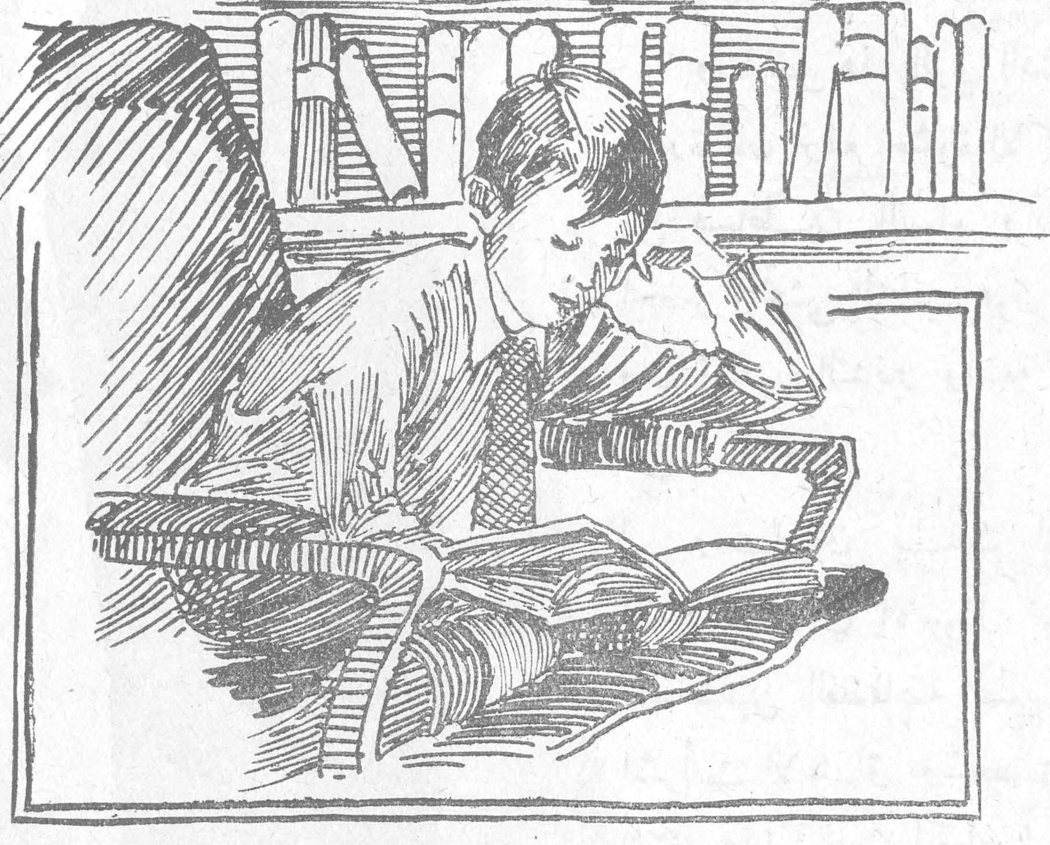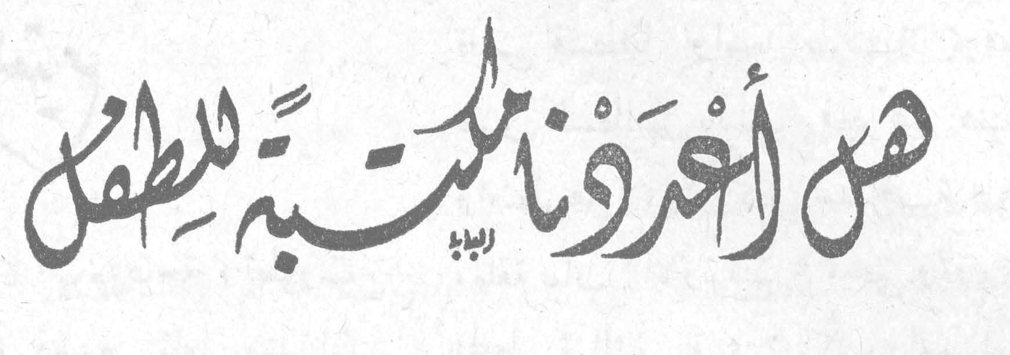
This is a question that "The Woman's Voice" has asked again and again; and now Dar al-Kitab has resolved to bring out a series of books for children written by the author of this article, Mrs. Edvick Jureidini Shayboub.
When the holidays come upon us, or other such occasions, and the buying of gifts for our children, or for our friends' children, commends itself to us, the first thing that comes to mind is books. We go around the bookshops in search of what we want — and find nothing of it in the Arabic language.
Children's literature? .. In this country it is a strange new name with no reality behind it. People know the child's playthings, dolls and the like, and they talk of the amusements of childhood; but as for literature — as for the greatest factor in the forming of our children's characters — of that the bookshops and the homes stand empty ...
Then we turn to the foreign bookshops and find them teeming with this living literature, and we are forced, grudgingly, to nourish our children's imagination and feeling, from their tenderest years, in a language other than the language of their country and their forefathers; and they take to drinking it in with eagerness and longing, to fill a pressing need in the depths of their souls.
Many have felt this lack in our literature, and regretted the existence of this gap in the foundations of our education; and we still hear the complaint from those whose opinion carries great weight. But this grumbling, and this feeling, have not availed, up to now, to lift the injustice and fill the void.
Some of our men of letters have tried to remedy the matter, and have written a few books for children; but they collided with the modes of expression, the choosing of words, and the finding of subjects, and their attempts ended in failure, because their books did not hold to the binding conditions of children's literature. The most
important of these conditions, so far as we know, are these:
First: the author must have practical experience with children. The man of letters who writes from behind his desk does not know the seats of delight and of the love of knowledge in the child's soul; and foreign sources are of little use to him, because the child has inclinations and needs that spring from his environment, and from the things he is familiar with and his senses have tried. It is well for us, then, to choose the subjects of our books from the very heart of our
daily life — our social and practical life. And this is what makes our teachers who specialize in kindergartens, and our cultivated mothers versed in psychology, the ones best able to nourish children's literature with sound nourishment. The mother who hears her son ask every day, "How is bread made?" or "Who guards our houses?" or "How did this letter get here from America?" can draw from every question the subject of a little book that will satisfy her child's hunger and
feed the instinct of the love of knowledge in him — provided she is cultivated and wise!
Second: the author must be exacting about the language he uses for children's literature, casting out every word that carries any depth of meaning or difficulty of utterance. Some of our men of letters have held the view that children's books should be in the colloquial tongue; we have differed with them in opinion, for reasons among which are these:
— The child who reads these books in the colloquial will before long
enter primary school and begin the study of classical Arabic, and the difference between the two languages will cause him a confusion that may weaken his resolve in study and dampen his eagerness for learning.
— Writing in the colloquial hinders the spread of books and confines them within the region or the country in which they appeared, because the colloquial dialects