Third — of antiquated expressions that do not keep pace with the spirit of the age, such as the various kinds of oaths, adjurations, and invocations.
Fourth — dropping the accretions and appendages, such as the shin at the end of the negated verb (ma ya'rifsh), and the ba' that precedes every imperfect verb for no reason.
Fifth — reforming pronunciation and enunciation, such as distinguishing properly between the sin and the sad, the qaf, the kaf, and the hamza, the ta' and the ta' emphatic, and the dal and the dad. How often we hear, among the people of Beirut, those who say saraq (with the heavy sad) for saraq, daqiq (with the heavy dad) for daqiq, qaltlu (with the heavy ta') for qaltlu — and who give a thick, emphatic sound to words with delicate endings, such as salat and Qur'an. It is clear that this faulty pronunciation drags students into many errors of spelling.
Sixth — reforming the accents, urban and village alike. The Beiruti accents are generally distinguished by their resemblance to song: they draw out the final syllable in a slack, languid way until the long vowel — if there is a long vowel — becomes doubled, as in: truh — tiji — mishtaqin.
As for the accents of the villages, of their varieties there is no end of telling. There are the accents of the North, which take their ease in thickened sounds and rounded lips, turning the alif into a waw, so that rayih becomes royih and Tarablus becomes Troblus. And there are the accents of the Mountain, or central Lebanon: among them those distinguished by their slackness and softness, or by their heaviness and drawl; among them those distinguished by constant stress and pressure, as though their speaker were wrenching the words out of his mouth; and among them those whose words are like rocks shattering, because they make a point of picking out of the language of the dad its roughest letters and its harshest sounds. All this apart from their disfigurement of the pronunciation of the alif, the waw, and the ya': the alif does not remain an alif, nor the waw a waw, nor the ya' a ya'.
We do not deny that many educated people incline to adjust their accents, and this usually happens unconsciously. But it is equally certain that many pay this matter no attention.
Moreover, the adjustment must come about in a logical and commendable way: it should be neither an imitation of the Beiruti ring nor the exchange of one accent for another, but the purging from our native accent of every deformed expression and every heavy pronunciation. The duty of educators in reforming the spoken language is not less than their duty in teaching the literary language — it is its complement; and the service they render the language thereby is not less than the one they render when they teach morphology and grammar.
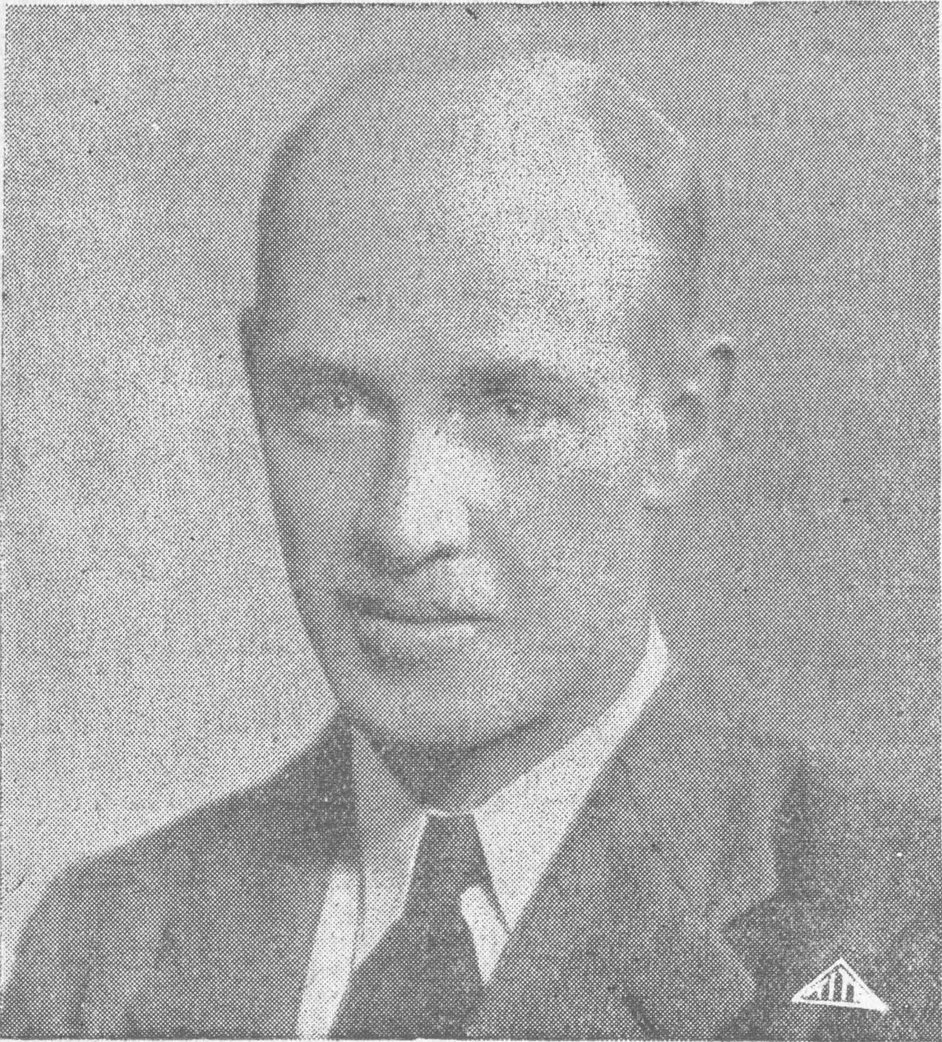
Dr. Robert B. Robertson is now plunging into a new battle — after the battles in which his courage shone during the war in the Middle East and in Italy — to combat mental diseases in Lebanon and the Middle East.
Dr. Robertson is determined to introduce modern improvements into the Asfuriyeh hospital and to enable the poor and the rich alike to benefit from the latest attainments of modern medicine. Two nurses specially trained for mental diseases have lately arrived from England to reinforce the team of specialists who are now working with Dr. Robertson.
Dr. Robertson is doing his utmost to establish contact with official personalities and bodies, and to bring responsible citizens to visit the hospital for themselves. Two hundred and fifty members of the Cultural Congress paid a visit to the hospital and greatly admired the work it is doing.
The opening of the psychiatric clinic on Phoenicia Street, in the Sami Saab agency building, to the west of the Daouk station, during the present month of October, will be a new event in mental medicine in Beirut. Specialists associated with the hospital will give private consultations, by prior appointment.
Alongside all this, Dr. Robertson is watching over the rise of a society of psychologists and physicians of the mind in the Middle East, whose aim is research into mental diseases. There is no doubt that the need for such a body is great; those wishing to cooperate in this field may apply to Dr. Robertson's deputy, Dr. A. S. Manoukian.