"Why should a man become a 'count' if he could be a painter?" — Toulouse-Lautrec.
Our subject was born in the year 1851.
Three years later he took ship with his family. From that time on he loved dangers, and sailing the seas
pleased him; he ventured and never drew back or hesitated.
In the last years of the past century — that century distinguished by absolute artistic liberation and a mad rush after emotions and passions — on a rainy day whose naked sun hid itself for shame behind clouds that thickened until they darkened and their color turned black, while the tall trees danced in the unruly winds and their leaves scattered, yellow and sickly — in the early morning of that day a man not yet stepping into his forties boarded a small, wretched cart, his direction the south.
The cart set off, scattering into the cold air a thick spray of dark brown mud, and wound through the intersecting streets of the city without anyone paying heed to the harsh sound of its wheels, without a stray dog or a wayward hen or a lost rooster starting up before it.
Yes. No one noticed this cart but one woman. And who would turn to look at a cart carrying a lone man, if not a woman? But this woman was not like other women. There at her window at the head of the street she stared at the cart as though she saw the past in its minutest details, and glimpsed from where she stood no gleam of light; beside her four children, most of them heedlessly at play, the eldest standing at his mother's side, staring with her as though he had lost something grave — say rather, lost life itself... And on her arms a little girl, silent, quiet save for a faint sound, or half a sound, that she sent up now and again out of pleasure in life... or the semblance of pleasure.
In the mother's eyes there was a deep wideness and a vague, frightening emptiness such as no human being had ever known in a woman's eyes before, and over them hovered
two great tears, wavering... Would they pour down in grief for the one whom the rain had wrapped away,
or flow to ease a choking anguish and care, or stay where they were, trembling for fear of a chance glance from a merry child, secure and easy of mind?...
Her daughter asked her, staring like her at the cart as it vanished into the mist of the falling rain:
— Where is father going, and when will he come back?
And does the mother know where her husband is going?... He has set out many times like this... and come back, without her expecting it of him or awaiting it...
Nay, is there anyone in the whole city who knows where that strong man has gone, gambling his own life and the life of his family? Does
anyone in the world know where he is bound — he who was wealthy in his youth, then divorced the banks out of passion for painting, and grew poor and made his family poor?... Does anyone know where an artist is headed once he has started on his way?
No... No man ever knew it, and no man ever will... not even that young dawn-farer in the small, wretched cart trundling shabbily through the pouring rain, the drops scattering over its roof, laughing, guffawing... in
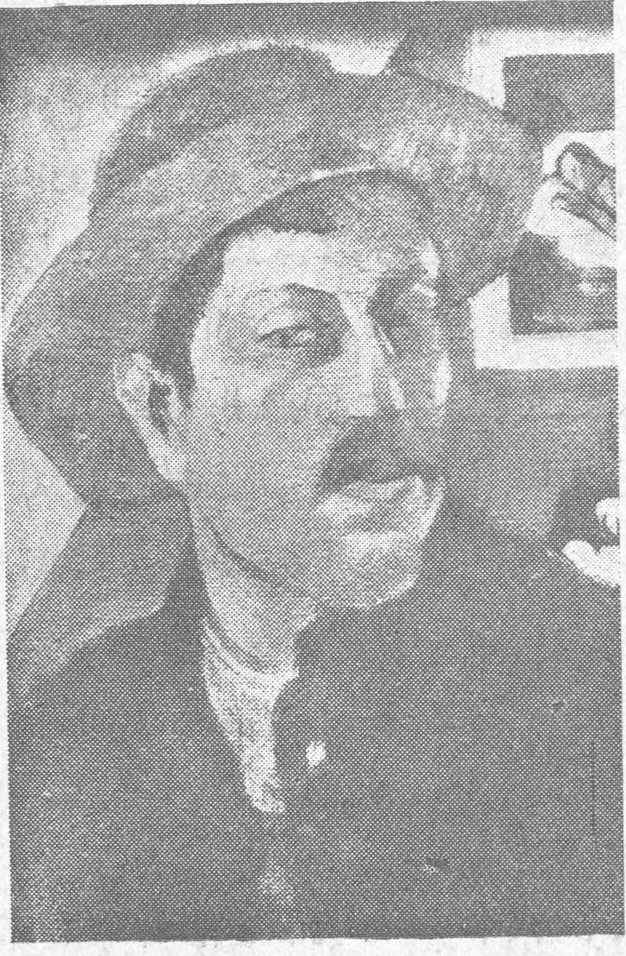
every direction.
Where are you bound, Paul Gauguin?
Let us gather up the memories as they slip from his imagination one by one — perhaps we may learn his past, or divine his destination.
At seventeen he was a hand on a steamer plying between Le Havre and Rio de Janeiro, but he soon gave up this work, and his family placed him in a bank when he was on the verge of twenty.
At twenty-four marriage overtook him, and he married a Danish girl who took to accompanying him on Sundays, sitting beside him, following with loving glances the movement of his brush and the appearance of the colors playing
Raymond Correa — Gauguin