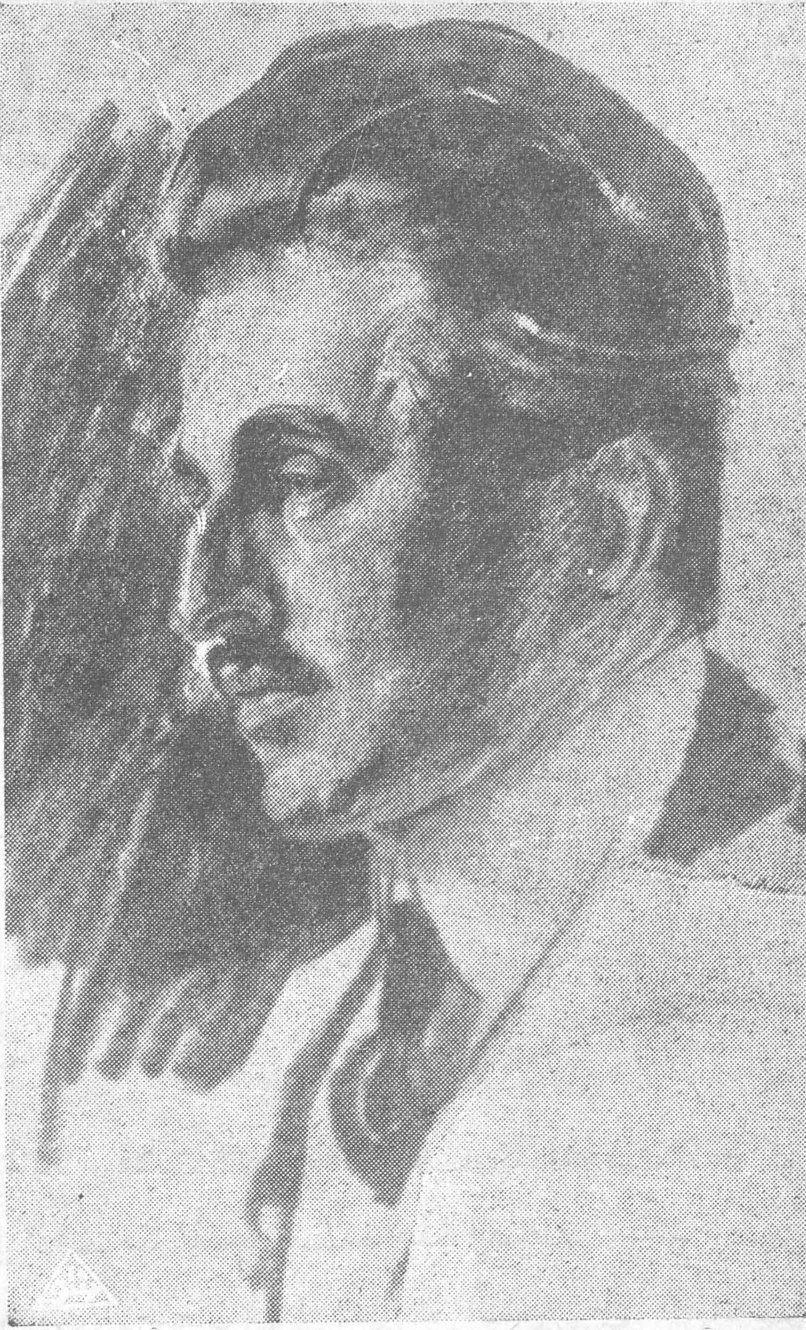
Ameen Rihani
"The Heart of Lebanon" is a piece of a poet's heart, a canvas from a painter's brush, and the handiwork of a man of letters who knows how to enter his subject and choose for it the mold that moves the soul.
It was said of the books of al-Jahiz that they teach the mind first and letters second — meaning that they do not teach the mind so much as they teach letters, or rather that their teaching of the mind surpasses their teaching of letters.
As for the books of Rihani — and "The Heart of Lebanon" suffices us for now — they teach the mind and letters in equal measure and with equal standing.
For Rihani the thinker, the reformer, walks side by side with Rihani the man of letters, the artist, the poet. All these qualities, interwoven and in harmony, make up the personality of Rihani the writer.
For that reason the reader never grows weary when he is in Ameen's company. If he undertakes to give you a valuable lesson in reform, he delivers it in that manner which endears it to heart and mind, so that you enter into it without strain or fatigue.
Nor do we think his lessons are all given in that dry mold in which lessons are ordinarily given. Rather they are given in a style we may rightly call "Rihanian," for I know of no writer other than Rihani who has used this style. They say there is a strong resemblance between Rihani and Voltaire in the satirical bent each of them pursued. But Voltaire's satire is harsh, painful, sharp — it is like lance-points that prick you and hurt you. Rihani's satire, on the other hand, is a gentled, agreeable satire, which the reader
takes in as he takes in a joke that makes him laugh in order to profit him, not to pain him. And the difference between the two is plain. Voltaire wrote and mocked in order to tear down. Rihani wrote and mocked in order to build a new nation, one that would keep from the past only its immortal glories, while its rotten traditions it would bury in the vault of "antiquities" — a vault indispensable to every nation climbing, step by step, the ladder of refinement and civilization.
A faction of ill-wishers accused Ameen Rihani of working for the Arabs and not working for Lebanon... so says this faction... And I say to this faction and to whoever has gone along with it: can Lebanon be served better than Rihani served it in his book "The Heart of Lebanon"?
If we wish to take a clear picture of this beloved homeland, we shall find it nowhere but in "The Heart of Lebanon." And if we wish to serve this homeland by rooting out its diseases and raising it up as a firm social edifice, we shall find the foundations of that edifice nowhere set out more clearly than in "The Heart of Lebanon."
I say this without partiality and without heated enthusiasm. For I, a Lebanese, was ignorant of Lebanon until I found it, in "The Heart of Lebanon," a homeland where opposites mingle, and where the present mingles with the past and the future. In it you pass from Souf to Hajjaj, and so you pass from the "behatted" city to the simple, "humane" city, which carries peace, tranquility, and steadfastness in its hands, and in its left hand carries the heart that receives you with an "ahlan wa sahlan" innocent of affectation, artificiality, and guile.
And in it you pass from Gharzuz to Jbeil, and so you pass as the hero of a novel passes from scene to scene to scene. And each of these scenes bears its own color and its own picture. In Gharzuz you hear the hymns sung to a wonder-working saint among the saints of the Mountain, and in Jbeil you hear the hymns sung to the god Adonis or to the goddess Astarte. Between Gharzuz
and Jbeil lies a distance not worth mentioning, as distances go. And between the hymns recited to the wonder-working saint and the hymns chanted to Adonis and Astarte there is a bond so close that the first is wondrously interwoven with the second... It is the past living with the present, and it is the present that gives you a picture of the future.
Did you know all this about Lebanon? Did you know this cast of soul that is ignorant of the measures of time, and so lives in past, present, and future? Here is the secret of the Lebanese singing of his bygone glories and forgetting the present. Here is the secret of the Lebanese clinging to his traditions, fixed in his breast more firmly than the rocks in the breast of Lebanon.
Rihani depicts all this in his own particular style, and so he spreads enthusiasm through your breast and awakens in your heart the desire for reform.
He does not hand you his opinion as opinions are handed out, merely because it is an opinion. Rather he depicts the situation for you precisely and comprehensively, and leaves you afterward to draw that opinion yourself, as the sound opinion for sound action. And this is a virtue that must be credited to Ameen: he makes the reader a partner in finding the remedies required for the ills. Thus the reader comes to action and to enterprise with awareness and understanding, because the reader feels, between himself and his own soul, that it is he who holds the right and correct opinion — not the writer himself, who has done no more than depict the ailment with masterly depiction.
This "suggestive" style, as the psychologists call it, is Rihani's style in the call to reform.
The possessor of such a style must needs be a poet, a man of letters, and an artist, so that he may command the feelings of his readers. And in truth Ameen Rihani — who was called "the Philosopher of Freike," and of whom it was commonly said that he was a great reformer and a great thinker — contains within himself as well Ameen Rihani the man of letters, the poet, and the artist.