This is an interview given by a distinguished Swedish lady to the correspondent of The Woman's Voice, Mr. Kamil Basila, on his recent visit to Sweden.
I write to you from Sweden, and in Sweden there are many things to catch the attention of our ladies in Lebanon; the most important of them is the position of the Swedish woman, and her standing in relation to man. For that reason I tried to get in touch with a Swedish lady of eminent standing among the ladies of this country, so that there might be between us a talk reserved for The Woman's Voice. This lady, Mrs. Branitter, one of the brilliant women of Sweden, spoke to me with a frankness and a tact such as I had never known in any lady — especially when she learned that her talk would be carried to the Arab world in the pages of The Woman's Voice.
Mrs. Branitter said: The Swedish woman does not differ from woman in the Scandinavian countries generally. She works in all the fields of life, side by side with man. You see her wherever you see man: in the courts, the offices, the shops, and the factories; and she occupies, besides, the great administrative posts of the state. She has taken her place in Parliament, a bold deputy defending the right of the people, with no distinction between its women and its men.
From all this you can observe the extent of woman's mental activity. It is great indeed, for in the field of culture woman has attained a degree that men may envy her.
Perhaps this position has affected woman's life among us, for she no longer cares to sew her dresses with her own hand; she buys them ready-made from the market, because the market offers them at acceptable prices and takes care to select models of the best style.
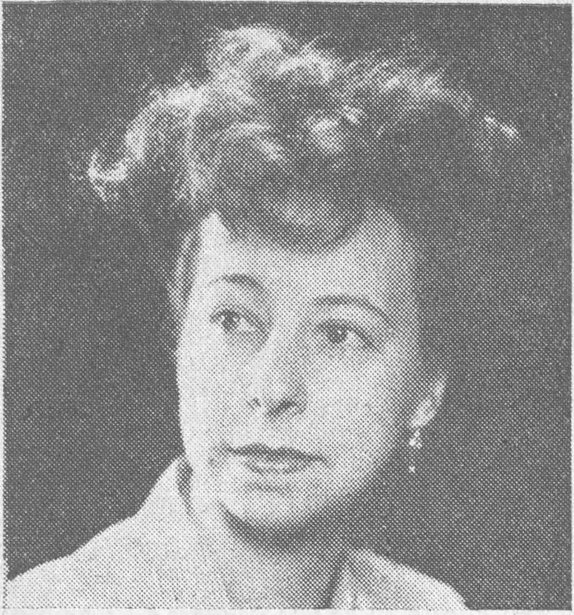
Mrs. Branitter, who gave this interview
And the freedom of woman among us must not be understood otherwise than in its true light. Freedom has had no effect whatever upon morals. For that reason a woman may not enter a cabaret without being in the company of a man who watches over her — even though drinks of every kind are absolutely forbidden in the cafés and restaurants.
In the family field, woman does her share of care and activity. And I may properly point out that the family in Sweden takes a particular course: childbearing in great numbers is not desired. Perhaps this is one of the results of the last war, which pictured to fathers and mothers that their children would become fodder for the fire... So the father and the mother, among us, have agreed to limit births, and the number of children does not exceed two...
In her hours of leisure, the Swedish woman masters the kinds of physical sport — "tennis," skiing on the snow, bicycle riding, and others.
As for women's associations and what goes with them, the woman among us does not concern herself much with them, for she is no longer in need of such associations, having obtained all that is necessary to her of freedom, culture, and equality.