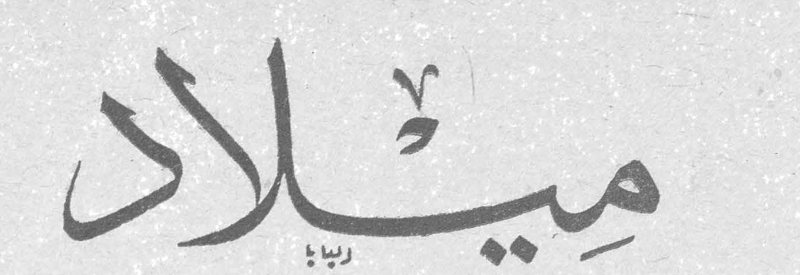
— Pressure breeds explosion. I have exploded, good people!
Then he began talking to himself, counting on the fingers of his left hand: Milad, feed the cow and the calf. Milad, turn out the goats. And — imitating his mother's voice — Milad, for my sake, cover the jar.
Then he sprang up and shouted: All that's left is: Milad, sweep the house; Milad, wash the dishes; Milad, wash the clothes... Milad, knead; Milad, bake... And where is death, then? I haven't a minute to scratch my head.
His sister Froseena burst out laughing, and his anger exploded and he bared his teeth at her threateningly... She laughed and said: Anyone who heard you talk would say you were Khoury Murqus, drowned among his books of theology and Syriac till he forgets his lunch and his supper.
This is the work of peasants like us, my dear. Am I sitting idle? And where is your mother? And where are your father and your brothers? All of them at work.
This talk fell upon the mother's ears. She threw the load of firewood off her shoulder and stood listening. Then she came in, forcing a smile to appease her seething son Milad, who said when he saw her: Here comes the she-demon — a woman without religion; she never rests and never lets anyone rest.
She said to him with fond tenderness: What was that you said, my soul?
Milad answered her, half in jest, half in mockery: Nothing, soul yourself. How sweet your tongue is, and how many your demands.
— Oh yes; I heard you talking.
No yes and no anything. A house like hell, a life as disgusting as your faces.
He said it and walked off, clattering. His mother walked at his right side, teasing him and humoring him, and she kept coaxing until his familiar laugh burst out and his boiling pot subsided. The mother went back, saying to herself: He is right — a life that is all toil and misery. Poor Milad has never seen a white day. Then a violent thought crossed her mind that blackened her face. And that black cloud soon broke when her neighbor appeared on the road and pelted her with talk from afar: All the boys have become like your son, Umm
Said. The whole plague comes from Ighnatius's boy. He spent two days in Beirut and came back yesterday — and with news, Umm Said, news of every shape and color. Boys have little sense. Handle your son gently, or the loss will be yours, sister.
Umm Said went up to her neighbor to inquire, and the two stood at the edge of the road — in Umm Said's hand a basket with things in it, and the other woman's jar full upon her shoulder. The talk ran half an hour and more; and had the village's fault-finder, who decries this failing in its women, not chided them, Umm Said would not have withdrawn into her house, nor the jar-carrier gone off on her way.
The jar-carrier's news upset Umm Said, and her heavy lips did a gentle little dance. The news tied her hands, so that she no longer knew what to do. She would begin a task and drop it, and she stayed that way for more than an hour. At last she remembered that noon was near and that her husband would be coming home to eat. He is exacting, and will have nothing to eat but cooked food, above all the hearty kind... His motto: nothing carries the knees but the belly. So she set the pot on the fire and began picking over the lentils, but her neighbor's news went on occupying her mind. And while she was lost in thought, another neighbor happened past; Umm Said hailed her and, the morning greeting returned, said: Come in.
She came in, and the carpet of discussion was spread. The subject was the neighbors' son, back from Beirut, who had disturbed the quiet village. The talk ran long, and the scales of judgment were set up. The two women went over the houses of the village one by one, and then their minds settled on this: it was a state of things not to be borne. The grown men have gone off to America, and the young ones will drift down to Beirut — and to whom will the land and the houses be left?
Then Abu Said cleared his throat and coughed. The neighbor fled by the west door, and he came in at the other, snorting and grumbling; and before he could shout, Umm Said forestalled him: Health to you.
He answered from the tip of his lips, sighed, and sat down, his huge frame
filling the mat. He said: Praise be to God. And Umm Said answered, as always: Every hour. When he had drunk a jugful of water he wiped his mustache with his hand and motioned to his wife, asking after her scowl. She said: Hush, man — very ugly news.
Abu Said took her meaning and said: For your life, tell me: when was your news ever good? I have told you a thousand times, don't carry the ladder crosswise. Sing another tune, Umm Said.
She was stung, but did not answer his gibe, lest a quarrel flare up. She said: The talk stays between us. He cut in: Don't say the talk stays between us and then have the talk all over creation. She was taken aback and fell silent. He said: All right — speak. She said: Our neighbor's Beirut boy has been playing with the lad's head; he has made the life of Beirut glitter in his eyes. He may go off with him.
Abu Said took it in and shouted: And you believed it, madwoman! And if he goes, he'll come back like the dogs. Let him go try his luck; when he's pinched he'll learn that he has been living in plenty. Umm Said stared at him with wide eyes, and he said: Eat me with your eyes, then. Owl! You have nothing but tidings of doom. And the mother's tears dissolved the talk.
And Abu Said was touched, for the first time in his life; he took another line and said gently to his wife: Let us be — let us live a couple of days like other people. Have you forgotten the proverb: my heart aches for my son, and my son's heart is set on stone. God keep you — up now, and give us our dinner.
The poor woman was appeased and rose; but she remembered that her boy Milad had not yet come back, and asked her husband to wait until his son returned. He refused, ate his dinner, and went back to his work. The weather was fit, and he had things that must be finished before the rainspout began to pour. The sky was troubled, and the lightning had been flickering for nights.
In the evening the mother wanted to broach the subject of Beirut with her boy, but Abu Said knit his fearsome brows, and she held back.
And on the morrow Milad went off to Beirut — a setting-out like Imru' al-Qays's. The boy vanished; they waited two days, three; at last they learned that he was in the city. A week passed, and two,
and Milad did not come back. Whispering crept through the village: Abu Said's boy is going round people's doors, hungry and naked...