grew weak in him. When the two brothers grew up, it became hard to believe that they were twins. Had their mother not died, and had the two lived together with art sheltering them under its spreading wings, the outcome would have been other than it was.
Guidance from early childhood, with persistence in it, has the greatest effect upon the artistic image that is imprinted in our subconscious mind. It takes root in our senses and alerts us to whatever music it selects for us. This is why our understanding and appreciation of classical music have grown weak: we did not hear it as children, and so our ears never grew familiar with it; instead we heard much of other kinds of music that bear no relation to art, and we chewed them over and reckoned them art, blind to their true nature, because our subconscious mind prompted us to it.
It behooves us, then, to attend to the artistic guidance of our children, and to begin this guidance from the first years of their childhood, by providing them with all the means that lead to the raising of their artistic level.
1 — Let us take care that in their hours of leisure they hear the finest kinds of the world's classical music, and let us help them distinguish it from the
debased music that is unlike it; in this way we cultivate in them sound taste and the power to appreciate true art.
2 — Let us strive to make of our little home an exhibition of pictures possessing artistic value — or of copies of them — and let us enlighten our children with all that their understanding can digest about the lives of the great painters and about the artistic values by which modern art is measured...
And on the fifth anniversary of his birth, let our gift to him be a bundle of colored pencils and a great big notebook on which the child may express the fancies of innocent childhood crowding his mind. With practice, the power of observing the harmony and clash of colors grows in him, and his taste is refined.
And when his birthday comes round for the tenth time, and we sense in him an overflowing eagerness to inquire into the secrets of beauty, let us seize this unique opportunity and present him with a miniature collection of the best of the world's artists; he will pore over this collection, coming to understand it, studying its lines, its colors, and its artistic significance.
And whenever we are invited to view an exhibition of paintings or of artistic statuary, let us encourage our children to accompany us. Thus they will have the good fortune, from time to time, of enjoying the finest pictures; they will acquire the power to form their own opinion of them, and the boldness to criticize them artistically should the need arise. They will then have taken a swift step along the road of art — that road which was once rugged going, until we lifted the stones from its edges with our own hands, so that it became broad and spacious in its reaches, and our children make their way along it in complete ease. Their lives become rich in meanings and in values, and are gradually freed from the artistic barrenness that has taken hold of us.
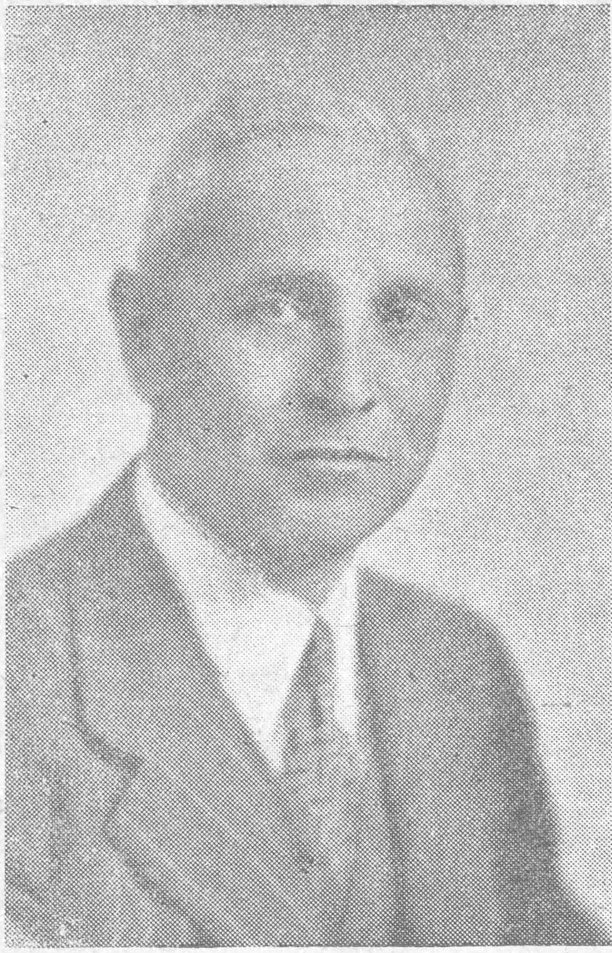
Educational circles received with pleasure and satisfaction the Lebanese government's gesture of appreciation toward Mr. William Stoltzfus, president of the American College for Girls in Beirut, in conferring on him the Lebanese Education Medal.
William Alfred Stoltzfus was born in 1891 in America; his forefathers had emigrated there in the eighteenth century in pursuit of freedom of belief. Reverence for this freedom remained a living force in the souls of that community's descendants, and it appears plainly today in Mr. Stoltzfus's life and in his service at the Junior College which he heads. His whole life may be considered a life of teaching, for he practiced this profession from his boyhood, when he was tutor to the younger children of the family, and he persevered in teaching even while pursuing his own studies, until he obtained his higher degree. At the end of the First Great War he joined the American Mission in these lands, working first in the American orphanages and relief centers in southern Lebanon; he was then appointed president of Aleppo College, and afterwards — for the past ten years — president of the Junior College for girls. During the thirty years Mr. Stoltzfus has spent in this country, the fine qualities that adorn him and his love for the people of this land have shown themselves plainly, whether in his work in social service or in teaching. There is not a single country in the Arab East without a number of his students, men and women, who, thanks to his training, have become a pillar to lean upon in building the renaissance of this East.
"The Woman's Voice" congratulates Mr. Stoltzfus on the appreciation of the government of this country, which gives him a place of love and gratitude in its heart.