
From “the Flood” to “the Redemption,” from sin to salvation — the life of humanity with all its wrath and its storms, and all its relief.
A fundamental stage in the history of the Old Testament was presented to us by the administration of the Lebanese Academy of Fine Arts — the music branch — on December 21 of the past year, in a delightful concert that gathered an elite of connoisseurs of the arts in an atmosphere where complete solidarity and mutual support prevailed. Before we say our word about the Flood and the Redemption, let us speak of what concerns Saint-Saëns and Franck, and so set out what led us to understand the Flood and the Redemption as the two poles of a fascinating upheaval that took place in the history of the Old
Testament — an upheaval whose consequences were dire.
Camille Saint-Saëns was born in 1835, the era of the successive revolutions in Europe and of their repercussions in France in particular; so he was marked by his love of logic and of reason, and this affected his music, which came out clear and plain in its intent. So keen was his intelligence that logic overwhelmed his emotional genius, and his melodies carried some small measure of stillness; yet his feeling flowed a little in the Flood, and this oratorio joined grace of expression to surging feeling. He composed many pieces, but the Flood aroused the astonishment of the theorists for the fine style of its musical composition, without containing any overflowing musical inspiration.
We mention in particular the “Danse Macabre,” in which he describes for us the dance of the skeletons of the dead before the gates of the graveyards, in a descriptive style rare in its like and its splendor. As for Franck, he was born in 1822 in Liège and completed his musical studies in France. He was marked by purity of conscience and goodness of conduct; he devoted his life to art, and especially to religious art, in which he found a heritage that satisfied his overflowing spiritual ambitions. In his writing for the organ he was influenced by the style of Bach, after having found his own personal mold of expression. He wrote several oratorios, among them “Ruth,” the Redemption, the Beatitudes, and Rebecca; and he wrote several pieces of secular
music — a symphony and pieces for the piano. All his works were marked by a clear leaning toward mysticism and the things of the spirit. We have now seen that Franck was born, and composed, before Saint-Saëns; but Saint-Saëns's love of logic drove him to compose the Flood after he had heard the Redemption performed, for he saw that the Redemption had a first cause, which was sin, and a powerful mover, which was the Flood. And since he was marked by his power of description, he saw fit to compose the Flood, thus joining his own music to Franck's.
“From the Flood to the Redemption” was a concert that delighted us and achieved a remarkable harmony. The Flood is a magnificent descriptive piece in which fine description shone forth, especially in the second movement, when he depicts the wrath of the Lord descending upon mankind in the likeness of massed clouds, strong winds blowing right and left, and heavy rain falling without pause for forty days and forty nights, until the description brings him to the opening of a window of the ark, from which a dove goes out to survey the state of the earth sunk beneath the waters of the Flood. Here the music puts on the garment of relief, and the melodies rise glittering like the glitter of the sky after a torrential rain that
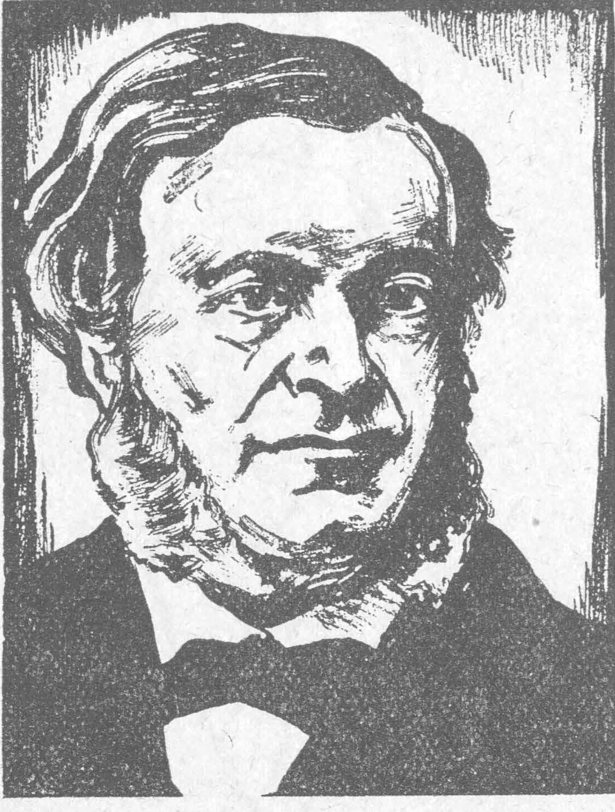
Franck
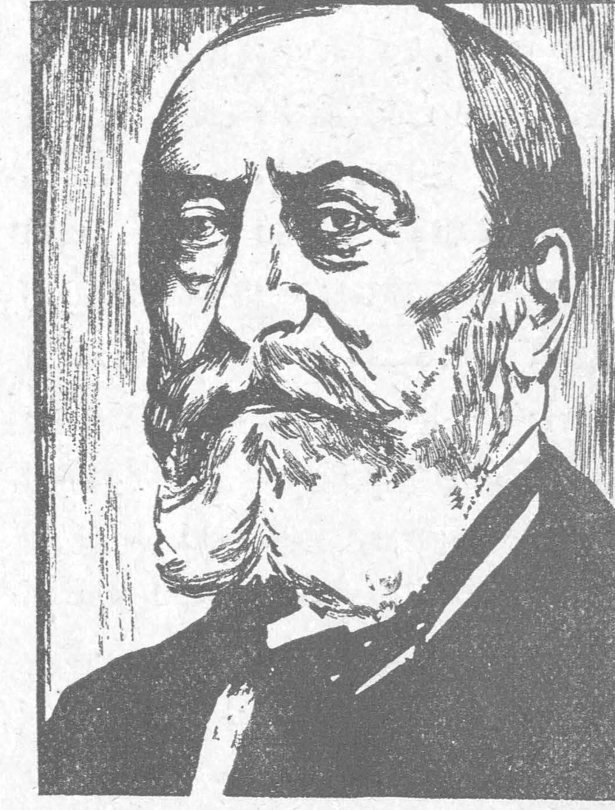
Saint-Saëns