and her nobility depend the health of the sick and their recovery. And who but woman can perform work such as this — the work of the tender mother, the devoted sister, the compassionate daughter? And what woman could bear to see before her a father or a mother or a child tossing on the bed of sickness while she stands with folded hands, not knowing what to do or how to do it? The feeling that calls woman to suffer for her patient is made complete when it is joined to sound science and firm principles.
As for the field of public health, it is the nurse who can reach the great mass of society's classes and raise them, in health, to the desired level, and guide them to the best means of protection against epidemics, or against the bodily decline that comes of malnutrition, poverty, and ignorance. To them she is the messenger of knowledge and of life.
So to the fathers and mothers I address this appeal: your daughters must cast off the garment of ignorance and of dependence upon others in all the affairs of life. If they look toward a profession,
then let that profession be the art of nursing. It is loftier in standing, and richer in benefit and blessing, than all the other professions; and it is not the lowly occupation that some ignorant people imagine, but an exalted medical study, and a girl has every right to take pride in this precious treasure of learning and work.
To the daughter of Lebanon who strives for equality with man; to her who desires independence: take the art of nursing as a profession, and you will no longer be a dependent upon man; you will feel that what you earn is honest, lawful gain, and a source of happiness and comfort to many suffering patients.
To her who wishes to preserve her captivating femininity: it is a profession that reveals in you its noblest aspects, for femininity shows itself most of all in movement and in life; and it adds an important distinction — science and knowledge — and so raises you above remaining a mere amusement for man.
And to her who has dedicated herself to the happy, ideal married
life: spend a few years in the study and practice of nursing. For the science of nursing — with the experience it develops in the diagnosis of disease, its training in first aid, and its constant contact with all classes of the people, from the highest to the lowest — prepares you for that sacred office, the office of wife and mother, and readies you for the home as no other study or preparation can equal. And beyond that, this art opens the way for you to put into actual practice the gentle character and lofty qualities that were yours already, and develops in you the spirit of sacrifice, of sympathy, and of tenderness; so that you practice your profession and perform your work led to it by the love of an ideal humanity, lightening misfortunes and pains. Your view of life changes, and you learn then how happy you are compared with the manifold torments the world endures.
Today we are in the most pressing need of specialized nurses possessed of courage, who spend themselves in the cause of the general service of humanity.
How noble is the girl who makes of her life a candle that melts to light the darknesses of ignorance and the swamps of wickedness. How noble the character of the girl who offers herself as a servant, sacrificing her comfort and her safety to lighten the pains of the sick — that girl who finds her ideal in life not in wealth but in continuous service, smoothing the difficulties that stand in her path and making of them a ladder for ascent. How great is the sacrifice the nurse offers in her struggle. It is a sacred struggle. It is a faith far removed from selfishness.
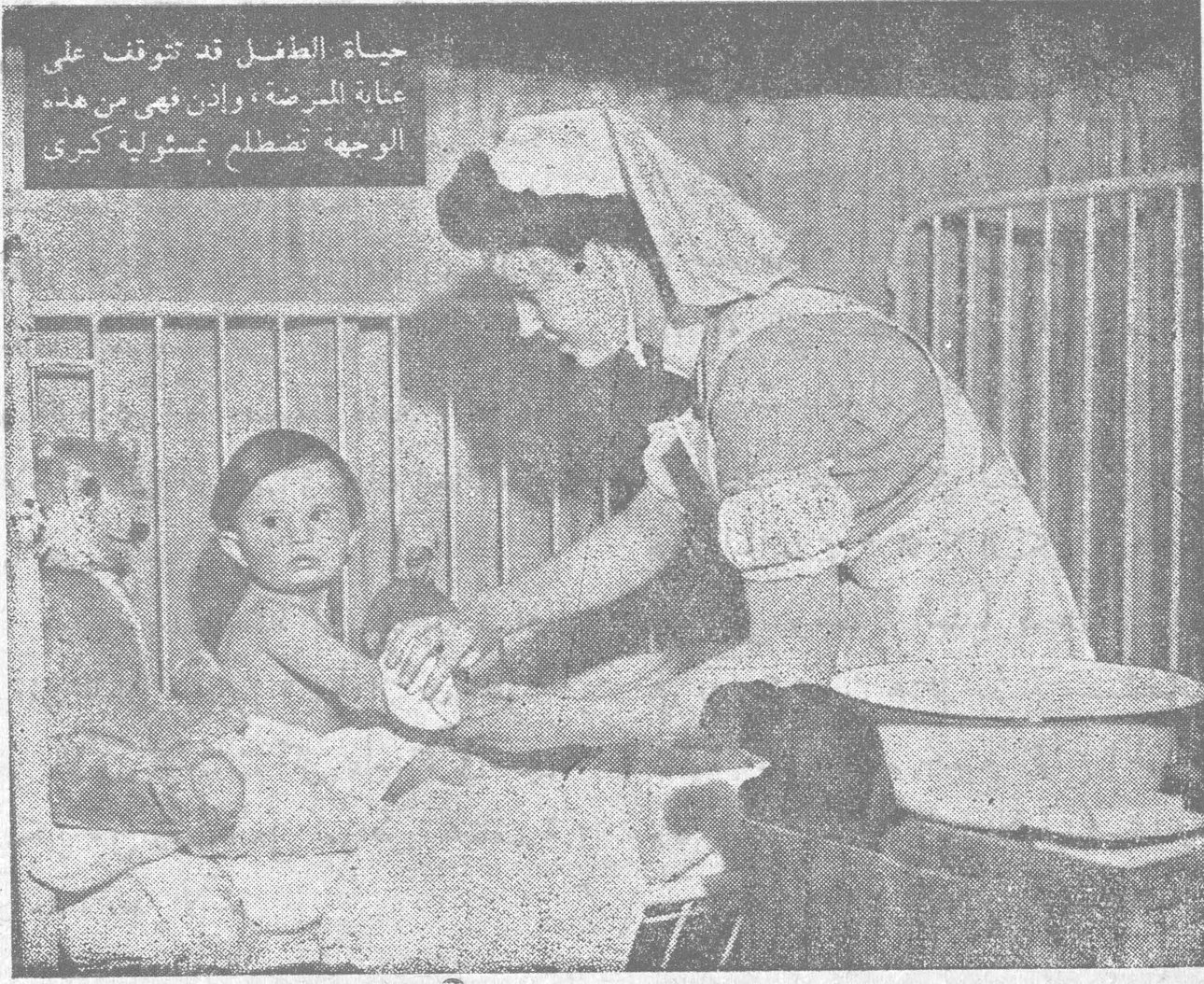
A child's life may depend upon the nurse's care; from this standpoint, then, she shoulders a very great responsibility.