During the months of their pregnancy, women call at maternity hospitals and on specialist physicians for the care of their health. These women vary in age, in general culture, and in the environment in which they grew up. But one thing remains common to them all... and that is fear!... Fear of the doctor. Fear of the outcome... fear of the illusions crouching in the souls of these mothers... And doctors take particular care to remove these fears and illusions, or at least to lighten them, by means of the psychological treatment at their command — drawing close to the expectant mother and winning her confidence and her peace of mind.
Doctors agree in principle that natural childbirth, in which the expectant mother is not exposed to hospital visits and the use of various anesthetics, is better than any other artificial delivery. It is always preferable that the mother, at the hour of her delivery, be in full consciousness and in complete cooperation with the doctor, if she wishes to obtain the best result. But it is fear alone that drives most expectant mothers to insist on being given anesthetic, while we see the doctor striving to delay giving it until the final stage of the delivery, lest its natural course be obstructed by what anesthesia may bring about — the stopping of the labor pains, or the contraction of the muscles of the mouth of the womb upon the child's head.
Yes, the sedatives which the expectant mother takes under the doctor's supervision to lighten the pains are not free of risk and of exposure to liability, and every doctor prefers

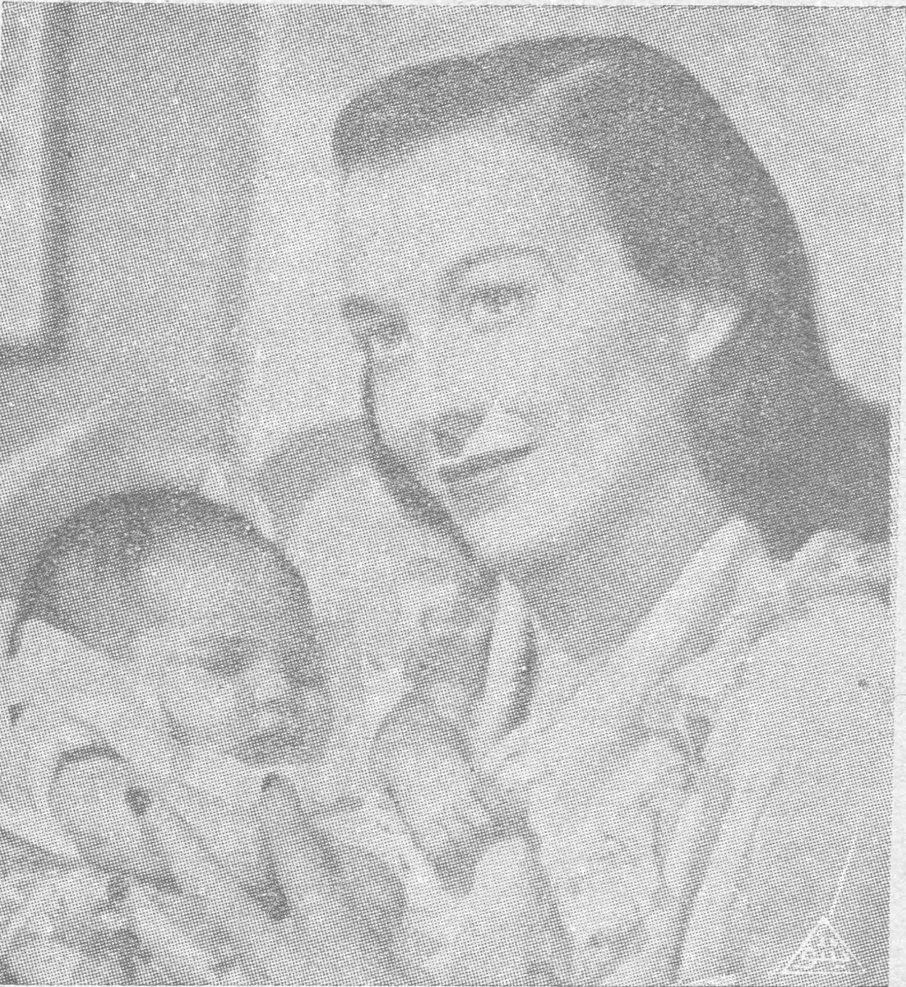
that the delivery end safely without his being obliged to use anesthetic.
But nature is merciless! And she often betrays her victims among women — whereas we see the hospital forestall this treachery and secure the health of mothers and their freedom from later chronic illness or general debility, thanks to the modern scientific means and first-aid facilities that hospitals possess. For this reason women have desired, from the earliest times, to lighten the pains of childbirth.
It is worth mentioning that the pains of labor are of great benefit, since they arise from the stretching of the muscles of the birth passage and the descent of the child through it, and these pains do not end until the delivery ends. The wise woman, therefore, is she who helps the doctor by controlling herself and bearing these pains with courage; and the higher the mother's capacity to endure pain, the easier the delivery and the more quickly its crisis is resolved.
And how greatly the moral forces in a woman's soul help in overcoming the many difficulties that confront most women of weak spirit, abounding in illusions and fears! This is the way in which a woman, by her own effort, overcomes the pains of delivery.
As for the second way — the one the doctor follows if the first fails, or in case of emergency — it is the method of general anesthesia. Doctors resort to this only after the woman has reached a state of exhaustion and collapse, and this seldom happens before the final phase of the delivery. It is in the nature of this double anesthetic to make the woman lose her sense of pain and forget the excruciating aches she suffered but a moment before!
As for the latest that medicine has attained in this field, it is the anesthetic called the "saddle-block," and this too is used in the final stage of the delivery. The manner of its use is that a whole ampoule of the anesthetic, dissolved in a sugar solution, is given by needle at the base of the spinal column. It is a property of the sugar solution that it is heavier than the fluid of the spinal column, so that it does not rise upward but settles in the lower part; and within five minutes all the pains disappear... yet the woman continues in the very same state as to the regularity of the labor and the descent of the child. She can, moreover, talk and laugh and eat... without feeling the least pain! And when the operation is over at last, the mother watches her child with eyes lined with delight and happiness, and hears his crying, in a state of spiritual and bodily tranquility.
This particular method of anesthesia is sounder than the method of general anesthesia and easier to use. It does not require the expenses which
a general anesthetic entails