In Florence there was a young man named "Federigo," famed throughout the whole province for surpassing its young men in skill at swordplay, in refinement of manner, and in nobility of soul. Before long he fell into what young men fall into: he fell in love with a maiden called "Monna Giovanna," known in her day as one of the loveliest of beauties.
Wishing to win her love, he took to jousting, displaying his arts in the lists, and set about giving banquets, holding parties, and spending money recklessly; but she joined chastity to beauty, and paid him no heed.
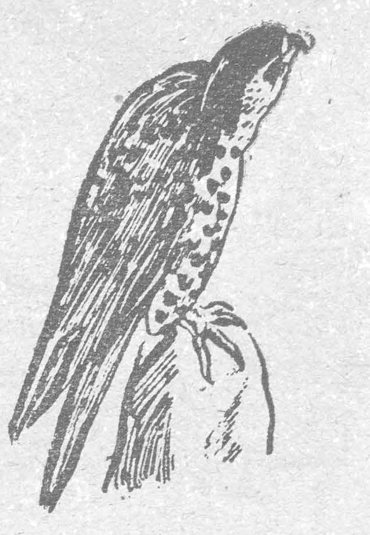
He kept up his extravagance until he lost his money and poverty overtook him, leaving him nothing but a small farm that scarcely sufficed him, and a falcon counted among the finest falcons in the world.
Love wore him down, and his ardor grew fierce, and he no longer possessed the means to live in town as he loved to do. So he moved to the farm and spent most of his time there, sending his falcon out after game, asking nothing of anyone, bearing his poverty with patience.
While he was far from the city, an illness struck the husband of "Monna Giovanna" and pressed hard upon him. Feeling that he was drawing near to death, he wrote his will. He was rich, and had but one son; and he loved "Monna" most dearly, so he made her his heir after his son, should the boy die without issue.
The wife grieved for her husband after his death, and went with her son to a house of hers in the countryside, near the farm where "Federigo" lived, to pass the year of mourning.
It happened that the boy became acquainted with Federigo, and a friendship grew up between them that strengthened with the days. The boy delighted in the dogs and the birds, and often saw the falcon fly, and wished it were his; but he dared not ask it of Federigo, having seen how intensely he prized it.
One day the boy fell ill, and his mother was most anxious for him. She took to spending the whole day at his bedside, comforting and diverting him, asking whether there was anything he wanted, and saying to him: "Ask whatever you wish, and I will get it for you if I can find any way to it."
She pressed him, and he said: "Mother, if you bring me Federigo's falcon, I have no doubt I shall be cured of my illness."
The mother fell to pondering the matter at length, to see what she should do. She knew that Federigo
loved her, but she knew also that she had never once favored him with a glance to gladden his soul and console his love with hope.
She said to herself: How can I go to him, or send to ask the falcon of him, when I have heard it is the best of falcons? Indeed, how can I bring myself to snatch it from a man who has no consolation left in the world but it?
She was certain that she had scarcely to ask it of him before he would give it; yet she remained perplexed, not knowing what to tell her son.
But her love for her boy prevailed in the end over everything, and she resolved to satisfy him, whatever the price of that satisfaction. She would not send a messenger to Federigo, but decided to go to him herself.
She turned to the boy and said: "Be easy, my son, and do not fret; tomorrow I shall go for the falcon, and I shall bring it back to you."
No sooner did the boy hear her words than he rejoiced and revived. His mother set out the next morning, in the company of one of the women, taking a stroll through the village as though she had gone out for exercise, until she came to Federigo's farm and asked for him.
He was in the garden, working the earth; for the weather had been overcast for days, and he had not gone out with his falcon to hunt.
How astonishment seized him when he was told that Monna was at the door asking for him! She saw him coming toward her, and hastened to greet him — a charmer to captivate the mind. He greeted her courteously... and she began: "How are you, Federigo, and how do you fare? I have come to atone for what I have done. You loved me, and loved to excess, and suffered by it. And I have come to dine with you today, I and my companion, to prove to you that I regret what passed from me."
He said, with utmost courtesy: "My lady, I do not recall ever having met with any ill from you on any day, nor that you ever brought me any hurt. If there remains in me today anything worthy of praise, it comes from that love, and is part of the praise that is your due... This gracious visit of yours is so dear to my soul that I would I had all that is on earth, to spend it once again as I spent it the first time. But you have come today to a poor man."
He led her into the house, and thence to the garden, and then said: "Pray, my lady, sit here with this good woman, the wife of this gardener, to keep you company and entertain you,