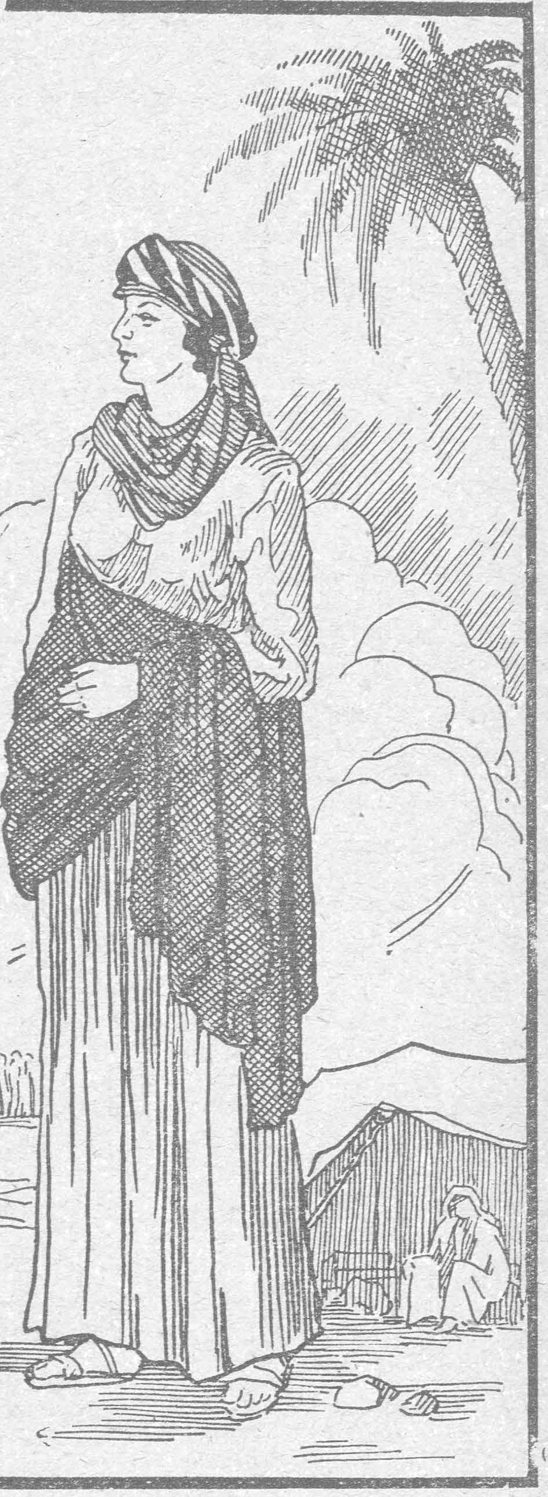
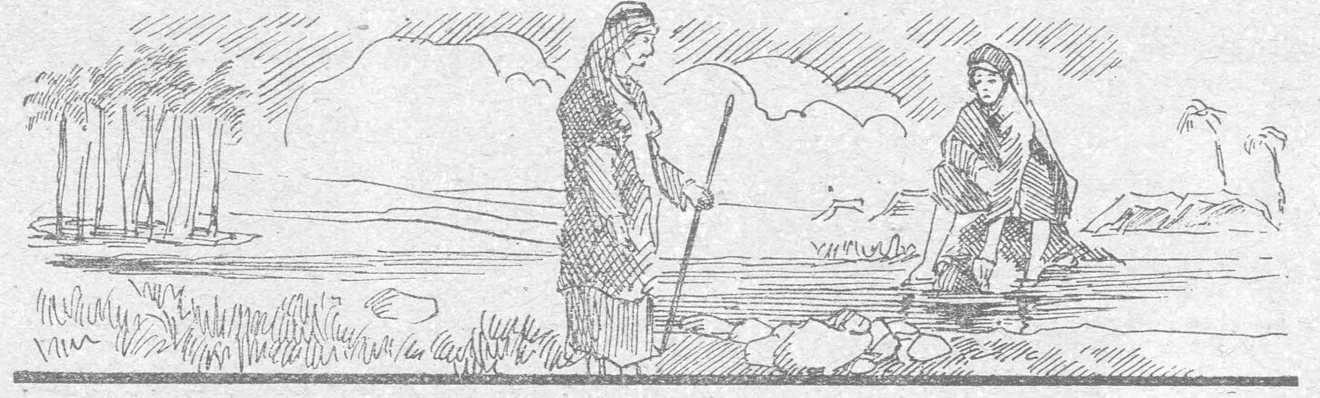
The beating of the tambourines is heard plain and clear when the morning breeze touches it, toys with it, and carries it off to the farthest reaches of the desert, to enter the tents of Banu Kalb, thrilling them with delight and stirring longing in them. But the maiden of Banu Kalb hears the beating of the tambourines, listens to the clamor of the approaching
caravan; the ululations of the women and the chanting of the men reach her ear — and she turns back to her tent, downcast and gloomy.
'Ho, Maysun,' said al-Jadal ibn Hunayf, lord of Banu Kalb, speaking to his daughter. 'Ho, Maysun, my little girl — fortune has come to you and fate has smiled upon you: today you go in bridal procession to the lord of Damascus, Muawiya ibn Abi Sufyan. Come, make yourself ready to go to him
with this caravan. Rejoice, my daughter! What honor our tribe gains by ties of marriage with the emirs of the Banu Umayya, and what a portion of fortune will be at your command, O pearl of the desert! Rise, my daughter, to your camel-litter; smile at life and lay hold of happiness. But — do not forget the desert and the virtues of the desert, and do not forget a people bound to you by kinship and affection, who live a life of hardship in this far-off wilderness.'
And how quickly Maysun's state was transformed! She became the lady of the Umayyad palace, commanding and forbidding, she who before had owned nothing but the little tent and some of the goods within it. And Muawiya ibn Abi Sufyan so willed, and ordered that his wife's quarters never be without women players, dancers, ladies-in-waiting, and singing-girls, all of them charged together with bringing joy to Maysun's heart. So the incense burned in the braziers set out for it in the palace courtyard, and the sides of the great hall filled with the most plaintive and sweetest of melodies. And Maysun sat to listen to all the kinds of diversion displayed before her: she reclined upon the costliest of couches, adorned herself with the most precious of jewels, and let her gaze range over this vast opulence and this life of ease — and yet, with all this, her memory went back to her first homeland, to the desert; nor did she come to herself until her hand was signaling to the singing-girls: 'Enough!' Then
the playing began, and stillness reigned, while her voice rose, tender and winning, chanting:
A tent where the winds flutter is dearer to me than a lofty palace, A dog barking the night-travelers away from me is dearer to me than a gentle cat, To wear a rough cloak with a contented eye is dearer to me than wearing sheer gowns, To eat a crust in the corner of my tent is dearer to me than eating the fine loaf, The voices of the winds in every mountain pass are dearer to me than the beating of tambourines, A slender youth of my own cousins is dearer to me than a violent brute, The roughness of my life among the Bedouin is sweeter to my soul than the life of soft luxury, I seek no substitute for my homeland — and what is more splendid than a noble homeland!
An uneasy silence enveloped the room and all who were in it when Maysun delivered her poem; scarcely had she finished it when eyes were glaring at her and lips all but tore her apart with rage. How could music and song be silenced for the sake of longing for tents and sand and open space? This is injustice and ingratitude! What denial of blessing! And from the far end of the hall comes a harsh, mocking voice — the voice of one of the ladies-in-waiting — saying: 'My sisters, hasten to your singing again, and excuse your princess, for she is — a Bedouin!'
Rage, O Nature! Storm, you winds! Pour down, O sky, and water the Barada as the daughter of the desert waters it, with pearls that began to fall from her two beautiful eyes. Poor Maysun