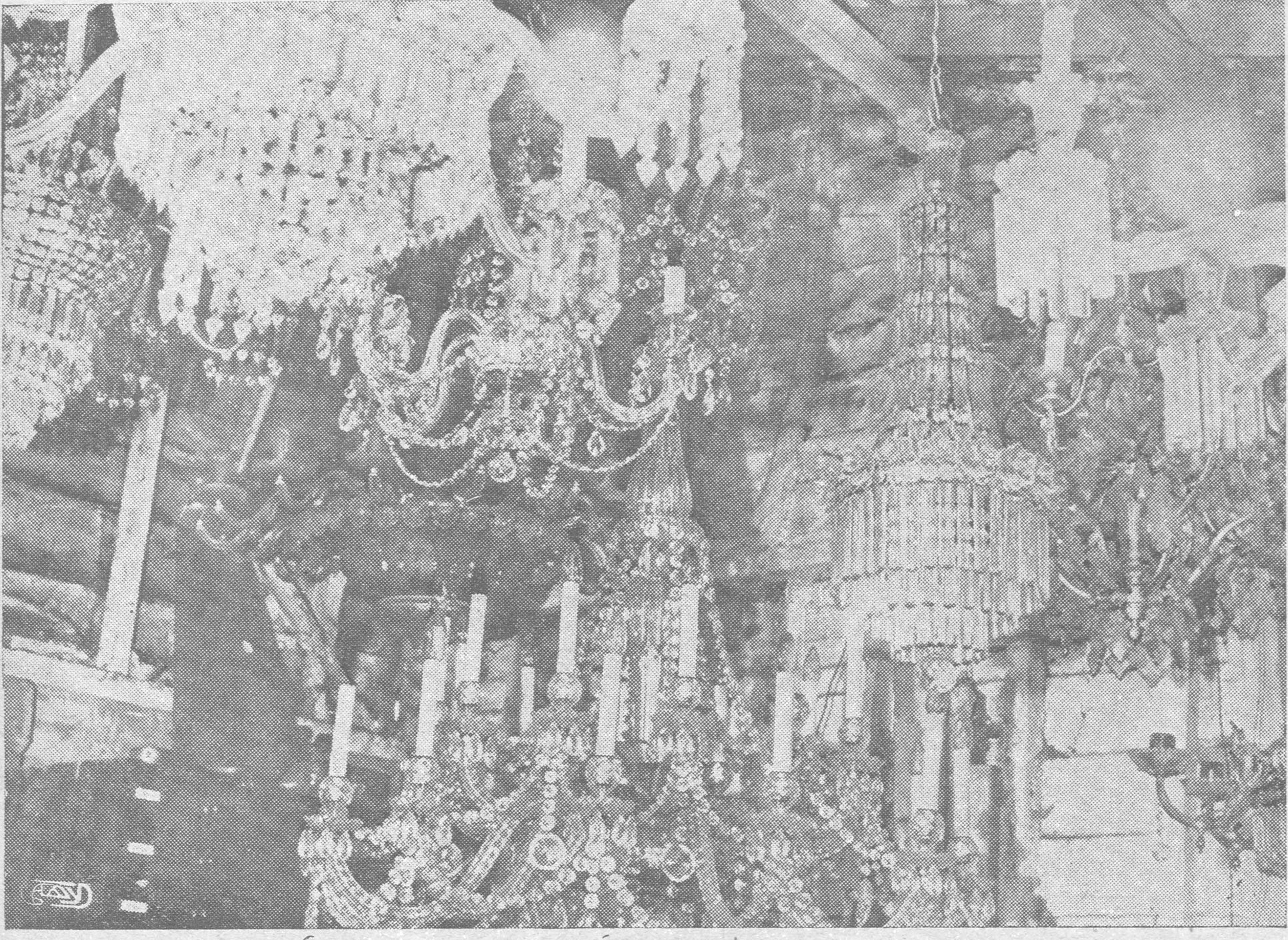
into the play of reflected lights on the other. Among the manifestations of this
composing are those glass chandeliers which spread through Europe during the last century, upon which the light is reflected and broken, creating patterns of color that work upon the soul as a piece of music does. All the palaces of Europe were adorned with these chandeliers, until their manufacture became one of the important industries of Europe, and especially of England, where it was considered a national industry. But the development of social
life in the last century toward simplicity in living, in building, and in furnishing weakened that industry, for these great ornamented chandeliers do not go with houses simple in construction and furnishing; so these chandeliers turned into historical relics in the old palaces of the capitals of Europe, and their manufacture no longer had any importance worth mentioning. Then came the last war, and the air raids on London: many of those palaces were destroyed, and many of these chandeliers were likewise damaged — which prompted a renewed concern with their man
ufacture, in order to restore what had been disfigured.
So this industry revived anew, and this revival of it has drawn the world's attention back to it: we find that the tourists from America and the other countries of the world who visit England today tour these factories with great interest, and carry a great deal of their output back to their own countries.
These four pictures show the factories of Mr. McDonald in "Apool," who is considered today one of the most skillful workers in this industry.