
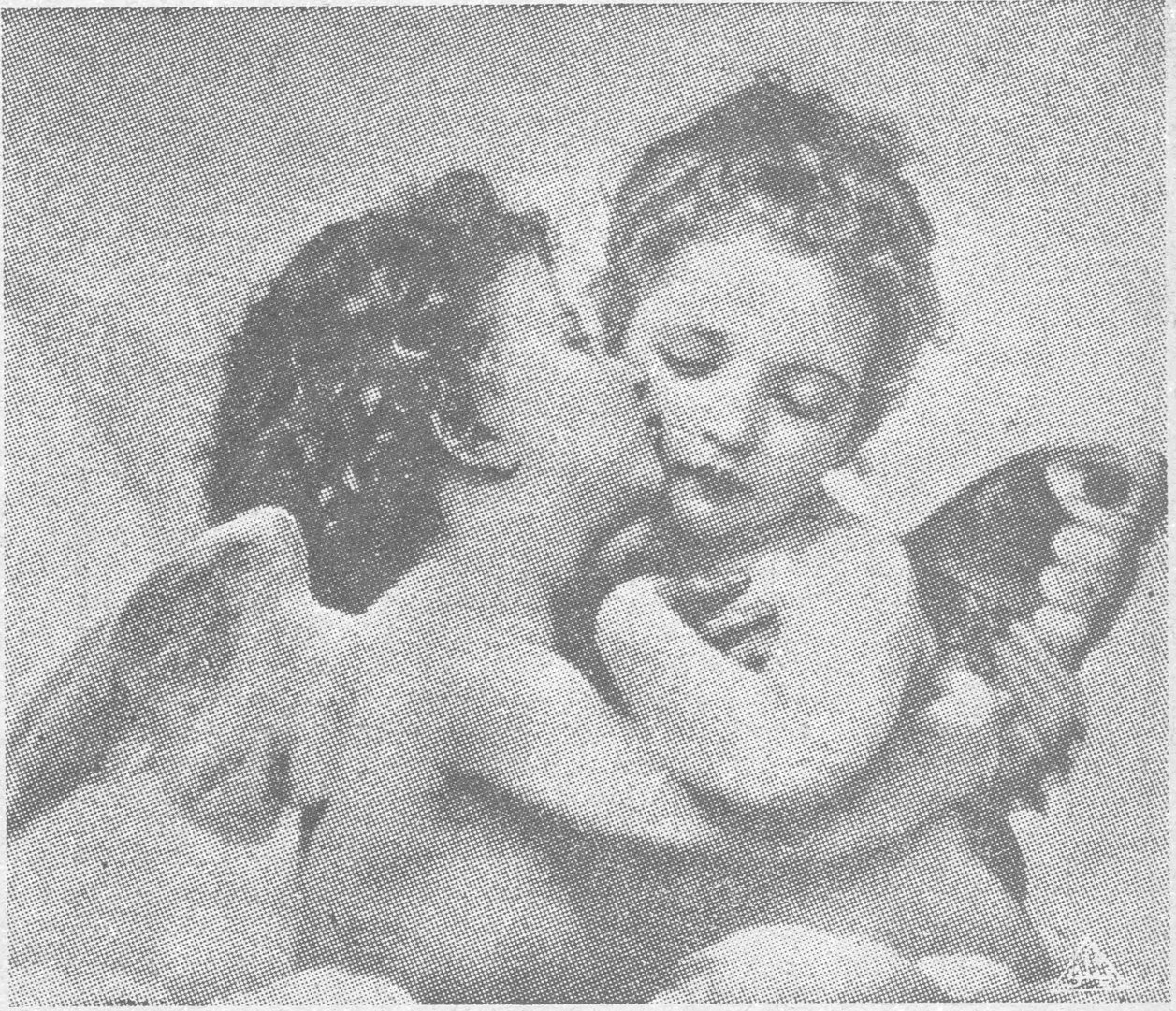
There is nothing tangible that scientists can call "love," but these scientists have managed to establish certain facts about love, as a result of their wide studies of married life and of the relations of human beings with one another. After long researches they arrived at presenting a full report on
this vital and important subject. Here are the most important conclusions on which they agreed:
What is love?
The most eloquent definition of love, in the scientists' view, is that of the poet Shelley, where he says: "This burning, leaping emotion that we call love is not merely a general thirst for a union of the senses, but for a union of the whole nature: mind, imagination, and feeling..."
Can some people live without love?
No! For we were created with an insistent desire in our breasts to love and to be loved, and this
desire must of necessity be fed by someone. Love and security — these two chief elements in the life of human beings — drive them to struggle and suffer for their attainment; no human being is content unless he has, in some corner of the earth, a companion
with whom he finds rest, and who shares his joys and his sorrows.
Do most young people marry for love?
Fifty percent of girls marry for love; as for the other half, they enter married life for other reasons, the chief of which are: to secure an independent life, fear of growing old and failing to obtain a husband, and the desire to form a family and children... And woman is bolder than man in venturing upon such a dry marriage... In this case life becomes mechanical, and it rarely lasts long or is joined with mutual happiness!
Is it true that people love their opposites?
No! The notion has spread abroad that the tall man usually inclines toward the short girl, and that the blonde inclines toward the dark man... But the truth is that the tall dark man prefers, in his heart of hearts, the tall dark girl, and the fair man is usually more drawn to fair girls: every human being prefers his own likes, not his opposites.
Are the bonds of marriage strengthened when the man is the head?
It is preferable that a marriage be equal in its forces, built upon complete understanding, without the family having a head at all. But if there is no escaping someone's taking the reins of rule, then the man has a better claim to it than the woman; happiness is rarely achieved in the family in which the seat of authority belongs to the woman — then the man's pride is shattered, and it becomes very difficult for him to bring happiness to the heart of his mannish wife.
At what age is a woman or a man most disposed to fall in love?
A girl answers the call of love most between the ages of 16 and 20; a man, between 20 and 25. After that age young people's susceptibility to burning love diminishes; but this passion leaps up suddenly after the age of thirty, and it is said that a man can love at forty with a violence and a force he never felt in the dawn of his youth...
How many times do we love in our lives?
People are not all alike, but
the studies and statistics on this subject have reached the conclusion that a woman can love, during her youth, on an average of seven