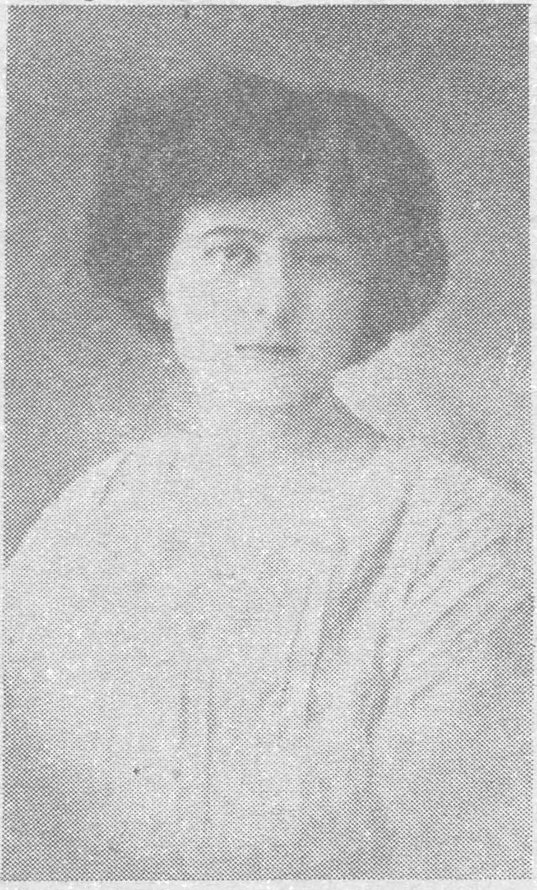
Memories of a great woman writer of Lebanon, in which she goes back to those grim, black days of this country's history... In those dreadful days the Lebanese woman, too, stood up in the face of Turkish tyranny.
•
We women worship God.
And before the lights of divinity flooded over us, we devoted ourselves to Ashtarout, goddess of love.
And what is love — when its springs run clear — but a symbol of transfiguration and of release?
The soul, when it loves, rises above base things — pure, cleansed of hatred and of envy and of rancor and its devouring fires. Rancor! That devil of the seven evil spirits.
The soul — in the hour it loves — slips loose, springs free, is liberated from all its thorns and its crosses and its nails.
Love, then, is nothing but freedom.
•
Freedom, for the men who were born as I was, in days of darkness that preceded the dawn of the twentieth century, was no intangible spiritual thing. She was an imperious enchantress who bewitched a company of men of awakened conscience and bound them in the chains of her will. She would raise her finger — as in the legends — and her worshippers would march; then she would lay her finger on her lips and they would halt and hold their breath; then she would wink her eye and they would put on false faces and cloak themselves in cunning, chanting verses of praise for the tyrants and the rule of tyrants; then her lips would part in a smile
of sly, contented coquetry and they would draw back, saying:
The hour has not yet struck — but strike it will!
That was in the world of men.
And the women??
In the boarding schools we would
be favored with "contraband" — those passages clipped from the newspapers of our free men in Egypt and America.
And a year before the proclamation of the Ottoman Constitution we were secretly memorizing two poems by the man who breathed the breeze of freedom, Sheikh Ibrahim al-Yaziji, and delighting in reciting them with fervor in the hours of our innocent evening gatherings.
... And the hour struck.
The Ottoman Sultanate proclaimed its adherence to the circles of Western democracy and brought the Constitution out of its tomb.
They told us then that freedom — that guarded houri, adored of plant and bird and man — had seated herself upon her throne.
The people rejoiced in my great village — Beirut — and the demonstrators marched, jesting and in earnest; a sheikh and a priest embraced in one of the city's squares, and circles were founded for union and for reform.
The rejoicing did not last long.
For in the tyrant's place sat tyrants, and instead of Abdul Hamid sat a thousand Abdul Hamids. Their aim — their very first aim — was the Turkification of the Arab elements, and persuading the Lebanese — who had their own council and their own government — to send their deputies to the assembly of the Ottoman Sultanate.
The Lebanese recoiled, and refused to give up what was in their hands.
As for the young men in the other sister lands, they moved swiftly to form parties: the society of the "Arab Covenant" was formed, and the "Decentralization Society," and others besides.
The independence groups, after their disappointment in the young men of the Turks, were breathing the spirit of liberation into the rising generation, and our souls would tremble at the mention of that awaited dawn — the dawn of freedom for a homeland where people would live as brothers, worshipping their Lord — each as he pleased — and drawing a long breath in an independent, emancipated homeland.
And it is with pride that I record that the woman of Beirut — say rather the girl of Beirut — was the first to awaken; she leaped to the aid of the liberators in a day when