It is a year and some months old, but the perceptible progress that accompanied its first year was so broad in scope and so many in its branches that the number of members has reached nearly seven hundred ladies.
The honorary president of this association is Dr. Saniya Habboub Nakkash, and she works with the utmost energy and devotion together with a large group of the best of our ladies, united in the founding stage of this association with its many branches.
Among the most important projects that the Young Muslim Women's Association has realized so far are:
1 - The project for combating illiteracy, which includes forty girls.
2 - The workshop, which is concerned with cutting and sewing and includes 57 girls.
3 - Painting from nature, under the supervision of Messrs. Farroukh and Wahbi.
4 - Music, chiefly playing the piano and the violin.
5 - Home economics.
6 - Instruction in the three languages: Arabic, English, and French.
7 - The organization of cultural lectures for select audiences and for the general public.
The expenses of these various branches are gathered from the donations of benefactors and the subscriptions of members. A group of men known for their ardor and their precious sacrifices in the cause of general humanitarian service look kindly on this project and support it with valuable assistance.
The Young Women's Christian Association
The greatest worldwide women's movement, born in 1856 in the Western world.
It was founded in Lebanon in 1920 and opened the first women's club, which it called the Cooperation Club, in which it set aside a boarding section for young ladies who had come to the city in search of a livelihood. The doors of the club were opened to all women and girls.
Its Projects
The Munjidat, who are the youngest members, their ages ranging between twelve and eighteen, have their own troops whose affairs they manage themselves. The number of Munjidat in the schools of Beirut exceeds 500.
Working Girls
It strives to improve the condition of the working girl by working with those in authority and by creating a public opinion directed toward raising the level of economic and social life.
The Association's Committees
The Association has an administrative board on which the following committees are represented: the committees on membership, the Munjidat, social affairs, combating the employment of juveniles and of women workers in the factories, the employment bureau, the summer camps, first aid and the training of volunteers, and the other committees which the Association finds itself obliged to organize for temporary undertakings.
The Employment Bureau
Many workers come to this bureau in search of work; it collects a modest fee from employers, while the bureau's services to working women and workers are free.
The Summer Camps
The Association has a summer camp which opens its doors for three months to girls of every class.
The Society for Raising the Moral Standard
The history of this society goes back to the year 1931. It was founded under the presidency of Mrs. Adelaide Richani, and it set before itself two important aims: first, to alert public opinion; second, to press the government to abolish those establishments and to cleanse Beirut of the stain of shame, and to remove temptation and provocation
from the eyes of the young men and juveniles who come to Beirut for work and study.
It began holding meetings in the various quarters of Beirut, delivering speeches and laying before the people the society's findings concerning these corrupt places; it
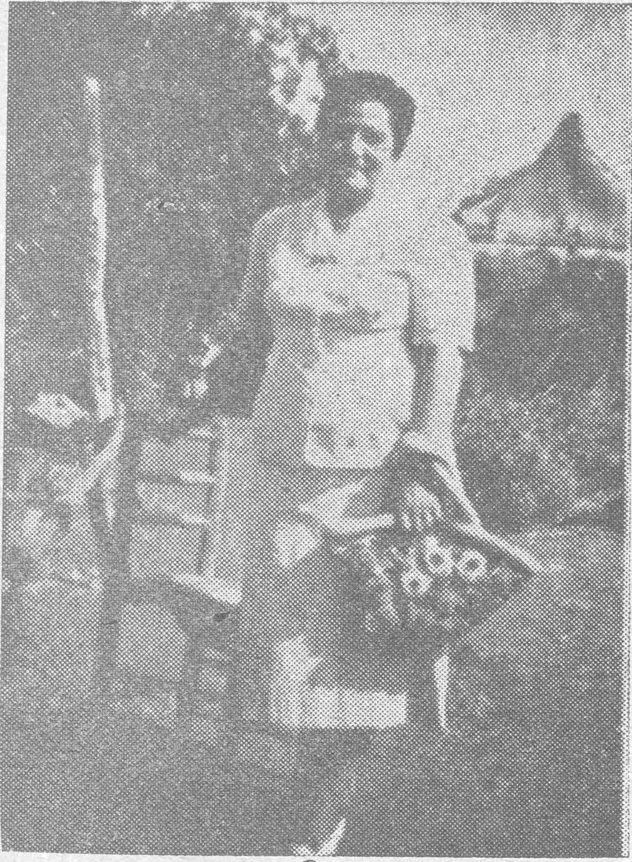
Mrs. Adelaide Richani
published articles in the pages of the newspapers, and a number of physicians, educators, religious leaders, newspaper proprietors, and other worthy people took part in this work. The society kept sending petition after petition to the government, asking for the abolition of these houses, and for a ban on the spread of books offensive to morals displayed in the bookshops, most of them translated from foreign languages.
These petitions remained ink on paper, piling one atop another for thirteen years, until the year 1943, when Lebanon gained its independence and the nightmare of colonialism was lifted from it — and lo, one of the newspapers, 'al-Bayraq',
published in its pages the following: 'The Municipal