As a result of the armed conflict which broke out after the United Nations vote to partition Palestine, the towns and villages and hill stations of our little country became the scenes of a great tragedy, for it is there and in other Arab countries that hundreds of thousands of Palestinian refugees have fled from the ravages of the war that has blazed through the holy land.
Here, in this gathering of many peoples whose aim is to lighten the hardships of stricken ones, is the place above all others, where we must expose for your prompt action, the plight of fellow human beings swept from their homes in hundreds of thousands.
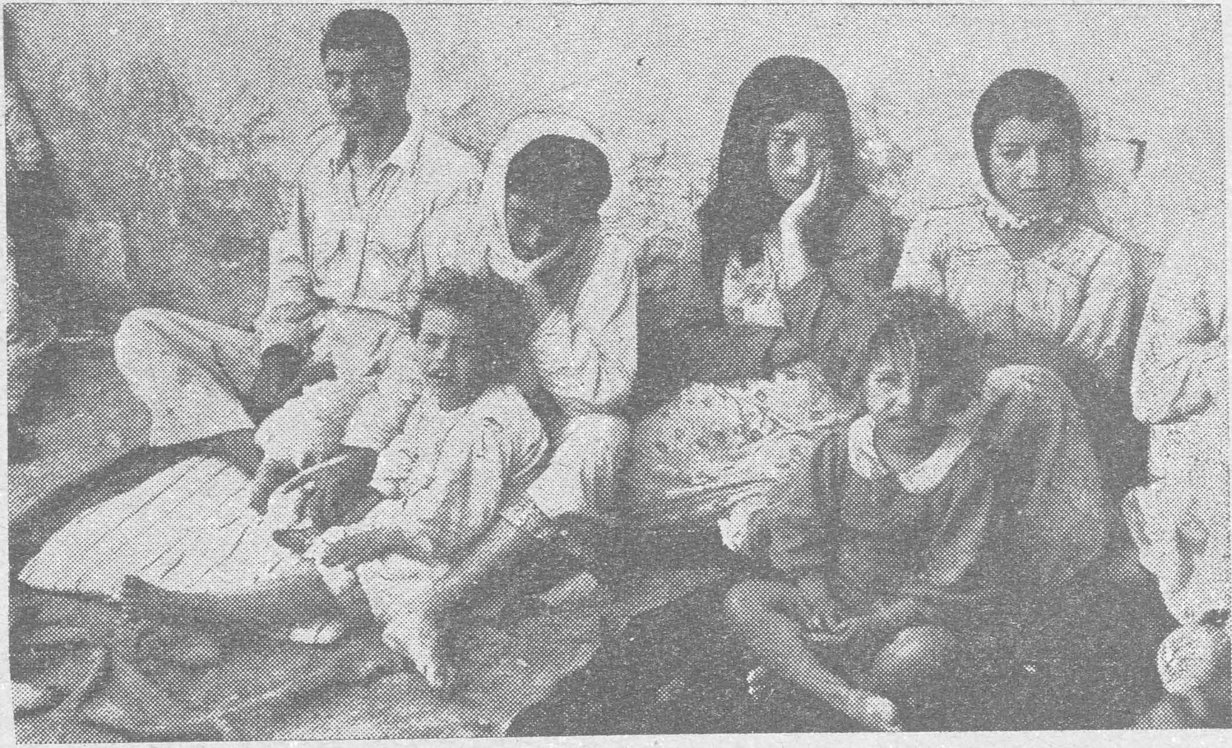
For the last several months there has been a steady stream of men, women and children pried loose from farms and homes where, they and many generations before them had been living. They have lost their homes, their farms, their orchards, their businesses, and today huddle in refugee camps and in houses thrown open to them by their neighbors of other Arab countries, whose hospitality is only bounded by the limits of their revenues.
They have come to us, these refugees from Palestine, often only with the shirt they were wearing. In Lebanon, a small country in size
and population, but great in its efforts to stick to the highest humanitarian principles — which is the aim of all those assembled here — we have spared no effort to lighten the sufferings of our unfortunate guests.
The men and women of our Lebanese Red Cross have worked unsparingly to prevent diseases from spreading in the camps we have improvised for these refugees. We have given them all the food we could procure, clothing and medical assistance. Aided by a special Palestine Committee organized in our country, we have exerted every effort to help the Palestinian refugees.
But the stream of refugees had soon swollen into a flood with which our young Red Cross organisation, with its limited resources,
cannot cope without help from this international body from which stem all our local groups. In a country of one and a half million, over fifty — thousand refugees is a serious problem — and a similar number is at our frontiers.
The refugees can be divided generally into two distinct groups — those who came with nothing and are in need of help of every kind, and those who either managed to save some of their belongings or who had relatives and friends to extend a helping hand. But even the latter are scraping the bottom of their bag, and the relatives and friends do not possess unlimited means. This matter has become an international humanitarian problem — a challenge which this organisation, I feel sure, will not ignore.