My homeland! O strangers in every homeland: to you this confidence.
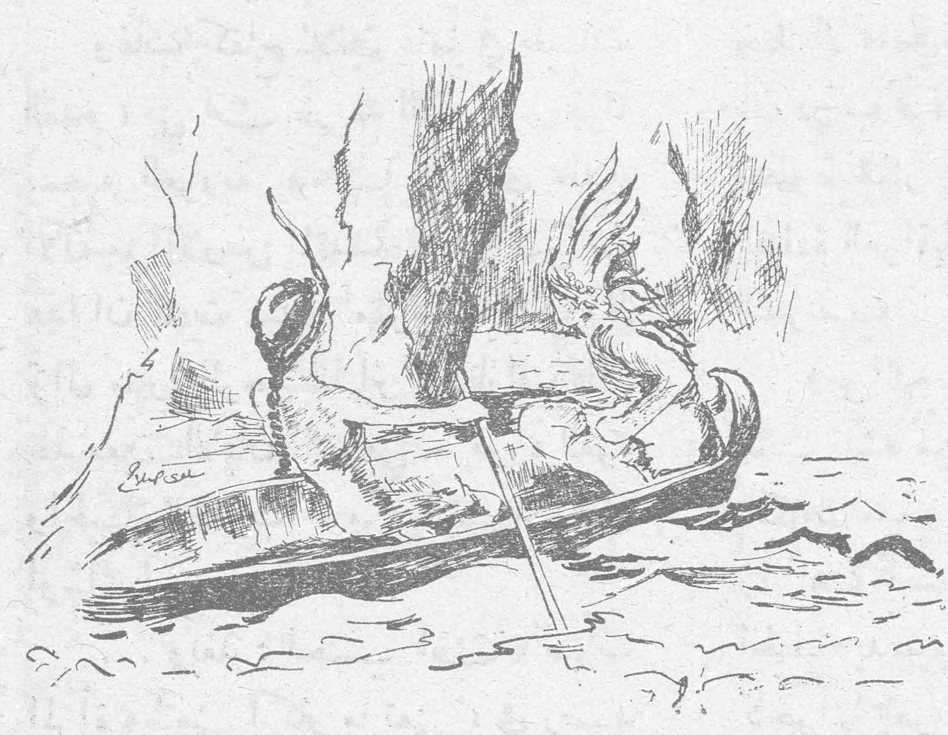
"Atala" (1), daughter of the chief of one of the Red Indian tribes of America, is moved to sorrow by the ordeal of the white prisoner; her heart overflows for him with mercy and tenderness. In the black of night she brings him the light of hope, the glad tidings of deliverance — so onward to freedom and release, in the keeping of the Eye that never sleeps.. From the loftiness of love the two have taken a pledge, from fidelity a guide..
Here is a boat carrying the two at daybreak, pressing on amid fears and dangers for fifteen days and nights; and at last here they are in safety, the sun sinking toward its setting, a holy flood of its red rays pouring over the water and the air, and deep stillness wrapping the place and the two hearts in an engulfing majesty, until from the depths of the breast a prayer pours forth... a confidence, which Atala sends to the homeland vanishing on the horizon:
"Happy are those who have never kept the feast, nor been gathered together, save in the shade of kin and the soil of the homeland, and who have never witnessed it among strangers.."
... If the bird of the "Mississippi" said to the wandering bird of "Florida": Why has your singing turned to wailing? Why is your heart distraught, your longing overflowing? Have you not here the beautiful waters and the spreading shade, and all the food and grasses of your meadows?! Then the roaming bird would answer: Yes — all that you mention is here, but... my nest is there... among the jasmine boughs — who will bring it to me?! And the sun gleaming over my beloved meadow — have you its like??...
"Happy are those who have never kept the feast, nor been gathered together, save in the shade of kin and the soil of the homeland, and who have never witnessed it among strangers.."
Here is the emigrant, after toil and long torment, alighting in
the far country; he casts his eyes about him, studies the buildings and the people — has he anywhere to rest his weary head?! No! No, by God..
Here he is: knocking at the doors, begging a shelter to shade his exile.. and the master of the house turns up his hands in regret! And back he goes — the pity of it! — despairing; he shoulders his pack and turns again to wander the wilderness, homeless..
"Happy are those who have never kept the feast, nor been gathered together, save in the shade of kin and the soil of the homeland, and who have never witnessed it among strangers.."
There: in the bosom of the family, as they listen to marvelous tales, the dews of tenderness and generous affection wash over them; the dear traditions — the most precious and sweetest things in life — bring them happiness, shedding their glad memories over the hours of those who never left the homeland's soil: the most splendid of joys! There... in the soil of the beloved homeland, their graves rest in the shade of the setting sun, amid the tears of friends and the rays of faith...
Happy are those who have never kept the feast, nor been gathered together, save in the shade of kin and the soil of the homeland, and who have never witnessed it among strangers...
— Your homeland, O emigrant: do you not remember it in your exile?! Would that you had carried with you a handful of its soil to remind you of it, as the genius artist Chopin remembered his — his country Poland enslaved, while he, consumptive and frail, could not fight as his brothers did; they pressed him to depart, and he was borne away by force, to carry his country's message and breathe out its sorrows in every place where he alighted — and that was a handful of the homeland's soil they gave him to carry, to remind him of it! Or did Chopin cease to sing once his homeland was crushed?! No! He went on pouring out his struggle for it in melodies.. melodies with the force of truth and the fragrance of fidelity! Chopin was truly tormented in his exile, feeling the flame of the injustice sweeping his homeland within the folds and recesses of his heart, when a friend wrote to him, saying:
"Set before your eyes the image of your country — your nationhood, and again your nationhood.. And just as there are national airs, so there are national outpourings: sing of our mountains, of our forests, of