

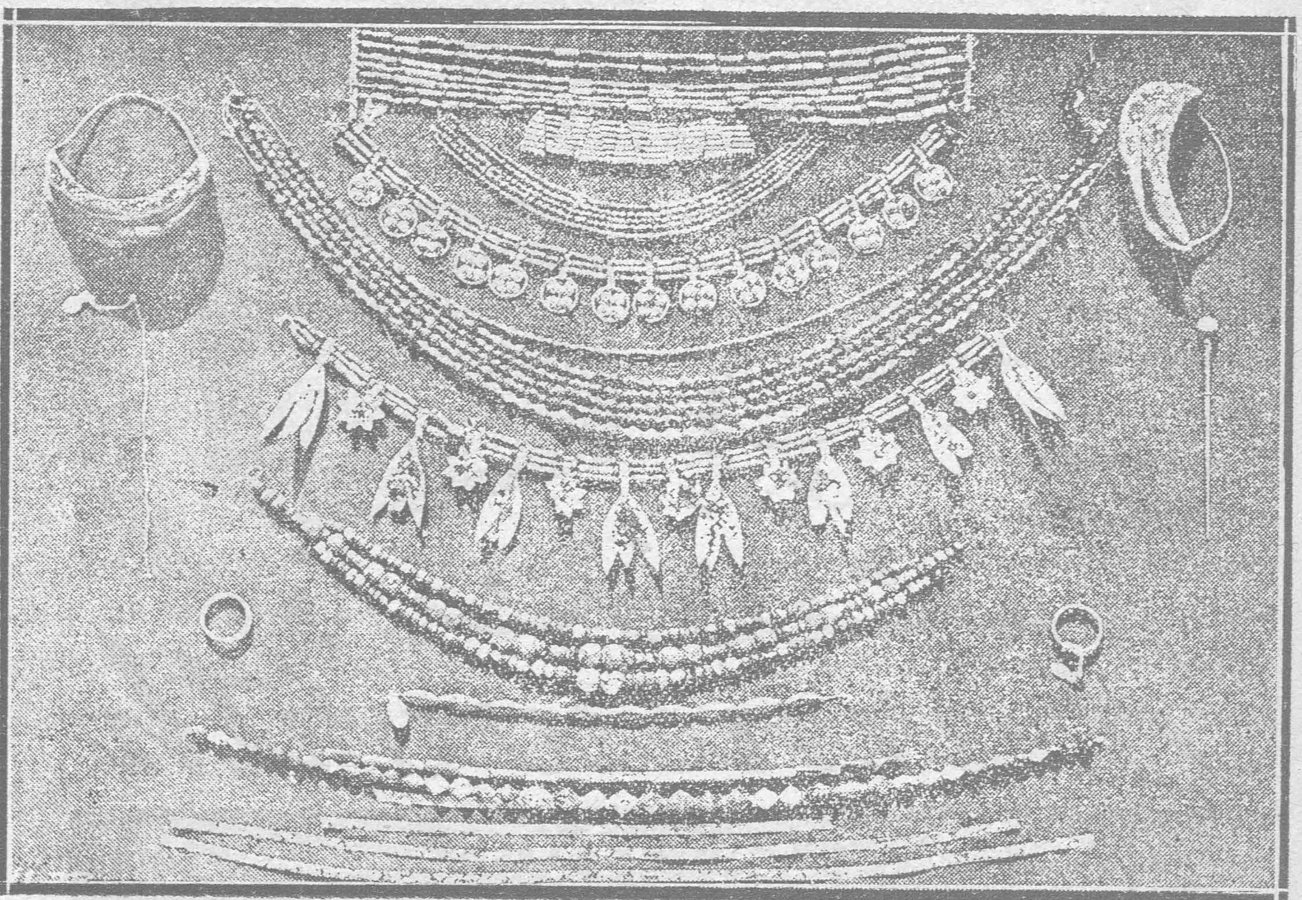
Much of our true history still lies buried under thick layers of dust, legend, and intellectual distortion, despite the many attempts being made in various parts of the country to revive it, bring it back to life, organize it, and make of it a sound science built on clear foundations. The modern discoveries in many parts of our homeland have played a far-reaching part in shaking off those thick layers of dust, just as they have played a part in revealing the origins of many of our social customs and habits.
Among the most important features of the Sumerian community were its conceptions of morals and conduct, which led it to lay down laws and rules for these conceptions — the first of their kind in the world. Hammurabi and his laws are nothing but the culmination of the spiritual
progress this community had attained by his relatively late age.
Sumerian society was divided into three principal classes. The first class comprised the heads of religion, government officials, and the men of the army; the second class comprised the merchants, the farmers, and the schoolteachers; while the third class comprised the slaves and bondsmen. Each class had its own laws and its fixed social position.
As for the woman in this society, she had an ample share of freedom, and she could attain important positions. In the city of "Kish" we see that a woman of humble origin named "Kubu" managed, in a manner unknown to us, to found a royal dynasty and to rule the whole of southern Iraq at a time when every city formed a government unto itself and chaos prevailed throughout
the land. Yet this freedom was relative and small if we consider the woman's position on the whole, and the fact that she was a chattel belonging to the man as the legal head of the family; he had the right to dispose of his wife — placing her, for example, at the disposal of his creditor for a period sometimes reaching three years.
It appears from the customs of the Sumerians that the mixing of the sexes was an accepted practice, for the bride, before her wedding, was permitted to frequent or even to live in her husband's house. This shows us that the girl was not shut away or barred from the company of her betrothed, as is still the case among us to this day in some places, where the fiancée may not visit her fiancé's house before they marry.
As for marriage, it was a contract between the suitor and the father, under which the former presented a dowry that became the property of the bride, hers to dispose of throughout her life; she bestowed it on her children when she died, and if she had no children, then on her family. There were also recorded in the contract
her conditions: that she could not be placed at the disposal of her