Our mail for this month is almost entirely poetry, or something resembling poetry in its feeling and its colors.
As we publish on this page some of these poems, we apologize to those whose work we could not publish, for some of it is not fit for a magazine like The Woman's Voice to print in its pages, and the rest is still weak of wing for flight.
Drunk...
Raja Baroudi
"Drunk," a poem by Raja Baroudi, from which wafts the scent of Nuwasian wine.
We do not know what kind of deep pain makes the young poet sink into such dazed abstraction from the universe and from life, drowning himself in cup and bowl.
Is it, one wonders, a despair settling over the young man's heart and sapping the resolve of his youth—or is it a generation of young men who have lost the spiritual values, and have taken to breathing out their lives in smoke, in nothingness?
I shall drink it though it carry off my soul,
for nothing heals wounds but wounds.
I shall drink it, lawful or forbidden,
and cauterize my sores in its hellfire,
and drink myself a drunkenness with no waking,
and in its taverns build my palaces,
and quench my burning thirst with it, and climb
to its Mount Qaf and the summits of my ambition.
I shall drink it, and shun whoever shuns it,
and cast off my sackcloth for the love of it,
and shake the hypocrisy of sobriety from my garment,
and put on my soul's nakedness in plain sight.
And whenever I am wronged, I make pilgrimage alone
to the thresholds of its forgiving presence.
O cupbearer, pour it out into my ribs,
and pour its vintage into the cup of my soul,
and drown me in my cup—perhaps in it
I may see her whom I seek, and the casements of opening.
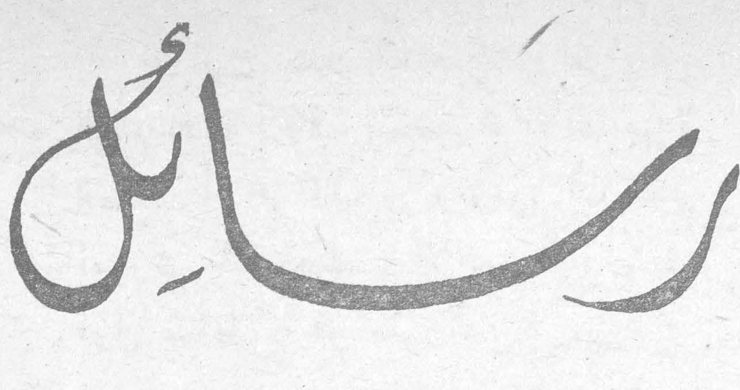
Readers' Letters
I polished away doubt, and my wounds closed over;
no cupbearer there and no drink,
and no tenderness but my own unruly soul.
O my soul, I would ransom you—set me free
from hateful sobriety, for my wildness is my own;
undo the fetter of my reason and carry me
from the pitch-dark night to the morning draught,
to my intuition, to the world of my beauty,
to what lies hidden in my self, and to my confession;
do not hold back—quench my burning thirst,
and array me in the most splendid jewels in the universe.
Perhaps upon existence I may see my own existence,
and beauty appear in "an ugly face."
And I bend over it while the whisper of morning
sows the enchanting
To You, Hanaa...
Nahida Fadli
By Miss Nahida Fadli "Dedicated to Miss 'S.,' the spring from which I sipped the sweetest cups of happiness..." To the Heights! To the Heights!
Do you remember the day you asked me: whither? And I said: to the heights... to the heights... Do you remember that well? Or was it a jumble of dreams I poured out the hour you visited me as I lay bedridden—and when it had passed, you asked me: whither? And I said: to the dust... to the darkness!
Ah, my dear! How weak we are before the massed armies of "Fate." Will a day come, I wonder, when we can overcome them? Never, never! Were we to live a thousand years, we could not overcome them or ward off their evil unless we made alliance with them...
You will say: are you dreaming, my dear, or are you awake? And I shall answer: no, I am awake—and how lovely a waking! I woke from that dream the day you enriched me with the first cup I sipped from your hands, and you answered me when I asked you: "Can happiness
be bought??" "Bought! Mercy, you angel! She would buy happi-ness... Happiness, my dear, is to look at everything in existence with the eye of spiritual, not material, beauty—that is happi-ness; so do not go searching for it: it is only in your own image..." Do you remember this too, or has it slipped from your mind? But how could it, when you are the
Who Are You?
Hind Haroun
"Who Are You?"—a poem by Hind Haroun of Latakia, containing a naïve bewilderment that reminds you at once of the poetry of the emigrants. We, who do not know Hind Haroun's age, glimpse in its white pages a childhood inclining toward a poetic gift in which the colors may grow rich, if she perseveres in reading serious poetry.
And let the poetess attend to her language, for her language is still weak, and some of her verses are broken. Here is a sample of this poem:
O soul, are you the wretched one, in the morning and in the evening,
or do you watch for a happiness between the eyelashes of the light?
Then a whisper from the far, wakeful horizon took me captive:
I am beyond what can be discerned, O daughter of the blossoming spring;
I am the secret of the sad one's moans and the melody of the stranger's sighs;
I am the splendor of buried pain and the solace of the mournful child;
I am the taste of poverty's cup in the mouth of a steadfast wretch;
I am the death-place of insolent, tyrannical, rebellious injustice.
Abd al-Rahman Abbas
Sabah — To you, Samira, my morning.
Under this title the litterateur Abd al-Rahman Abbas of Latakia sent us a long poem containing shades of tender poetic feeling.
The poet appears to sink very deeply into imaginative descriptions that lead to nothing definite—descriptions that have become a widespread disease among our rising poets...
Sabah
I clasp your image in my mind,
Morning
dewy, with fragrant hope
I drowned in my rapture and soared until
18