elections, the right of guardianship over minors, the right to own property and to keep her income. Woman's view of these demands varied in the different American regions.
In September 1937 the League of Nations resolved to give this subject its due of careful scientific study, and the Council appointed a committee of specialists to give the matter thorough study and investigation. But because of the declaration of the Second
World War this committee was compelled to stop pursuing its work, the results of which had not yet appeared.
The Application of the "Charter" of the United Nations:
But this struggle did not reach its height until the appearance of the right affirmed by the "San Francisco" conference in 1944, when the "Charter" of the United Nations guaranteed, with absolute clarity, equality between man and woman, their basic purpose in this being to arrive at international cooperation and to raise the level of respect for the rights of the individual human being, without any regard to origin, sex, language, or religion.
This latest victory for woman came about because of the presence of a large number of women delegates at the San Francisco conference, and because of the world's recognition of the great contribution woman made toward
the victory of the democratic front in the war, in which she proved her competence in assuming responsibilities.
When the Council met in February 1946 it appointed a subsidiary committee of specialists in various fields, among its branches being the Commission on Human Rights, whose scope includes inquiry into women's affairs. All these branches met in April and May and gave their decisions in June.
Thereupon the Council approved the establishment of the Commission on the Status of Women, to study woman's condition in all countries and to work to assist her in claiming her political, social, economic, and cultural rights, and to draw the Council's attention to urgent situations that might befall certain women's circles and call for attention.
On December 11, 1946, the General Assembly met and unanimously approved an appeal to all the states belonging to the United Nations to give woman the same political rights given to man. This resolution was communicated at once through the delegate of Denmark.
The First Session:
Most of the discussion in the first session of the Commission on the Status of Women was preparatory to future work, and may be summed up in phrases like these:
"Freedom and equality are essential to the advancement of mankind, and woman, as a human being, is not inferior to man; therefore she must share these rights with him."
"The success of society depends on the extent of cooperation between man and woman, for the display of their full personalities and the fulfillment of their responsibilities toward themselves and toward one another; woman therefore has an important part in
building a moral, free, and sound society, and she cannot perform this task of hers in the fullest manner unless she is herself a free and responsible member."
To arrive at this goal, the aim of the Commission on the Status of Women will be to raise the status of woman, without regard to nationality, origin, language, or religion, and equality with man in all the social and civil fields.
As regards political rights, the Commission demanded for women of full age the right to vote and to be elected, and the right to hold posts of responsibility, with the exercise of all civil rights and duties, without regard to origin, language, or religion.
As regards marriage, the Commission demanded freedom in the choice of husband, the safeguarding of woman's dignity, the prohibition of polygamy, and equality in the right to dissolve a marriage. The Commission
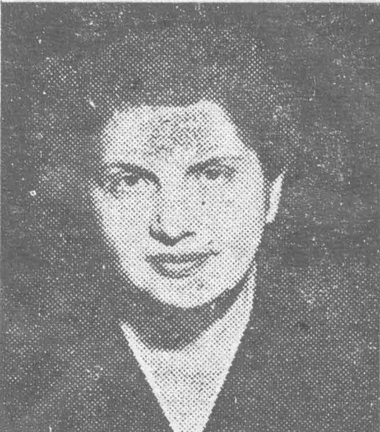
MME DE ECHEVERRÍA — Costa Rica
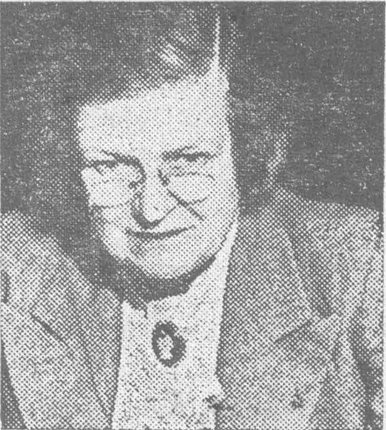
MME STREET — Australia
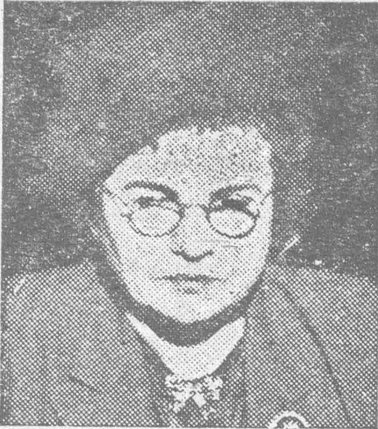
MME COSMA — Syria